
Experts Assess Iran's Absence from Second Negotiations Due to US Imposing Its Will
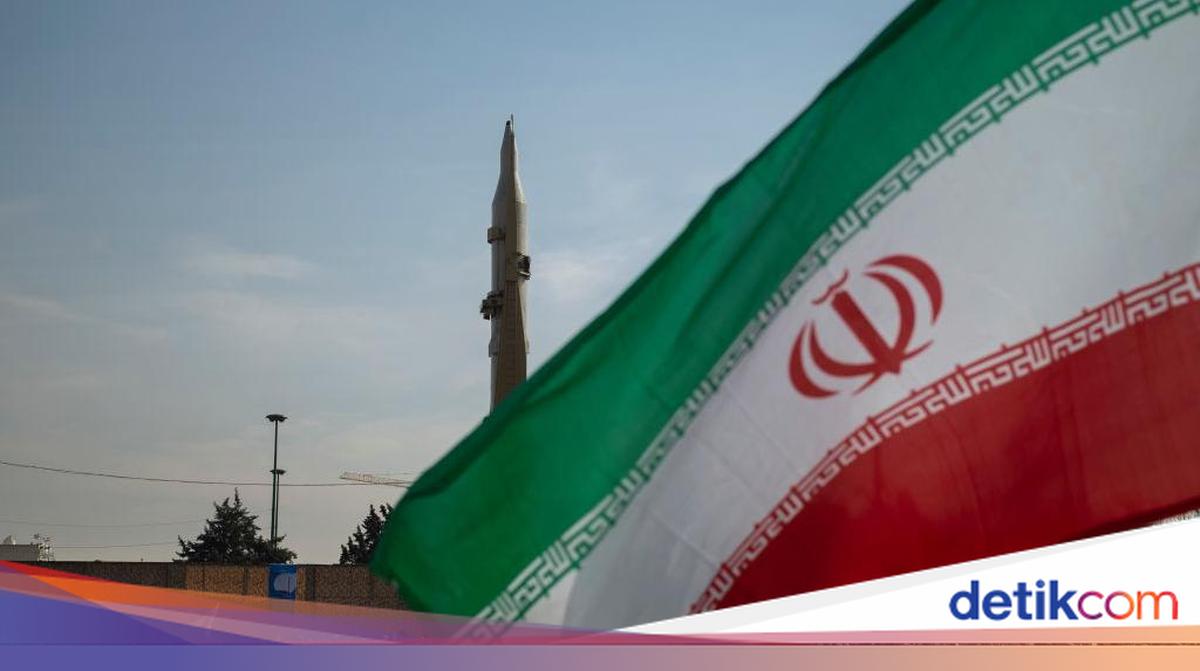
Lecturer from the Department of International Relations at the University of Indonesia (UI), Asra Virgianita, assesses Iran’s reluctance to attend the second round of negotiations with the United States as a political strategy. According to her, this also reflects a lack of trust in the ongoing process.
“Iran’s stance can be read in two contexts. First, it serves as a form of bargaining power or strategy, expected to pressure the US into reducing its demands while fulfilling Iran’s requirements, particularly at present regarding the blockade of the Strait of Hormuz,” Asra told reporters on Tuesday (21/4/2026).
“So, Iran’s threat of absence not only signals rejection but also serves as a political message reinforcing Iran’s bargaining position,” she added.
Furthermore, she views this attitude as mirroring Iran’s distrust of the current negotiation process. According to her, US policies, including the blockade of Iranian ports in the Strait of Hormuz area, strengthen this perception.
“Iran’s stance will undoubtedly impact the plans for the second round of negotiations. Without Iran’s presence as the disputing party, any decisions reached will have weak legitimacy and binding force (a de-legitimisation strategy),” she stated.
This situation, Asra continued, risks each party pursuing its own interests. Therefore, she assesses the chances of renegotiating a ceasefire as slim.
“The consequences are predictable: each conflicting party will proceed with its own perspective. This means a ceasefire will be difficult to renegotiate, or the likelihood of escalation will increase, thereby widening the space for renewed conflict,” she explained.
“As a result, the situation heats up again, and regional and global economic stability is once more at stake. In this context, Trump may attempt other strategies to ensure no further mutual attacks occur. Nevertheless, Trump will reconsider the cost-benefit calculations of the US’s current and future positions,” she added.
The same view was expressed by Professor of International Relations at the Faculty of Social and Political Sciences, University of Indonesia (UI), Fredy Buhama Lumban Tobing. He considers Iran’s response to the United States as part of the normal dynamics in the negotiation process between the two countries.
“In my view, this is part of the dynamics of negotiations between the US and Iran. This will certainly impact the second round of negotiations,” he said.
According to him, the situation could prompt the United States to be more cautious in its actions. Because every step taken will influence Iran’s response.
“At the very least, the US, for example, will be more cautious in its behaviour moving forward, as it will affect the formation of Iran’s stance,” he revealed.
“We certainly hope that the second round of negotiations can proceed smoothly and result in a peaceful agreement,” he added.
He assesses that so far, the United States’ approach still appears to impose its will unilaterally on Iran. This, he said, has provoked many negative responses from Tehran.
“So far, the US stance seems to strongly impose its will unilaterally on Iran, which naturally elicits responses and negative reactions from the Iranian side. We hope that both parties still have goodwill to negotiate peacefully and with mutual respect,” he stated.
Previously, Iran currently has no plans to attend talks with the United States (US). This news came after US President Donald Trump ordered US negotiators to Pakistan just days before the Middle East ceasefire expired.
Cited from AFP on Monday (20/4), the ongoing US blockade of Iranian ports has become a significant point of contention, and the issue is likely to become more complicated following Trump’s announcement on Sunday (19/4) that a US destroyer had fired upon and hit an Iranian vessel attempting to evade it.
Iran’s state broadcaster IRIB on Sunday (19/4), quoting Iranian sources, stated that “there are currently no plans to participate in the next round of Iran-US talks”.