
Experts Address the Mystery of Masalembu, the 'Ship Graveyard' of Indonesia's Bermuda Triangle
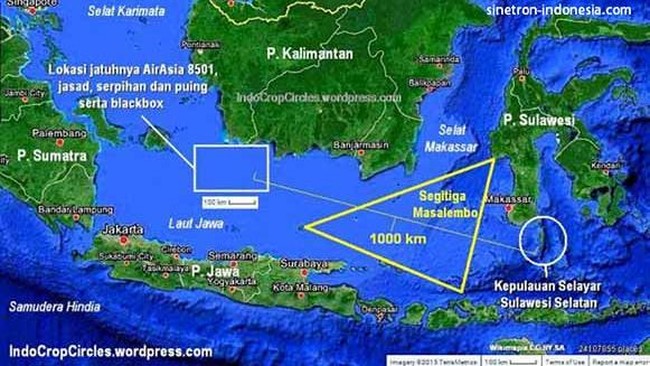
The Masalembu waters have come under intense scrutiny following the accident involving KM Virgo Transport 8 in the Java Sea in the early hours of Sunday (13/09/2026). The search for missing victims of the accident is still ongoing.
According to the manifest, KM Virgo was carrying 240 people. As of Monday (14/09/2026), 114 victims have been evacuated, with 6 confirmed fatalities.
The Masalembu waters, often pronounced Masalembo, are located in the eastern part of the Java Sea, north of Sumenep Regency, East Java. This area is frequently referred to as the Indonesian Bermuda Triangle, as it marks the confluence of the Java Sea, Flores Sea, and the Makassar Strait, surrounding three main islands: Masalembu, Masakambing, and Keramaian.
The Makassar Strait is a vital route for the Indonesian Throughflow (Arlindo), which transports water masses from the Pacific towards the southern Indonesian waters. Meanwhile, the Java and Flores Seas possess circulation characteristics influenced by island configurations, tides, and seasonal changes driven by the monsoon system.
How, then, did the ‘Bulmuda Triangle’ moniker become attached to the Masalembu waters? Is it true that ship accidents occur frequently in this location?
Daryono from the Indonesian Disaster Expert Association (IABI) acknowledged that the Masalembu waters have been associated with various mystical stories for many years.
“It is even called the Indonesian Bermuda Triangle. However, from a scientific perspective, this region is far more interesting to understand as part of the Indonesian marine system, which possesses complex oceanographic and maritime meteorological dynamics,” he said on Wednesday (16/09/2026).
“The ‘Triangle’ is, to me, merely a term; in reality, it does not exist,” Daryono added.
He emphasised that the complexity of Masalembu does not mean the waters possess mysterious or unique marine phenomena that automatically cause ships to sink.
“Navigation risks in this area are more accurately understood as the result of the interaction of various factors, including wind, waves, currents, tides, atmospheric conditions, bathymetry, ship characteristics, cargo, as well as navigational decisions and procedures,” he stated.
He continued that the Masalembu waters are not merely a meeting point of three seas, but also a site of dynamic water mass exchange.
“Differences in temperature, salinity, density, depth, and current direction can form complex marine structures, both horizontally and vertically. Under certain conditions, density differences between layers can produce marine stratification and current shear, which is the difference in velocity or direction between one layer and another. This process can be related to turbulence, water mass mixing, or internal wave phenomena,” he explained.
However, he stressed that these phenomena should not be immediately assumed to be the cause of a ship losing buoyancy or control.
This is because several other factors play a very important role, ranging from environmental factors—including wind, waves, currents, tides, convective weather, Cumulonimbus clouds, and the shape and depth of the seabed (bathymetry)—to factors related to the ship and its operations, such as stability, cargo distribution and securing, technical condition, sailing speed, manoeuvrability, crew competence, and navigational decisions.
“Masalembu is within a region influenced by the Asia-Australia monsoon system. Changes in wind direction and speed can affect the formation and propagation of waves. In certain conditions, waves coming from different directions can meet and form a ‘cross-sea,’ a condition where wave systems exist from more than one direction,” Daryono explained.
“When Cumulonimbus clouds develop strongly, heavy rain, lightning, downdrafts, and gust fronts can occur. Rapidly changing winds can cause sea conditions to change in a relatively short period. For a ship, sudden changes in wind and waves can increase the load and movement of the vessel. The combination of wind, waves, and currents is a critical parameter that must be considered in navigation,” he elaborated.
Regarding sea depth, Daryono reminded that changes in depth do not always mean wave height will increase drastically. The magnitude of the change depends on the period and direction of the incoming waves, sea depth, seabed shape, tides, and local current conditions.
“Therefore, dangerous sea conditions in Masalembu should not be explained by a single mechanism. Navigation risk is the result of the interaction between environmental factors and human and vessel factors,” he noted.
At the same time, Daryono cautioned that the oceanographic and meteorological phenomena discussed should not be taken as a final conclusion regarding the cause of the KM Virgo Transport 8 accident.
“These phenomena are environmental factors that can physically affect navigation conditions. However, the contribution of each factor must be proven through data and accident investigation,” he said.
He added that it is necessary to avoid the assumption that all accidents in Masalembu are caused by natural conditions.
“Ship accidents are fundamentally events that can involve many factors simultaneously. A good investigation must examine weather and sea conditions, ship condition, cargo, stability, engine, navigation, operational decisions, and human factors,” he said.
“Thus, Masalembu does not need to be explained as a mystical area or a ‘ship graveyard.’ Scientifically, this region is a dynamic and complex marine environment,” he concluded.
Source: jawawa.id (https://jawawa.id/newsitem/experts-address-the-mystery-of-masalembu-the-ship-graveyard-of-indonesias-bermuda-triangle-1789545608)
Originally published by CNBC Indonesia (https://www.cnbcindonesia.com/news/20260916132717-4-768366/pakar-jawab-misteri-masalembu-kuburan-kapal-di-segitia-bermuda-laut-ri), translated from Indonesian