
Expert Warns DPR: Last-Minute Election Bill Debate Could Destroy Public Trust
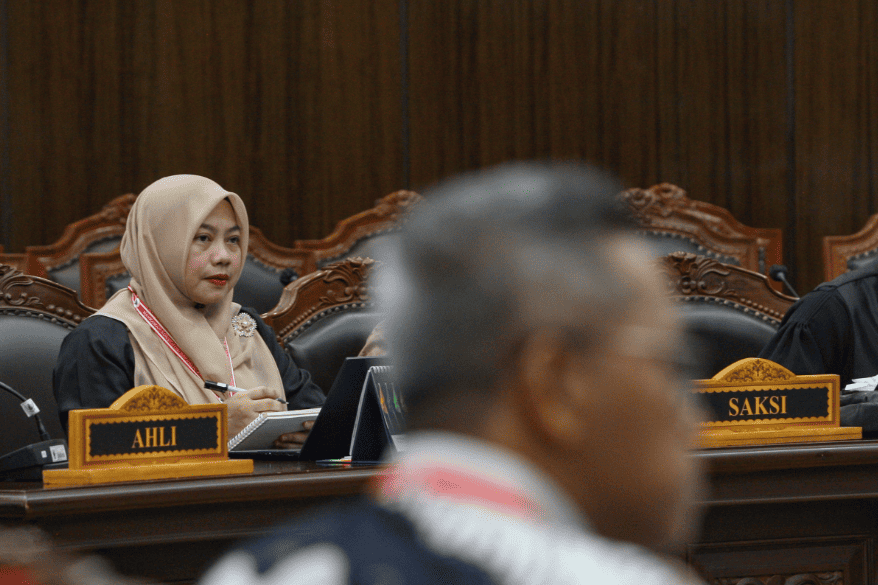
The discussion and ratification of the Election Bill cannot be postponed any longer, according to experts. In addition to following up on several Constitutional Court rulings, the revision of electoral regulations is needed to ensure Indonesia has a legal foundation capable of anticipating technological developments and guaranteeing certainty for the 2029 election. University of Indonesia electoral law expert Titi Anggraini warned that delays in the deliberation would only result in regulations being drafted hastily, potentially eroding the quality of democracy. She said the current stagnation in the revision of the Election Law indicates a lack of strong political commitment from the House of Representatives and the government to make electoral reform a priority agenda. “This delay shows the weak political will and commitment of the DPR and the government to make electoral reform a priority. In fact, the revision of the Election Law is not a sudden need. The evaluation of the 2024 elections, various Constitutional Court rulings, and the need to design the 2029 elections have provided a very adequate basis for immediately starting the discussion,” Titi told Media Indonesia on Wednesday. She acknowledged that political factors are a major cause of the delay, as changes to the Election Law directly intersect with the interests of political parties and the configuration of power. However, she insisted that this condition should not be used as an excuse to continue postponing the legislative process. “The political factor is very dominant because changes to the Election Law directly intersect with party interests and the configuration of power. However, political complexity cannot be used as a reason to delay. The discussion must start early so that it is transparent, participatory, based on evaluation, and not done hastily just before the election stages begin,” she said. Titi also highlighted another urgent matter: the upcoming selection process for members of the General Elections Commission and the Election Supervisory Body. She argued that the formation of election management bodies must be aligned with the institutional design that will be regulated in the new Election Law. “Do not let KPU and Bawaslu members be selected based on the old institutional design, while after they are selected, the rules, authority, or institutional structure changes. This could create uncertainty and disrupt the independence of the organisers,” she stressed. Titi assessed that if the revision of the Election Law is only completed close to the 2029 elections, Indonesia risks repeating the same problems as in previous elections, namely the creation of reactive and poorly prepared legislation. “Delaying until close to the 2029 elections will again produce reactive, rushed legislation that is highly vulnerable to being co-opted by short-term political interests,” she said. She explained that the impact of the delay would not only be felt by election organisers but also by election participants and the public as voters. “Organisers will lose time to draft technical regulations, prepare human resources, build technology systems, and conduct adequate voter education and outreach,” she said. Meanwhile, election participants will lose legal certainty in preparing nomination and political competition strategies, while the public could face confusion due to late socialisation of rule changes. “For election participants, late rule changes will disrupt certainty in determining nomination and competition strategies. For voters, rules that change or are not properly socialised can cause confusion. These conditions ultimately increase the potential for disputes, implementation inconsistencies, and decrease public trust,” Titi said. Therefore, she believes that electoral law should be an instrument that provides certainty, not one that creates uncertainty ahead of election stages. “Electoral law should provide stability and certainty, not be a source of uncertainty. Because of that, the principle that rules must be available well before the stages begin must be upheld. An election with integrity cannot be prepared through regulations made at the last minute,” she said. Furthermore, Titi emphasised that the revision of the Election Law is a necessity to accommodate various Constitutional Court rulings that have changed the design of the national electoral system. She said lawmakers must not merely insert the court’s rulings partially into the law. “Various Constitutional Court rulings have changed important parts of the electoral design and must be followed up consistently by lawmakers. The court’s rulings cannot just be partially attached to the Election Law. All their implications must be harmonised to avoid conflicting and ambiguous norms, legal vacuums, or new problems in their implementation,” she explained. In addition to adapting to legal developments, the revision of the Election Law must also be able to answer the challenges of rapidly advancing technology. Titi said the new regulation needs to comprehensively govern the use of technology in election administration, including aspects of transparency, cybersecurity, and personal data protection. “The law needs to provide a clear framework regarding system transparency, cybersecurity, personal data protection, technology audits, algorithm accountability, public access, and accountability mechanisms in the event of system failure. Technology should be a tool to strengthen electoral integrity and accessibility, not create dark spaces that are difficult to supervise,” she said. She warned that without regulatory updates, Indonesia risks entering the 2029 elections with rules that are no longer relevant.