
Expert Urges Tourism Restriction Mechanisms as Volcanic Status Changes
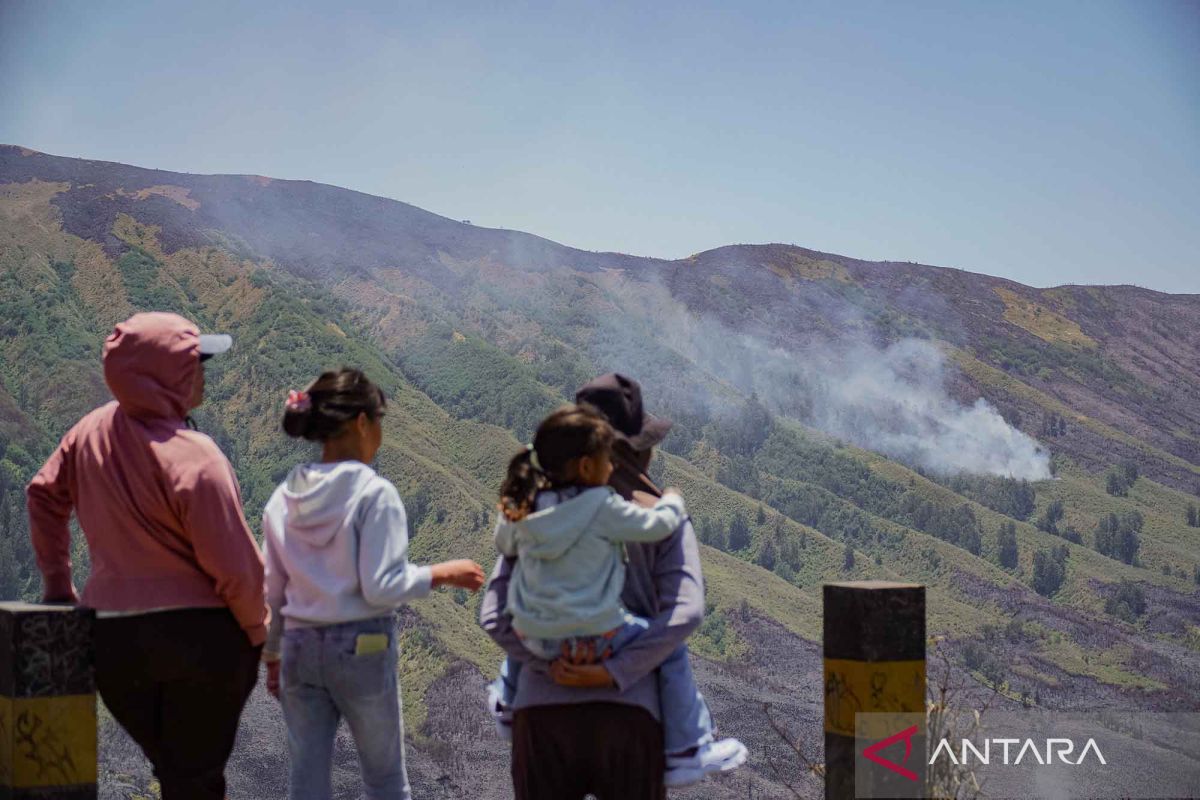
Jakarta (ANTARA) - Tourism expert from Andalas University, Sari Lenggasting, believes the government needs a clear mechanism to adjust tourism activities when the status or risk recommendations of a volcano change, ensuring that safety decisions do not remain in a grey area.
“When there is a change in status or recommendations from the Centre for Volcanology and Geological Disaster Mitigation (PVMBG), the consequences for tourism activities must be clear: whether visitor capacity is reduced, certain routes are closed, the radius is expanded, or all activities are suspended,” Sari told ANTARA in Jakarta on Friday.
Sari stated that such a mechanism needs to be part of risk-based visitor management, rather than merely determining whether a destination is open or closed.
She noted that tourists’ decisions are influenced not only by objective risks but also by their perception of risk. This can lead to an under-perception of risk, where tourists feel safe because the weather is clear, many other tourists are hiking, or they have visited previously without encountering any issues.
Conversely, an over-perception of risk can occur due to inaccurate information, particularly when spread via social media, leading the public to believe an entire area or destination is unsafe, even if the threat is limited to a specific radius or sector.
Therefore, Sari believes that volcanic tourism management needs to utilise dynamic safety zoning. A tourism zone that is safe at one time is not automatically safe the next, so tourism activities must adjust whenever scientific recommendations change.
She stated that information from the PVMBG or the Geological Agency must serve as the primary source for decision-making and be connected with local governments, the Regional Disaster Management Agency (BPBD), national parks or destination managers, tour operators, and guides.
In addition to activity restriction mechanisms, the government also needs to ensure visitor tracking, so that it is possible to know who has entered, the number of tourists, the routes used, the guides, entry times, and the time by which tourists are expected to return.
Sari also encouraged the government to implement the principle of preparedness before response when facing volcanic activity.
She proposed the implementation of a national volcanic tourism safety protocol that integrates the Ministry of Tourism, PVMBG or the Geological Agency, BNPB/BPBD, local governments, national parks or destination managers, tour operators, and guide associations.
According to her, every volcanic destination should ideally have a specific tourism disaster management plan that regulates decision-making, the restriction or closure of destinations, tourist evacuation, information dissemination, visitor tracking, and the recovery of tourism activities once conditions are safe.
Sari emphasised that risk communication must also be conducted proportionally by explaining the affected volcano, its status, zones, threats, and which activities are still permitted.
“Tourism must follow scientific risk recommendations, not considerations of tourist numbers or economic interests,” she said.