
Expert Urges Thorough Investigation into Alleged Involvement of Other Parties in Febrie Adriansyah Case
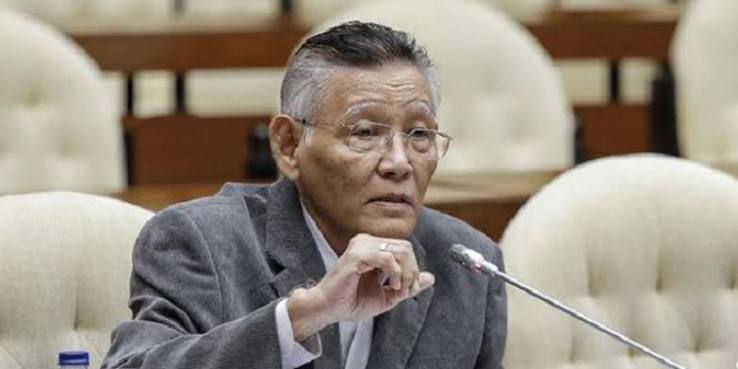
Criminal Law Expert Romli Atmasasmita has urged the Attorney General’s Office (Kejagung) ‘Team 9’ to thoroughly investigate and uncover the alleged involvement of other parties in the corruption and money laundering (TPPU) case of former Junior Attorney General for Special Crimes (JAM-Pidsus) Febrie Adriansyah. According to Romli, the alleged involvement of other parties could be ensnared under Article 55 paragraph (1) of the Criminal Code (KUHP) concerning criminal participation, which can include those who commit, those who order, those who participate in, and those who incite others to commit a criminal act.
“One of the most sensitive aspects and one that has the potential to cause human rights violations is the determination of criminal participation (deelneming) against other parties suspected of being involved in the corruption or money laundering crime,” Romli said on Tuesday (28/7/2026).
Based on circulating information, Romli stated that there are a number of important figures whose involvement needs to be carefully examined. These parties, both from within the Attorney General’s Office and external parties, can be charged under Article 55 paragraph 1 of the Criminal Code if there are more than two pieces of evidence showing a common intent with Febrie.
Romli explained the important elements of criminal participation, including in examining the alleged TPPU case of the former JAM-Pidsus. Firstly, participation requires that the party suspected of being involved must be legally proven to have known (weten) about the criminal act alleged against the former JAM-Pidsus. This knowledge is not merely an assumption but must be proven with valid and convincing evidence.
“The second element requires that the related party must be legally proven to have desired (willen) the occurrence of the criminal act. This will is a manifestation of the mental attitude (mens rea) which is the foundation of subjective criminal liability,” he stressed.
Romli also touched on the criminal law doctrine that recognises the possibility that some actions are carried out intentionally (dolus) while others contain elements of negligence (culpa). He said Team 9 must be careful and not rush in applying the participation article to avoid errors that could lead to human rights violations.
Romli stated that a mental attitude alone is not enough; there must be a real act as a manifestation of that evil will. Doctrine since the mid-19th century has emphasised that criminal sanctions are very sharp and can cause deep suffering for those affected, so caution is a legal obligation.
“Let there be no mistakes that ultimately violate human rights, including investigations that are obsessive and unlawful. The doctrine of criminal law since the mid-19th century has warned of the existence of dolus and culpa offences because the consequences of criminal sanctions are very sharp,” Romli asserted.
Romli also requested that the AGO’s Team 9 announce every development in the TPPU case ensnaring Febrie Adriansyah to the public. According to him, Team 9 is filled with experienced individuals who can uncover the case transparently.
“The Attorney General’s Office, the majority of whom are experienced at the KPK, bears a historic responsibility to demonstrate integrity and accountability in this investigation process. Every development in the investigation must be announced openly to the public so that public trust in law enforcement institutions can be maintained and strengthened,” he added.
From a criminal law perspective, he continued, there are a number of crucial facts that absolutely must be answered before the process of naming suspects and drafting indictments can be carried out legally and fairly.
“The fundamental question that must be answered is, who is the legal owner of the assets found by the National Police’s Kortastipidkor, and for what purpose were these assets stored in the Sentul house? In legal logic, all movable and immovable assets located and placed inside a house carry the assumption that the homeowner knows of the existence and purpose of placing those assets,” said Prof. Romli.
He emphasised that several institutions could play a role in the Febrie Adriansyah case. One is the PPATK, which can trace and determine the status of the former JAM-Pidsus’s assets through analysis of financial transaction flows.
“Furthermore, the KPK plays a role in examining the former JAM-Pidsus’s State Officials’ Wealth Report (LHKPN) as important material to strengthen the suspicion of a criminal act. If Team 9’s investigation encounters serious obstacles, the KPK, in its supervisory function, can take over this case on legally appropriate grounds, namely that in handling a corruption case, there is corruption,” he said.
He stated that Febrie Adriansyah could be charged with corruption simultaneously accompanied by a TPPU charge if sufficient preliminary evidence is found during the investigation, including criminal acts of corruption (Law No. 31/1999 in conjunction with Law No. 20/2001), embezzlement in office (KUHP), TPPU, and participation (Article 55 paragraph 1 KUHP) for related parties.
“This cumulative indictment construction is commonly applied in major cases involving public officials, and is the most effective legal instrument for recovering state losses comprehensively,” he explained.
On the other hand, the case of the former JAM-Pidsus is considered to have deep socio-political resonance for the future of law enforcement in Indonesia. The case, Prof. Romli said, is a true reflection of how strong the internal and external supervisory systems can work synergistically in facing corruption crimes.
“Every law enforcement institution must build and strengthen an internal supervisory system that is effective, transparent, and courageous in uncovering internal irregularities. Without this system, corruption will continue to nest within institutions that should be at the forefront of eradicating it,” he said.
He assessed that the KPK has the authority to supervise the handling of this case.