
Expert Urges Revision of Anti-Corruption Law or Passage of Asset Forfeiture Bill
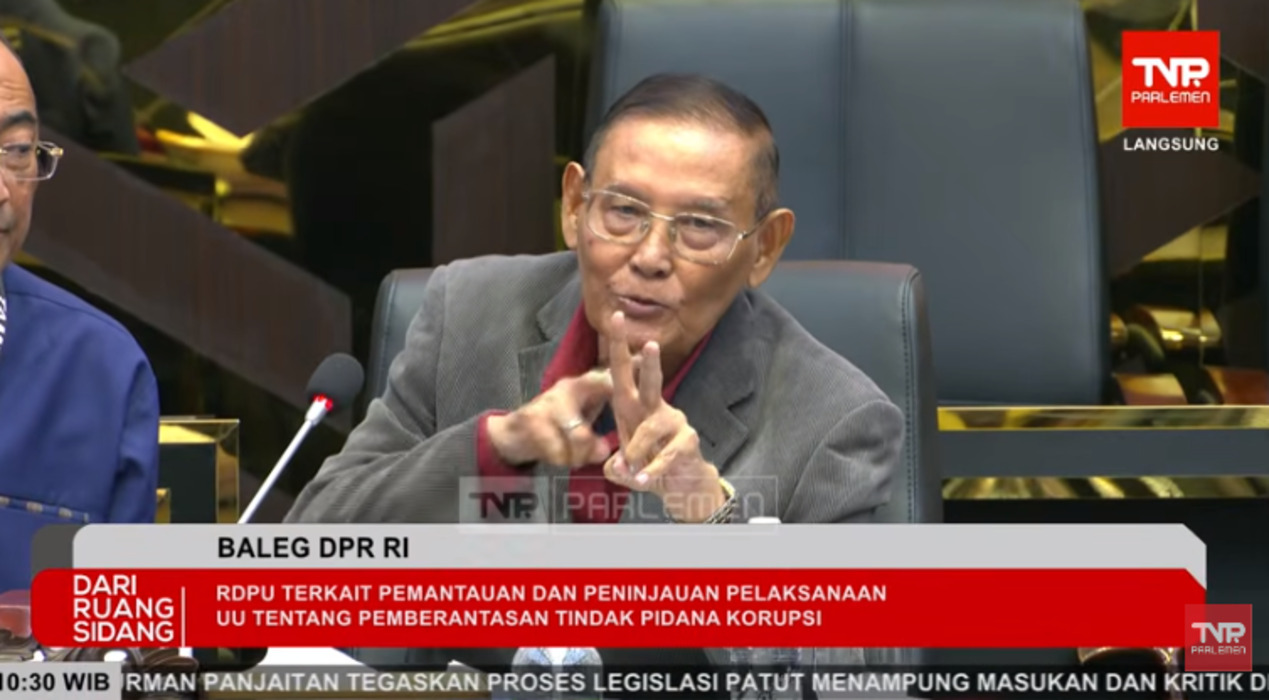
Criminal law expert Romli Atmasasmita has levelled criticism against law enforcement practices in corruption cases in Indonesia, which he believes frequently deviate from the original intent of the legislation. He shared these views while serving as a resource person during a Public Hearing with the Legislative Committee (Baleg) of the Indonesian House of Representatives (DPR RI) regarding the monitoring of the Anti-Corruption Law (UU Tipikor) on Monday.
Providing historical context, Romli explained that the regulations replacing the 1971 Law were prepared in 1998 during a period of national instability, characterised by widespread smuggling and economic hardship. Consequently, elements regarding losses to state finances and the national economy were included. He noted that the articles were formulated such that these losses must result from unlawful acts or the abuse of authority.
However, Romli expressed regret over the distortion of legal logic currently observed in judicial practice. He assessed that law enforcement agencies often appear to search for evidence of state losses first, subsequently attempting to force a finding of legal violation. He pointed out that the Anti-Corruption Law actually provides a strategy for resolving issues through administrative and civil law via the Attorney General’s Office for Civil and Administrative Affairs (Jamdatun) if criminal evidence is insufficient.
As a solution, Romli urged the Legislative Committee to either immediately revise the Anti-Corruption Law or shift focus towards passing the Criminal Asset Forfeiture Bill. This regulation is considered far more effective as it possesses the instruments to seize suspicious assets without necessarily criminalising the individual owner. He highlighted the two strategies of asset forfeiture: ‘in personam’ (targeting the person) and ‘in rem’ (targeting the property). He argued that ‘in rem’ forfeiture—where assets can be seized if the source of wealth cannot be proven, regardless of whether the individual is punished—is the superior approach to prevent the complexities of simultaneous criminal penalties and replacement fines.
Source: jawawa.id (https://jawawa.id/newsitem/expert-urges-revision-of-anti-corruption-law-or-passage-of-asset-forfeiture-bill-1780912406)
Originally published by Media Indonesia (https://mediaindonesia.com/politik-dan-hukum/891322/kritik-penerapan-uu-tipikor-pakar-pidana-desak-baleg-sahkan-ruu-perampasan-aset), translated from Indonesian