
Expert Urges Ministry of Environment to Reassess Palm Oil Wastewater Discharge Standards
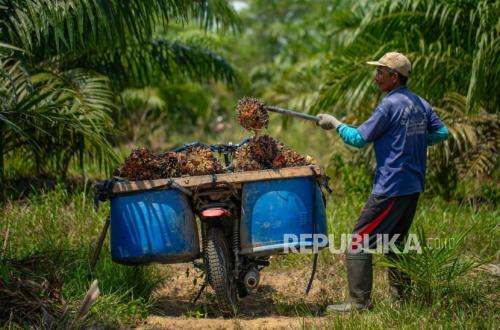
The plan to tighten the quality standards for liquid waste from palm oil mills (LCPKS) to a biological oxygen demand (BOD) of below 100 milligrams per litre (mg/l) has drawn scrutiny. Researcher from Pusaka Kalam, Dr Gunawan Djajakirana, has reminded the Ministry of Environment (LH) to reassess the draft regulation because it is not based on a soil ecology approach or sustainable agronomic practices.
According to Gunawan, policies that force the palm oil industry to treat LCPKS to very low standards before discharging it into rivers would squander the significant potential of this waste as a source of natural organic fertiliser for plantations. “The regulatory focus solely on a BOD below 100 mg/l is misguided,” he stated in a press release in Jakarta on Monday (20/4/2025).
“The environment is not automatically safe just because the BOD is low. Reassess the draft ministerial regulation so as not to ignore the positive potential of LCPKS,” Gunawan added. Currently, the Ministry of Environment is developing a draft ministerial regulation on Wastewater Quality Standards and Wastewater Management for Crude Palm Oil Business and/or Activities.
One of the drafts under scrutiny is the justification for setting wastewater quality standards for irrigation with BOD below 100 mg/l and the use of synthetic fertilisers. This draft tends to overlook the substantial potential of LCPKS as an excellent organic fertiliser for sustainable palm tree productivity.
Gunawan explained that the parameters traditionally used as references are only BOD and pH. Meanwhile, other nutrients such as nitrogen, phosphorus, calcium, magnesium, and potassium are often ignored. However, based on field analyses he has conducted, LCPKS that has met low BOD standards still contains high levels of nutrients that can trigger eutrophication if discharged into rivers.
This condition can cause algal blooms and excessive growth of other aquatic plants. This would instead damage the aquatic ecosystem. “So, a figure of 100 mg/l does not mean it is safe. If the volume is large, it can still pollute,” said Gunawan.
Source: jawawa.id (https://jawawa.id/newsitem/expert-urges-ministry-of-environment-to-reassess-palm-oil-wastewater-discharge-standards-1776649845)
Originally published by Republika (https://news.republika.co.id/berita/tdrpe0484/pakar-minta-kementerian-lh-kaji-ulang-standar-batas-limbah-sawit), translated from Indonesian