
Expert Urges Election Law Revision to Map Offences at Each Stage, Prioritise Non-Custodial Sanctions
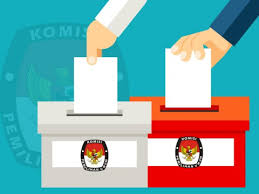
Criminal Law expert from Hasanuddin University, Aswanto, has urged lawmakers to map potential criminal offences at every stage of elections and to shift the orientation of punishment from imprisonment towards non-physical sanctions. This call responds to the need for criminal law synchronisation in the revision of the Election Law with the new Criminal Code (KUHP) and Criminal Procedure Code (KUHAP).
The former Constitutional Court Justice for the 2014-2019 period stated that harmonisation must begin by adjusting all formulations of election crimes with the general provisions in Book I of the new KUHP, as mandated by Article 613. According to him, mapping offences is necessary to avoid legal vacuums and differences in legal interpretation.
"If we are serious, virtually every stage of the election has the potential for criminal violations. Therefore, we must start mapping from each stage so we can formulate precise articles for all election stages," Aswanto said at the Bawaslu RI office in Jakarta on Monday (29/6).
He assessed that clear offence formulations would facilitate law enforcement officials in handling election crime cases and reduce debates within the Integrated Law Enforcement Centre (Gakkumdu). "If the formulation is clear, there is no need for debate about the criminal elements. The potential for differences in Gakkumdu can occur if the formulation is unclear," Aswanto stated.
Based on his experience as an expert in several election crime cases, Aswanto acknowledged that many cases stall at Gakkumdu due to differing views between Bawaslu, the police, and the prosecutor’s office regarding whether criminal elements have been fulfilled.
Beyond clarifying offences, Aswanto also stressed that the revision of the Election Law must follow the paradigm shift in punishment under the new KUHP. He noted that the purpose of punishment is no longer retribution but rehabilitation, meaning the types of sanctions chosen must also change. "The purpose of punishment is no longer for retaliation, but for improvement. Therefore, in the future, election crimes should more often be punished with supervision, fines, or community service orders," he said.
He explained that imprisonment should no longer be the primary option, especially for crimes with relatively light penalties. Instead, judges need to prioritise non-custodial sentences, which are considered more aligned with the philosophy of the new KUHP. According to Aswanto, aligning the types of punishment is as important as adjusting criminal norms in the revision of the Election Law, so that the election law enforcement system is truly in line with the new KUHP and KUHAP, while also providing legal certainty at every stage of election administration.