
Expert Urges Effective Asset Forfeiture Bill to Combat Crime, Prevent Abuse of Power
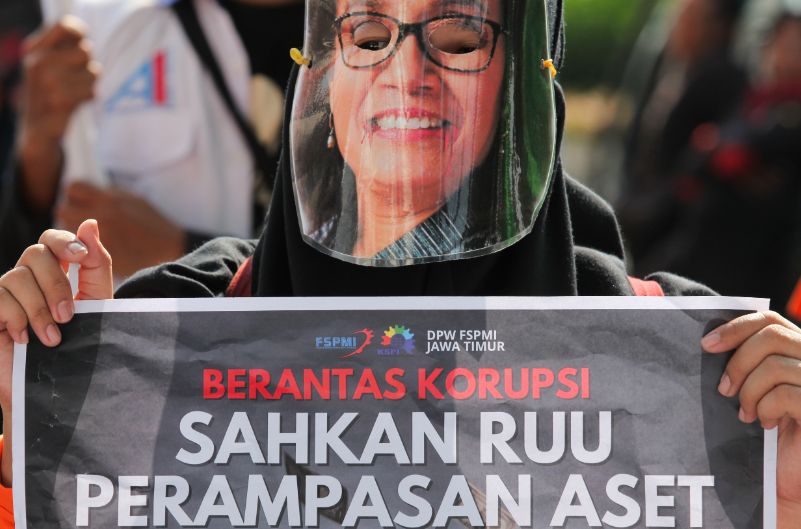
A legal expert has urged the House of Representatives (DPR) to immediately finalise the Asset Forfeiture Bill, warning that failure to do so would reflect a lack of political commitment. Zaenur Rohman, a researcher at the Gadjah Mada University Anti-Corruption Centre (Pukat UGM), stated that the bill is a national legislation programme priority and its success depends entirely on the will of lawmakers. “If it is said to be a priority, the hope is that it will be discussed immediately. This DPR term must not fail to complete it. It all comes back to political commitment,” Zaenur said.
He acknowledged that debate over the bill’s substance is normal, provided it is conducted openly with meaningful public participation. However, he stressed the most critical aspect is ensuring the resulting regulation is effective in seizing criminal assets while respecting human rights. “There must be good faith from our political elites to discuss it, and not just discuss, but also ensure the substance of the regulation is effective for seizing criminal assets and guarantees human rights. There must be a balance between the effectiveness of asset forfeiture and human rights guarantees,” he explained.
Zaenur emphasised that the Asset Forfeiture Bill should not be understood solely as an instrument to recover state losses from corruption. He clarified that its scope is much broader, targeting all assets related to criminal acts. “This bill is not for recovering state losses, but for seizing criminal assets. This includes instruments used to commit crimes, proceeds of crime, and assets originating from criminal proceeds even if they have been converted into seemingly legitimate forms,” he said. He noted that the mechanism applies not only to corruption but also to other crimes such as narcotics. “It is not exclusive to corruption. Narcotics, for example, do not cause state financial losses but damage the nation and state. Therefore, this bill must apply to all criminal acts that generate criminal assets.”
Regarding the proposal to establish an Asset Forfeiture Agency, Zaenur expressed his disagreement. He argued that the authority to seize assets should remain with law enforcement according to their respective duties. “I do not agree with forming an asset forfeiture agency. What is important is not the agency, but a professional asset management institution. The authority to seize remains with law enforcement, but the management of assets should not be in their hands,” he stated. He proposed that the management of seized assets be placed under an independent and professional body, such as the Directorate General of State Assets at the Ministry of Finance or another government-appointed institution. “If asset management remains with law enforcement, the potential for abuse of power is very high.”
Zaenur also highlighted several provisions in the draft bill that need revision. One concerns the conditions for asset forfeiture, which under Article 7 can only be carried out under specific circumstances, such as when the perpetrator has died, fled, or is missing. “If the conditions are limited to that, I think it will not be effective in eradicating corruption. This is what needs to be a substantial debate in the bill’s discussion,” he said. To prevent abuse of power by law enforcement, Zaenur stressed that all coercive actions in the asset forfeiture process must obtain court approval. Furthermore, authority must not be centralised in a single institution. “All coercive measures must have court permission. Authority must be separated, especially asset management, which should not be held solely by law enforcement because the potential for misuse is very high,” he asserted.