
Expert: TPVI Offers an Alternative to Open-Heart Valve Replacement
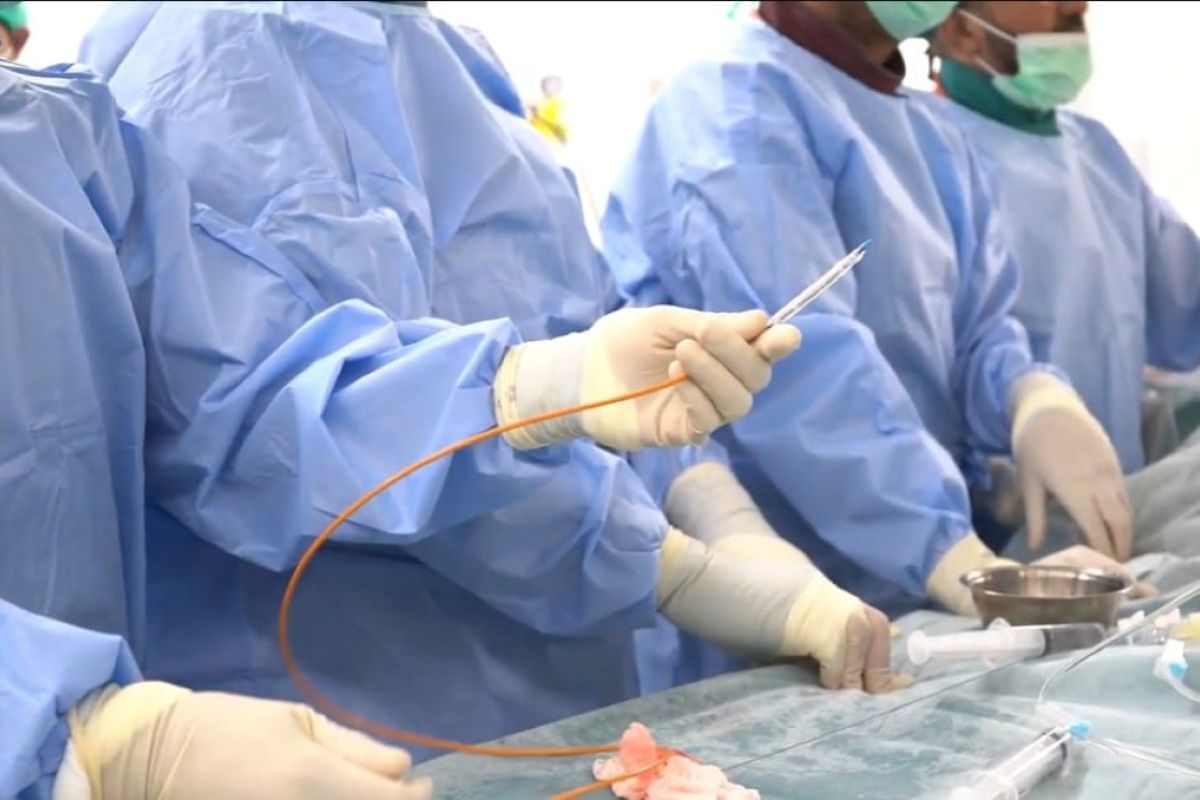
Jakarta (ANTARA) – Transcatheter Pulmonary Valve Implantation (TPVI) is an alternative to pulmonary valve replacement without open-heart surgery for patients with heart valve disorders who meet the clinical and anatomical criteria.
Interventional cardiologist and electrophysiologist at Heartology Cardiovascular Hospital, Dr Faris Basalamah, SpJP(K), said in Jakarta on Friday that TPVI involves replacing the pulmonary valve by inserting a catheter through a blood vessel and guiding it to the heart. The artificial valve is then positioned at a planned site based on an assessment of the patient’s anatomy and clinical needs.
Compared with open-heart surgery, the transcatheter approach does not require the chest cavity to be opened. For suitable patients, it may reduce surgical trauma and support faster recovery. However, suitability depends on the anatomy of the heart, the condition of the valve and the results of a comprehensive examination, he said.
Faris said TPVI requires careful planning, from assessing the heart’s anatomy and selecting the valve device to evaluating the outcome. The decision to use a transcatheter approach must therefore be made by the medical team in light of each patient’s condition.
Transoesophageal echocardiography (TEE) is also key to the procedure, helping doctors obtain a more detailed view of the heart’s structures.
Heartology Cardiovascular Hospital consultant paediatric cardiologist and congenital heart disease specialist Dr Radityo Prakoso said the procedure had been performed at the hospital on a 25-year-old woman with a history of Tetralogy of Fallot (ToF), a congenital heart defect that affects the heart’s structure and blood flow.
The patient underwent corrective surgery for ToF at the age of one year and four months, followed by the implantation of an implantable cardioverter-defibrillator (ICD) at 19. At 24, she again developed pulmonary valve insufficiency, or leakage, he said.
For patients with a history of open-heart surgery, repeat corrective procedures require careful clinical consideration. In this case, the operation when the patient was one year and four months old was an important factor in deciding how to proceed, as the risks of bleeding and complications during repeat surgery had to be taken into account.
TPVI can replace the pulmonary valve without another open-heart operation in patients who meet the clinical and anatomical criteria, he said.
For patients with Tetralogy of Fallot, treatment does not necessarily end once the congenital heart defect has been corrected. Over time, some may develop further problems, including pulmonary valve leakage, he said.
Long-term monitoring and assessment of the heart are therefore important in determining whether a patient needs further treatment.