
Expert to DPR: Family Ties Must Not Be the Sole Legal Basis for Asset Forfeiture
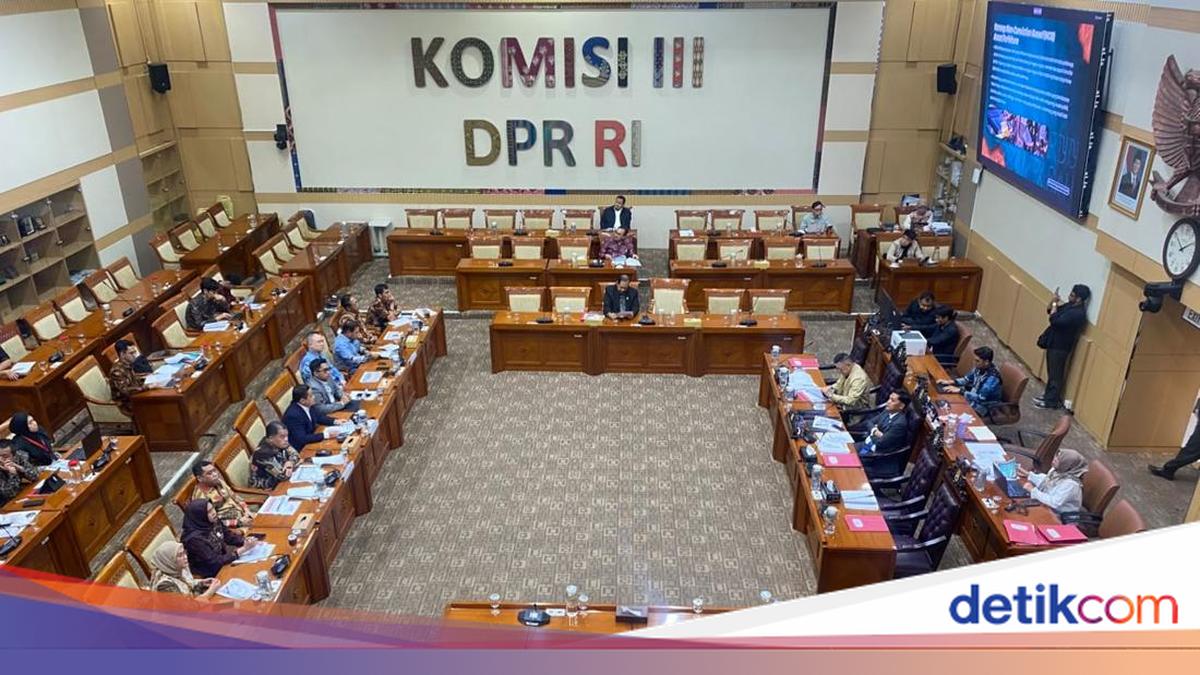
Commission III of the DPR held a Public Hearing (RDPU) with several academics to discuss the Asset Forfeiture Bill. During the meeting, Said Bakhri, an academic from the Faculty of Law at Jayabaya University, emphasised that differences in political choices or critical stances towards the government should not serve as a basis for asset seizure.
“Differences in political views or critical attitudes towards the government do not, in themselves, constitute a basis for asset forfeiture. The substance of this draft law is the ‘in rem’ principle, meaning asset seizure is based solely on suspected assets resulting from criminal acts, not due to political ideological sentiments,” Said stated during the meeting at Commission III of the DPR on Monday (28/09/2026).
Said Bakhri proposed that involved parties must remain protected, stating that the faults of a perpetrator should not be burdened upon their family or heirs.
“Equally important is the protection of related parties. This means there must be mitigation to protect those involved. First, regarding the principle of ‘nemo punlar pro alieno delicto’: the perpetrator’s wrongdoing should not be imposed on family, heirs, or any other parties not involved in the criminal act,” Said explained.
“The family relationship or closeness of an individual in asset forfeiture must have its role and legal connection to the crime proven by the perpetrator. Family or kinship ties must not be the sole legal basis for asset forfeiture,” he added.
He noted that punishment should only apply to those who break the law, and expressed hope that the Asset Forfeiture Bill would be able to deliver justice.
“We consider this part vital to scrutinise, because punishment applies only to the perpetrator who violates the law, not to others, even if that person has a kinship relationship with the perpetrator. This draft law must implement and adhere to this principle ‘in concreto’,” he said.
He also called for oversight of the Asset Forfeiture Bill to prevent abuse and extortion. Said mentioned that the presumption of innocence must be maintained and that the designation of a suspect must proceed through the judicial system.
“To prevent abuse and extortion—addressing the fear that this authority could be used to silence criticism, attack political opponents, or extort citizens—concrete safeguards must be established,” he said.
In his presentation, he also highlighted the need for a dedicated body to conduct oversight. He proposed the creation of a complaint channel accessible to all parties.
“Furthermore, to maintain effective oversight, a transparent and accessible complaint mechanism should be created, or a separate body should be formed through a whistleblowing system—an internal and external organisational mechanism to report violations or fraud,” he stated.
“We recommend that this draft law includes effective oversight by providing accessible complaint channels, followed by protection for every whistleblower,” he continued.
Said also noted that unexplained wealth must be examined through fair evidence, asserting that wealth discrepancies should not result in an automatic verdict.
“Therefore, this Asset Forfeiture Bill should not regulate illicit enrichment in a way that makes wealth discrepancy an automatic verdict. Every legal consequence must rely on clear legal certainty, verifiable evidence, and the opportunity for related parties to provide explanations,” he concluded.
Source: jawawa.id (https://jawawa.id/newsitem/expert-to-dpr-family-ties-must-not-be-the-sole-legal-basis-for-asset-forfeiture-1790575469)
Originally published by detikcom (https://news.detik.com/berita/d-8682369/pakar-di-dpr-hubungan-keluarga-jangan-jadi-dasar-hukum-tunggal-perampasan-aset), translated from Indonesian