
Expert: Soft approach has yet to shift dominance of terrorism criminal sanctions
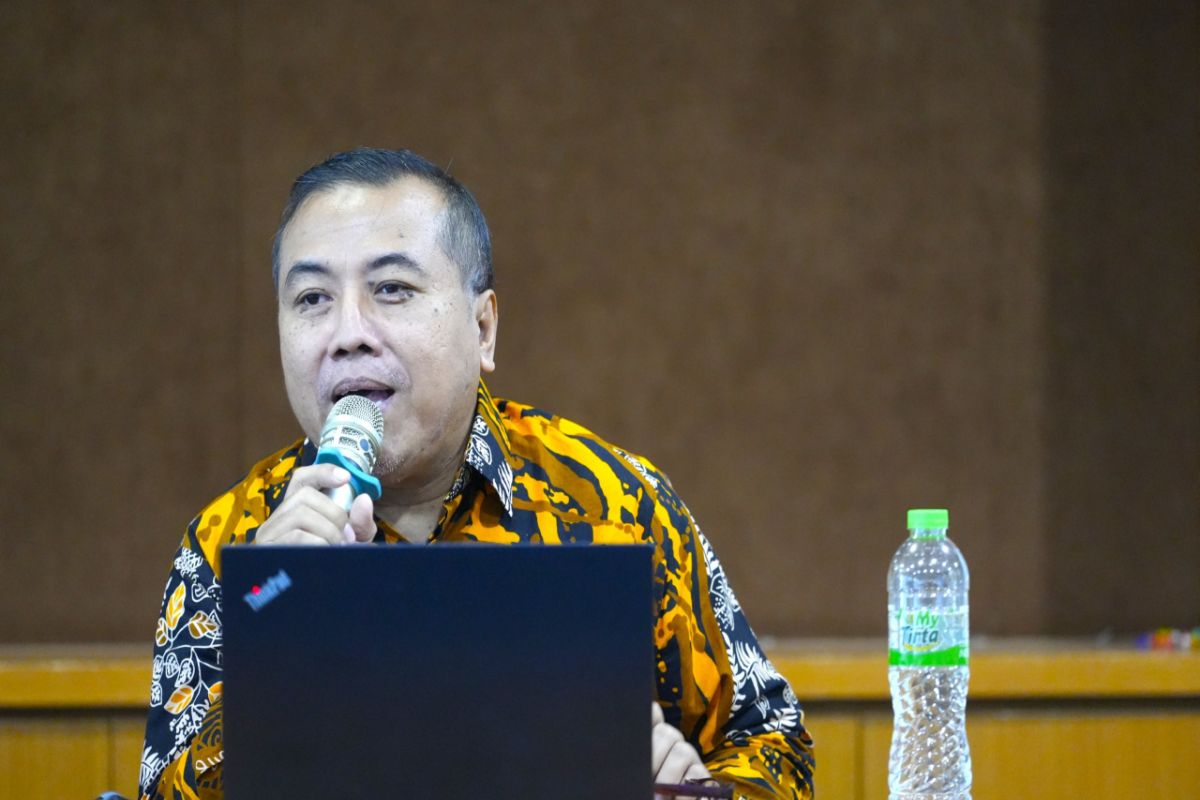
An International Relations expert from Muhammadiyah University of Yogyakarta, Surwandono, believes that the soft approach in tackling terrorism in Indonesia has not yet fully shifted the dominance of criminal sanctions and imprisonment.
“That figure has indeed decreased compared to Law Number 15 of 2003, which reached 94 per cent. However, criminal penalties and imprisonment remain the largest part of the policy mix,” Surwandono stated in Yogyakarta on Thursday.
Based on a content analysis of Law Number 5 of 201s regarding the Eradication of Terrorism Crimes, the proportion of criminal penalties and imprisonment still accounts for 77 per cent of the overall regulatory content.
According to him, the 2018 revision of the Terrorism Law, which strengthened the soft approach, has not been balanced by the institutionalisation of adequate deradicalisation and reintegration mechanisms.
Meanwhile, the content related to guidance, education, and reintegration increased from zero to four per cent. Prevention content also rose from 0.7 per cent to two per cent. The proportion of eradication increased from 5.2 per cent to eight per cent in the new regulation.
“This revision of the Terrorism Law represents a shift towards a soft approach, but its proportion is still small. Discussions on terrorism regulation still focus heavily on criminal penalties and imprisonment, whereas efforts to encourage perpetrators to return to civil society have not received a comparable share,” he said.
The government continues to strengthen prevention policies, including through Presidential Regulation Number 8 of 2026 concerning the National Action Plan for the Prevention and Countering of Violent Extremism Leading to Terrorism, or RAN PE 2026–2029.
According to him, the character of perpetrators and targets is becoming increasingly diverse, including the involvement of women and children, with activities no longer limited to Java and Bali.
He noted that there were at least 14 terrorism incidents during the 2000–2011 period, which increased to 20 incidents during the 2012–2023 period.
Therefore, he urged the government to strengthen structural approaches by increasing peace incentives so that former terrorists can be socially and economically reintegrated.
“It is important that peace can prevail. We must make peace initiatives larger than the incentives for conflict,” Surwandono emphasised.
He cited regions with histories of conflict, such as Papua and Aceh, as needing strengthened peace mechanisms and the continuous institutionalisation of peace incentives.
Surwandono concluded that law enforcement remains a vital part of counter-terrorism efforts.
“However, law enforcement must work in tandem with prevention, deradicalisation, reintegration, and socio-economic support to ensure long-term security,” he said.
Source: jawawa.id (https://jawawa.id/newsitem/expert-soft-approach-has-yet-to-shift-dominance-of-terrorism-criminal-sanctions-1790866755)
Originally published by Antara (Indonesian) (https://www.antaranews.com/berita/5767336/pakar-pendekatan-lunak-belum-ubah-dominasi-pidana-terorisme), translated from Indonesian