
Expert: Setting the Number of Presidential Advisory Council Members Is Constitutionally Permissible
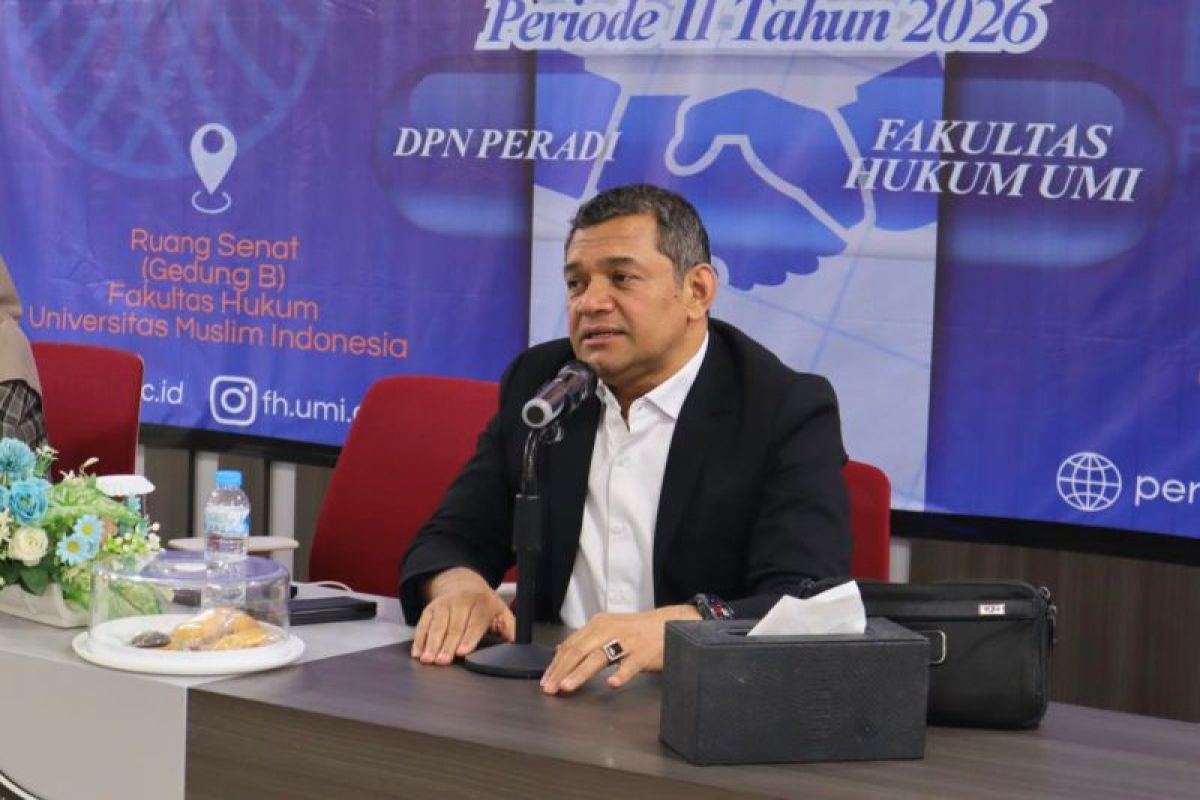
Jakarta (ANTARA) – Constitutional and state law expert Fahri Bachmid of the Indonesian Muslim University said that determining the number of members of the Presidential Advisory Council (Wantimpres) is constitutionally permissible as part of the President’s constitutional policy discretion.
Philosophically, he argued, the President, in exercising executive authority under the Constitution, needs advice and consideration to ensure that policies comply with the principles of law, democracy and good governance.
“This is in pursuit of the state’s objectives as set out in the Preamble to the 1945 Constitution of the Republic of Indonesia,” Fahri said in a statement received in Jakarta on Wednesday.
Fahri was responding to a petition for a substantive review of Article 7(1) of Law No. 64/2024, amending Law No. 19/2006 on the Presidential Advisory Council. The petition has been registered with the Constitutional Court under case number 389/PUU-XXIV/2026.
The petition was filed by Muhamad Riziq Maulana on 15 October 2026. It challenges the absence of a maximum limit on the number of Wantimpres members, arguing that this could result in an excessively large institution and burden the state budget (APBN).
President Prabowo Subianto appointed 26 Wantimpres members on 2 October 2026 through Presidential Decree No. 107/P of 2026.
As a matter of doctrine, Fahri explained, “constitutional permissibility” refers to an action being allowed within the constitutional framework, provided it has a valid legal basis and does not exceed the limits set by law.
He said the term was appropriate for describing the authority to determine the council’s membership, because it emphasises the legal basis that allows the President to set the number of members according to the needs of government.
Accordingly, he said, the absence of a numerical ceiling cannot automatically be taken as grounds for concluding that the provision is unconstitutional.
“Constitutionality must still be assessed with regard to the applicable norms, the basis of authority and the relevant constitutional principles,” he said.
Fahri noted that, under Indonesia’s constitutional system, the Wantimpres is tasked with advising and providing consideration to the President, as stipulated in Article 16 of the 1945 Constitution.
He said the regulatory changes introduced by Law No. 64/2024 allow flexibility in determining the council’s membership.
In his view, the wording means that membership is no longer subject to a specific maximum number, but is left to the President’s assessment of government needs, while taking account of the effectiveness of governance.
“The absence of a maximum number of members does not automatically make the provision unconstitutional. However, the President’s discretion must still comply with Article 7(1), particularly the principle of effective governance,” Fahri said.
Constitutionally, he argued, the policy is grounded in the presidential system of government. Article 4(1) of the 1945 Constitution states that the President holds executive power under the Constitution.
Within that framework, Fahri added, determining the structure of government’s supporting and advisory bodies is part of the President’s policy discretion, often explained through the concept of prerogative power.
He said the open-ended approach to membership is intended to give the President flexibility to incorporate expertise in various fields, including economics, law, social affairs and geopolitics, without being bound by a rigid numerical ceiling.
“Nevertheless, the President’s authority to determine institutional design is not unlimited; it is a sphere of policy that must be exercised in accordance with the Constitution and legislation,” he said.
Addressing criticism that the Wantimpres is too large and burdens the state budget, Fahri said the issue should be considered proportionately by distinguishing the President’s constitutional authority, choices in institutional design, and assessments of budget efficiency.
He said a large membership does not automatically make the council unconstitutional, just as the absence of a numerical ceiling does not automatically justify every decision on its size.
For that reason, Fahri said, questions about the constitutionality of the provision should be distinguished from evaluations of institutional effectiveness and accountability in the use of the state budget.
Source: jawawa.id (https://jawawa.id/newsitem/expert-setting-the-number-of-presidential-advisory-council-members-is-constitutionally-permissible-1792558454)
Originally published by Antara (Indonesian) (https://www.antaranews.com/berita/5801157/pakar-penentuan-jumlah-wantimpres-kebolehan-konstitusional-presiden), translated from Indonesian