
Expert Says State Losses Alone Insufficient to Prove Corruption
Jakarta (ANTARA) - Criminal law expert from the Christian University of Indonesia, Prof. Mompang Panggabean, has said that the element of fault (mens rea) must be proven to determine a person’s criminal liability in corruption cases.
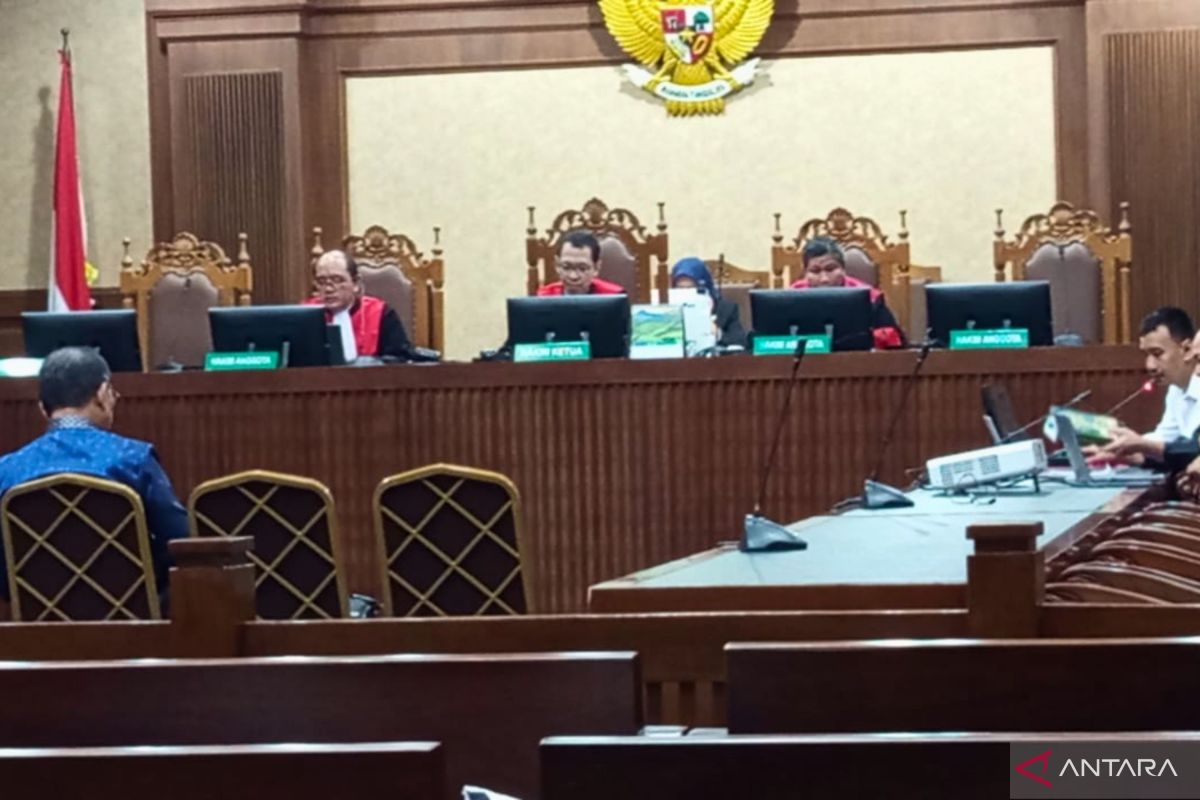
Mompang made the statement while testifying as an expert presented by the defence in the trial of an alleged corruption case involving national export financing at the Indonesian Eximbank (LPEI) at the Corruption Court of the Central Jakarta District Court on Monday.
“A person cannot simply be held criminally liable merely because the act they committed later turned out to be connected to the emergence of a loss,” he said.
Mompang explained that in criminal law there is “actus reus”, which refers to the element of the act, and “mens rea”, which relates to the mental attitude or fault of the perpetrator.
Actus reus is a Latin legal term meaning “guilty act”. In criminal law scholarship, actus reus refers to the physical element, the actual conduct, or the negligence of a person that violates the law. This element shows the objective side or the outward act of a crime.
According to him, the fulfilment of the element of the act alone is not sufficient to declare that a person can be held criminally liable, so the element of fault also needs to be proven.
Meanwhile, Article 36 paragraph (2), Mompang said, in principle regulates that criminal acts are committed intentionally, whereas criminal acts due to negligence can be punished only if expressly stipulated in laws and regulations.
During the trial, the legal counsel of one of the defendants described the mechanism for submitting financing at LPEI, which is carried out in stages, starting from the relationship manager as the proposer up to the decision-making by the committee.
According to the legal counsel, the proposer is tasked with collecting documents and preparing the financing proposal in accordance with procedures, while the final decision on granting the financing rests with the committee.
The alleged corruption case involving LPEI’s national export financing for the 2015-2020 period has ensnared eight defendants from the private sector as well as former officials and employees of LPEI.
Prosecutors suspect that the defendants jointly committed unlawful acts in the provision of financing facilities, which among other things used documents related to feasibility studies, asset appraisals, fiduciary arrangements, as well as invoices and contracts that were allegedly not in accordance with the actual conditions.
The defendants are charged under the provisions on corruption offences in the National Criminal Code as well as the Law on the Eradication of Corruption.
Source: jawawa.id (https://jawawa.id/newsitem/expert-says-state-losses-alone-insufficient-to-prove-corruption-1786377314)
Originally published by Antara (Indonesian) (https://www.antaranews.com/berita/5688243/ahli-sebut-kerugian-negara-tak-cukup-buktikan-seseorang-korupsi), translated from Indonesian