
Expert Says No Systemic Harm from Expired Internet Quota
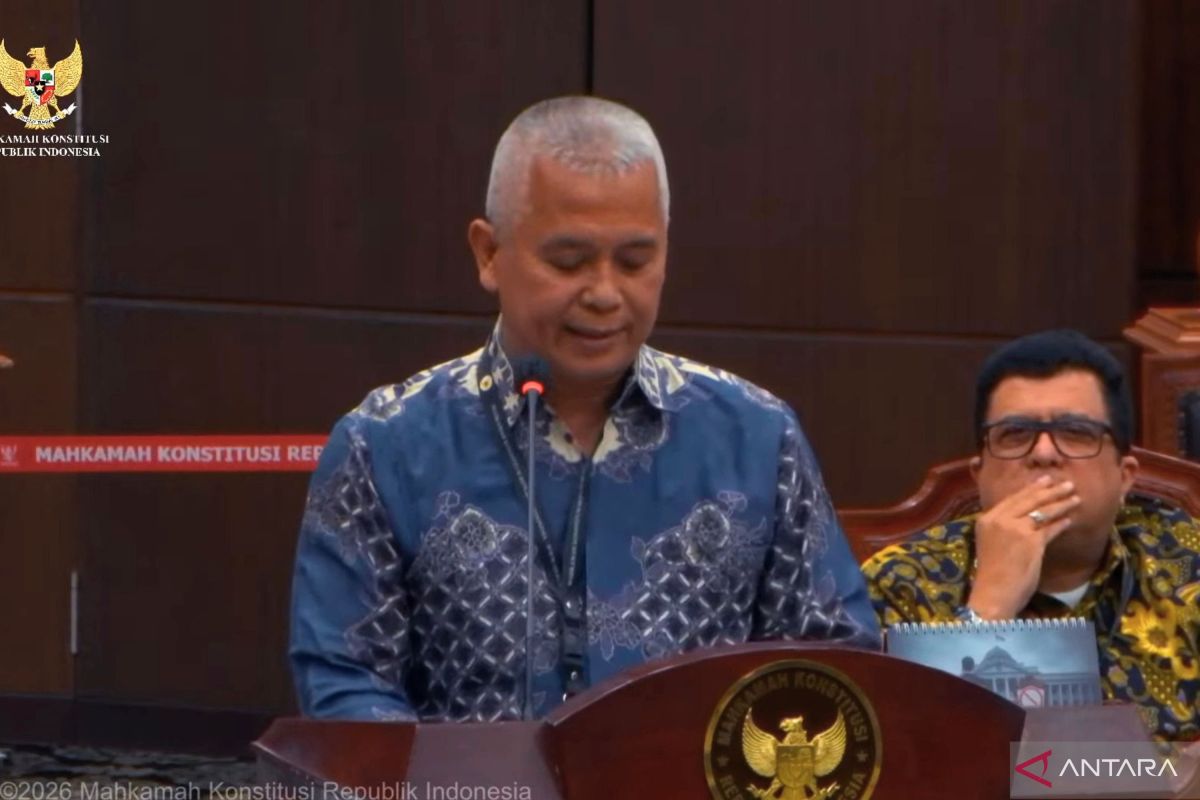
Jakarta (ANTARA) - An expert presented by the government during the judicial review of Law Number 6 of 2023 on Job Creation, Agung Harsoyo, stated that based on empirical facts, there is no systemic loss resulting from expired internet quotas.
He explained that if a system were truly structurally detrimental to consumers, clear symptoms would emerge, such as continuously rising quota prices, fewer service options, declining service penetration, deteriorating service quality, or market failure.
“However, what is happening in Indonesia is quite the opposite,” Agung said during a plenary session at the Constitutional Court (MK) in Jakarta on Monday.
He revealed that surveys by the Indonesian Internet Service Providers Association (APJII) show that in recent years, the number of internet users in Indonesia has increased, network capacity has grown, service coverage has expanded, service options have multiplied, product innovation continues to develop, and internet access costs have become increasingly affordable. Therefore, he stated, these facts demonstrate that the existing ecosystem is working effectively to produce benefits for the public.
From a legal principle perspective, Agung noted that based on the principles established in Article 2 of Law Number 36 of 1999 on Telecommunications—specifically the principle of benefit—the public has obtained wide and affordable digital access. Furthermore, regarding the principles of fairness and equality, he added that various segments of society can now choose services according to their needs and capabilities. Regarding the principle of legal certainty, he noted that rights, obligations, prices, and service terms are communicated transparently.
Consequently, he argued that when viewed as a whole, the telecommunications ecosystem shows that the state has fulfilled its regulatory obligations, operators have fulfilled their service provision obligations, and consumers have received their rights in terms of access, information, and freedom of choice. “The practice that has developed so far is not a relationship that disadvantages one party, but rather a balance of rights and obligations that produces mutual benefits for consumers, the industry, and the state,” he remarked.
Ag Agung, who is a lecturer at the School of Electrical Engineering and Informatics, Bandung Institute of Technology (ITB) and Head of the Information Technology Division at Perum Bulog, provided testimony as an expert in cases Number 2023/PUU-XXIII/2025 and 33/PUU-XXIV/2026.
Article 71, number 2 of the Job Creation Law contains two points: first, the rates for telecommunications network and/or service provision are determined by the providers based on a formula set by the central government. Second, the central government may establish upper and/or lower tariff limits for telecommunications provision, taking into account public interest and healthy business competition.
In petition number 273/PUU-XXIII/2025, online motorcycle taxi driver Didi Supandi and online culinary trader Wahyu Triana Sari challenged the system of expiring unused internet quotas at the end of the active period by telecommunications providers or mobile operators. The petitioners requested the Constitutional Court to interpret Article 71, number 2 of the Job Creation Law as: The determination of tariffs and telecommunications service schemes must provide a guarantee for the accumulation of remaining paid data (data rollover).
In petition number 33/PUU-XXIV/2026, TB Yaumul Hasan Hidayat, a university student, also challenged the same article. Yaumul argued that internet quotas significantly impact online learning, and that the unilateral deletion of quotas without consent or proper compensation is contrary to the principles of legal certainty and justice. In his petition, Yaumul requested that Article 71, number 2 of the Job Creation Law be amended to state: Internet quotas paid for by consumers must not be unilaterally deleted or expired, and in cases where validity periods are set, they must be accompanied by a fair, transparent, and proportional mechanism to ensure legal certainty and the protection of citizens’ constitutional rights.