
Expert: Revitalising KAI’s Historic Assets Must Preserve Cultural Values
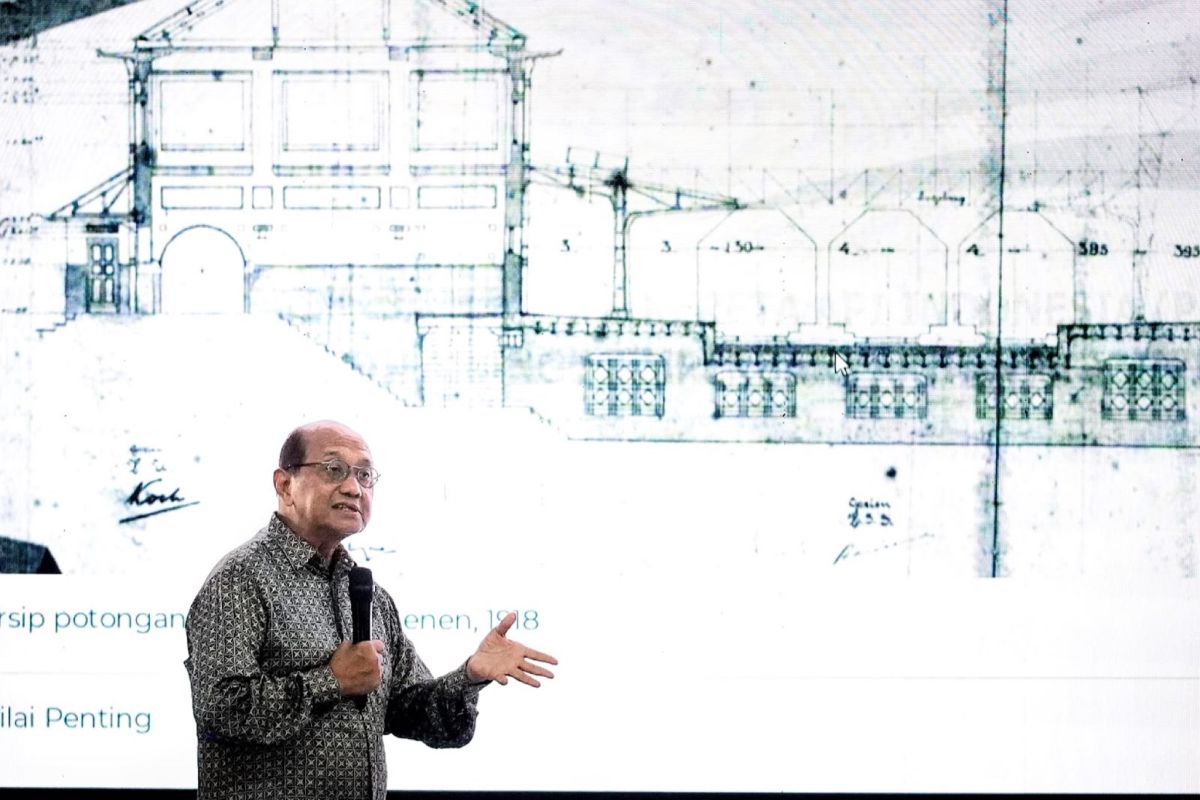
Jakarta (ANTARA) – Professor of Architecture at Gadjah Mada University (UGM) Prof. Ir. Ikaputra stressed the importance of preserving historic railway assets through an approach that combines the protection of cultural values with the sustainable use of buildings.
Stations, railway lines and supporting facilities, he said, not only reflect the development of transport systems but are also part of the identity and collective memory of communities.
“Cultural heritage has unique, distinctive and special qualities that need to be protected. Preservation must therefore begin with an understanding of the historical and cultural values it contains,” Ikaputra said in a statement in Jakarta on Thursday.
He explained that the concept of cultural heritage entails protecting objects of significant value, meaning that the use of historic buildings must take conservation rules and their original character into account.
Ikaputra said railway assets on Java were important to the history of global transport development because they formed part of a technological system that helped transform society and the economy.
This heritage includes railway lines, technology, land, station buildings and operational facilities, some of which remain in use today.
Revitalisation should therefore preserve authenticity and historical value while ensuring that the buildings remain relevant to the needs of contemporary society.
Meanwhile, Linda T. Wijaya, chief executive of the Indonesia Real Estate Institute (IREI), highlighted the importance of investment in ensuring the sustainable preservation of historic buildings. She spoke at the “Heritage Reimagined” Architecture Seminar, held as part of the Rail Heritage Forum 2026 in Semarang on Monday (9 November).
Historic buildings have economic potential because they offer distinctive architectural identities, rarity and tourism and commercial appeal that are not easily found in modern buildings, Linda said.
“Preservation requires investment, and investment requires incentives,” she said.
She explained that adaptive reuse of historic buildings could create opportunities for economic activities, including food centres, commercial spaces, public events and historical tourism destinations.
However, such development requires an assessment of investment viability, taking into account the building’s physical condition, restoration costs, market potential and capacity to generate sustainable income.
Linda also stressed the need for legal certainty, flexibility in how buildings can be used, simpler licensing procedures, and support for public-private partnerships to attract investment in historic assets.
She cited examples of historic buildings repurposed in other countries, including the Red Brick Warehouse in Yokohama, Japan; CHIJMES in Singapore; and Grand Central Terminal in New York, United States.
These examples show how historic buildings can retain their architectural character while serving as centres of economic and social activity, Linda said.
Successful development of historic assets requires collaboration, she added: the government as regulator and guardian of cultural heritage, the private sector as a source of investment and innovation, and the public as beneficiaries.
The two experts’ perspectives offer input for state-owned railway operator PT Kereta Api Indonesia (Persero), or KAI, as it seeks to optimise historic assets across the country, including old stations, operational buildings and railway precincts with economic development potential.
Source: jawawa.id (https://jawawa.id/newsitem/expert-revitalising-kais-historic-assets-must-preserve-cultural-values-1794484646)
Originally published by Antara (Indonesian) (https://www.antaranews.com/berita/5849751/pakar-revitalisasi-aset-bersejarah-kai-perlu-jaga-nilai-budaya), translated from Indonesian