
Expert Reveals Estimated Time of Death for Bank Branch Head, Suspected to Have Been Alive When Dumped
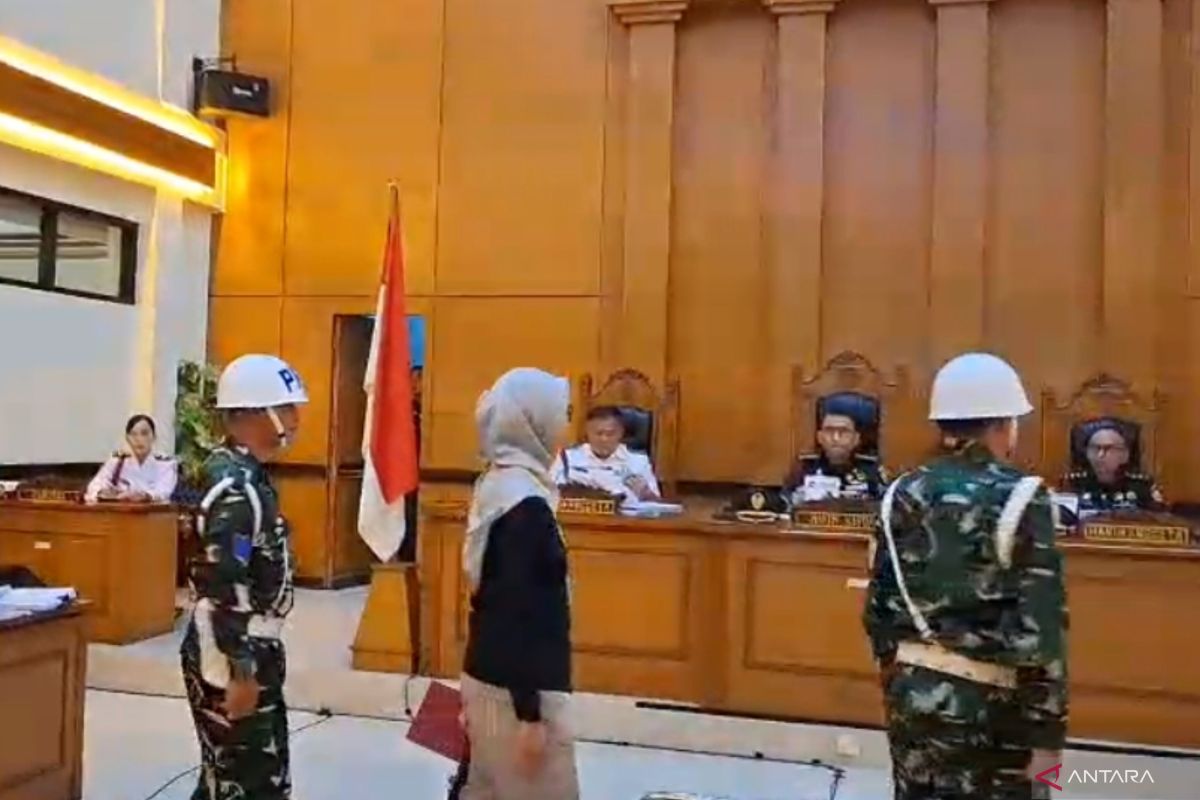
Jakarta (ANTARA) - Forensic expert from the Kramat Jati Police Hospital, Astri Megaratri Pralepda, revealed that the victim of the kidnapping and murder of a bank branch head with initials MIP (37) was suspected to still be alive when first placed at the discovery site in Bekasi, based on the estimated time of death from the forensic examination.
“Based on the forensic examination results, the victim is estimated to have died within the time frame between 00:45 WIB and around 06:45 WIB,” said Astri during the additional witness examination hearing in the alleged kidnapping and murder case against a bank branch head in Jakarta with initials MIP (37) at the Military Court II-08 Jakarta, Cakung, East Jakarta, on Monday.
Astri stated that the estimated time of death was obtained from the external examination of the body conducted on 21 August 2025 around 14:45 WIB at the forensic installation of the Kramat Jati Police Hospital.
According to Astri, the forensic team examined several signs of death, from the condition of rigor mortis, livor mortis, to the victim’s corneal condition. From these results, it was found that the victim’s body had not yet experienced full rigor mortis.
“The victim’s body joints could still be moved, and livor mortis was still absent with pressure,” said Astri.
She explained that based on these forensic indicators, the victim was estimated to have died around eight to 14 hours before the external examination was conducted. This statement drew the attention of the panel of judges, who delved into the possibility that the victim was still alive when first placed at the discovery site.
The judge linked this to information that the victim was suspected to have been at the discovery site around 00:00 WIB to 00:30 WIB. Based on the time of death calculation provided by the expert, there is a possibility that the victim had not yet died when first at that location.
In response to the judge’s question, Astri said that if using the maximum estimate of 14 hours before the examination, then there is a possibility the victim was still alive when placed at the discovery site.
“Based on my earlier calculation, if placed at 00:00, then the body was still alive,” said Astri.
However, Astri stated that forensic science cannot determine the exact time of death very specifically. According to her, there are many factors that can affect a person’s body condition after death.
Some of these factors include environmental temperature, the victim’s physical condition, pre-death activity, muscle mass, and the location where the body was found.
Furthermore, a cold environment can slow the onset of rigor mortis. In this case, the victim was found in a bushy area in the early morning, so the environmental temperature is considered to have significantly influenced the victim’s body condition.
“A cold condition can slow the occurrence of rigor mortis,” said Astri.
During the trial, Astri also provided a scientific explanation regarding the process of rigor mortis. According to her, the human body does not immediately stiffen after death because it still has an energy reserve in the form of ATP in the muscles.
“Rigor mortis usually begins to appear around two hours after death and reaches its peak around 12 to 13 hours,” said Astri.
However, this process is not always the same for everyone. Someone who experienced heavy physical activity or resistance before death could experience rigor mortis faster than someone who did not move much.
In addition, the victim’s body temperature does not immediately become cold right after death because the body still retains heat.
“Immediately after death, we still have a heat reserve in the body, so it does not immediately become cold,” said Astri.
The forensic expert’s testimony becomes one of the important points in the trial because it directly relates to the reconstruction of the victim’s time of death and condition when first discovered by residents in the Bekasi area in the morning.