
Expert Reveals Challenges for Indonesian Cooperatives in the Digital Era and Necessary Preparations
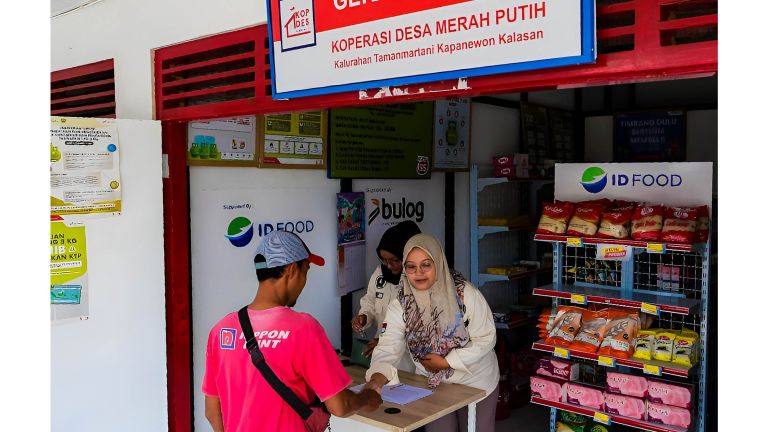
Cooperatives in Indonesia are facing new challenges due to technological shifts, the development of digital markets, changing value chain dynamics, and an increasingly complex business environment.
Amidst these changes, cooperatives are required to adapt and become more modern. However, modernisation does not mean abandoning the fundamental principles that form the identity of a cooperative.
Dr Suharno M.Adev, a lecturer at the Faculty of Economics and Management (FEM) at IPUS University, stated that the main challenge for Indonesian cooperatives does not lie in the irrelevance of cooperative principles. Rather, the issue lies in the gap between those principles and the institutions that implement them.
“The primary problem for Indonesian cooperatives is not the irrelevance of cooperative principles, but the gap between normative principles and the institutional arrangements that operationalise them,” Dr Suharno asserted, as reported by IPB University on Monday (14/09/2026).
According to Dr Suharno, member ownership, democratic control, mutual benefit, and service to members are the cooperative identities that must be maintained.
Meanwhile, aspects such as governance, capital structure, audit systems, professional management, networks or federations, digital platforms, and business models can be developed in accordance with environmental changes.
Dr Suharno also compared the journey of cooperatives in Indonesia with several successful global cooperatives that have achieved large-scale growth, such as Fonterra in New Zealand, Rabobank in the Netherlands, and Amul in India.
In his view, the experience of these global cooperatives demonstrates that business scale growth can go hand-in-hand with cooperative principles through institutional innovation.
Strategies that can be learned include organisational consolidation, professionalisation of management, the formation of federations, innovation in capital structure, value chain integration, business diversification, brand strengthening, digitalisation, and investment in education, research, and development.
“These experiences are not meant to be copied directly by Indonesia. The key lesson is how cooperatives can maintain their basic principles while adjusting their institutional mechanisms,” he explained.
In his view, one of the critical issues that needs addressing is the pattern of member participation. The presence of members should not merely be measured by their numbers, but must be translated into tangible economic participation.
Ideally, cooperative members should act as both owners and users. They should not only own the cooperative but also utilise its services, invest, perform oversight, voice aspirations, and derive economic benefits from the cooperative’s existence.
Therefore, the metrics for cooperative success also need to be expanded. Success should not be judged solely by the size of assets, turnover, or Surplus of Net Income (SHU), but also by the cooperative’s ability to improve the economic position of its members, expand market access, strengthen bargaining power, and ensure business sustainability.
Source: jawawa.id (https://jawawa.id/newsitem/expert-reveals-challenges-for-indonesian-cooperatives-in-the-digital-era-and-necessary-preparations-1789372290)
Originally published by olenka.id (https://olenka.id/pakar-ungkap-tantangan-koperasi-indonesia-di-era-digital-ini-yang-harus-disiapkan), translated from Indonesian