
Expert proposes Ministry of Basic and Secondary Education to develop transport safety curriculum
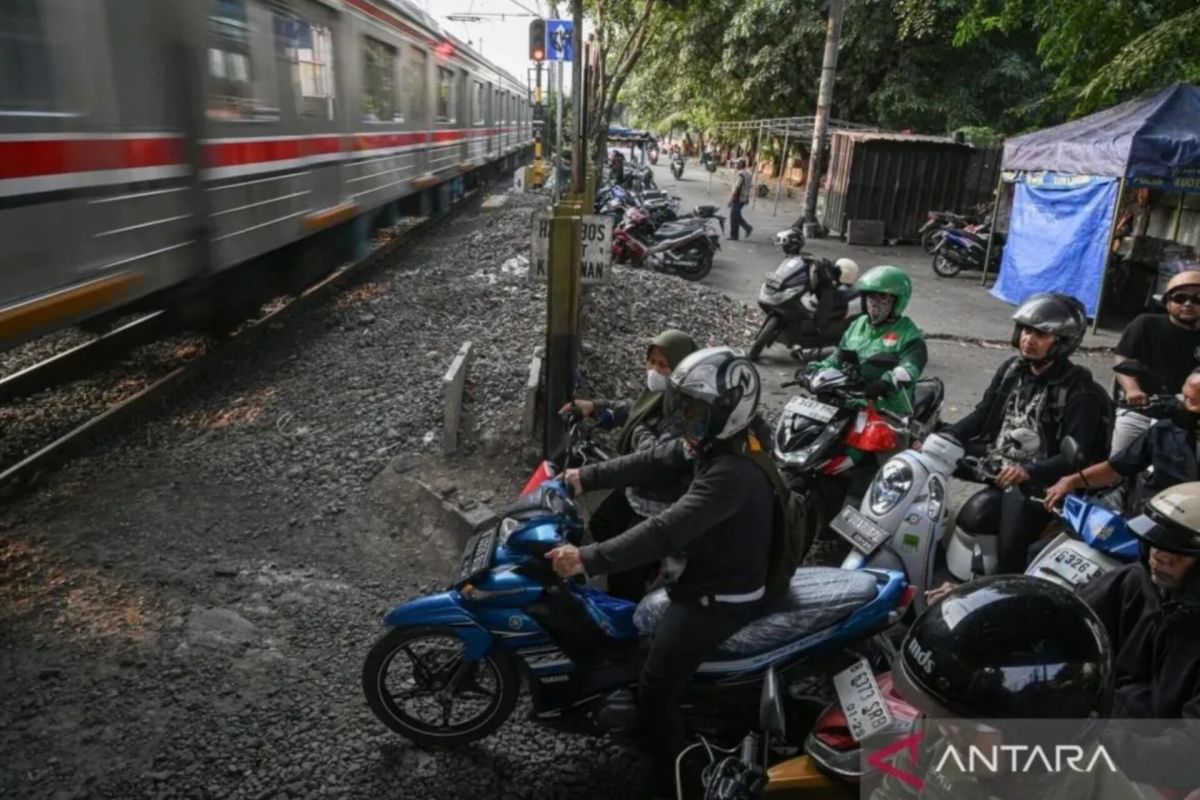
Jakarta (ANTARA) - Transport expert Djoko Setijowarno has proposed that the Ministry of Basic and Secondary Education of the Republic of Indonesia develop a transport safety curriculum from an early age, following the train accident at Bekasi Timur Station that claimed over a dozen lives.
“It is recommended that the Minister of Education develop a transport safety curriculum so that children from an early age understand the importance of traffic safety,” said Djoko when contacted in Jakarta on Wednesday.
Djoko emphasised that the curriculum should include the 3E concept, namely education, engineering, and enforcement.
According to him, instilling traffic safety awareness from an early age is important so that it becomes a guideline in daily life.
“Transport safety is a long-term investment, not just a cost burden,” he stated.
He also stressed the importance of collaboration between the Ministry of Basic and Secondary Education and the Ministry of Transportation, as well as other relevant parties, in developing and implementing the curriculum effectively.
One aspect of education in the curriculum, said Djoko, could teach that every road user intending to cross a railway line must prioritise the train’s passage.
Furthermore, Djoko proposed that the curriculum cover the fact that level crossing gates are not the primary safety device and not a traffic sign, but merely an aid to secure train travel.
“Until now, many victims have died in vain due to negligence and indiscipline when crossing railway lines,” he said.
Based on data from the Directorate General of Railways under the Ministry of Transportation in 2026, there were 40 accidents at level crossings. The majority of incidents (57.5 per cent) occurred at crossings without gates, with 23 cases, while the other 17 cases (42.5 per cent) occurred at gated crossings.
The main trigger for accidents was dominated by driver behaviour of forcing through (34 cases), followed by stalled vehicles (4 cases), and delays in closing gates (3 cases). The impact of these accidents was very fatal, claiming 25 lives (61 per cent), as well as causing 5 serious injuries (12 per cent) and 11 minor injuries (27 per cent). The vehicles involved included 22 cars (55 per cent) and 18 motorcycles (45 per cent).
Furthermore, the causes of stalling incidents at crossings were (1) cars stopping with engine failure on the crossing, (2) rear motorcycle wheels getting stuck due to carrying heavy loads of goods, such as chickens, (3) cars experiencing engine trouble while on the tracks, and (4) low-deck trucks getting stuck because the gradient elevation at the crossing was not suitable for the truck.