
Expert Proposes Clear Limits on Assets That Can Be Seized in Asset Forfeiture Bill
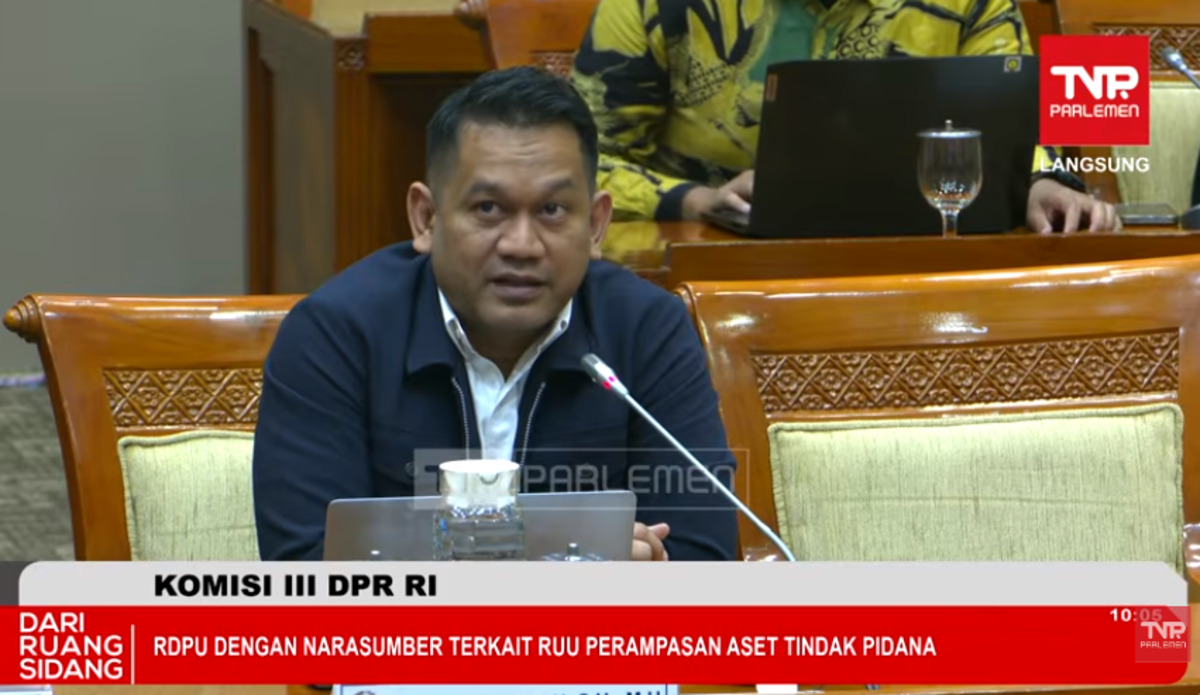
Criminal law expert from Tarumanagara University, Heri Firmansyah, has highlighted the importance of clear regulations regarding the types of assets that can be seized in the Asset Forfeiture Bill to ensure legal certainty.
He explained that in criminal law, assets that can be confiscated generally include the proceeds of crime as well as the tools used to commit the crime.
“In one crime, there are tools used and there are proceeds of the crime. Both can become objects of asset forfeiture,” he stated during the Public Hearing (RDPU) of Commission III of the House of Representatives (DPR RI) on Asset Forfeiture, in the parliamentary complex in Jakarta on Monday (6/4).
However, Heri warned that phrases such as “known or reasonably suspected” must be regulated carefully to avoid opening the door to abuse of authority.
“That phrase is indeed important, but in practice, it must be selected carefully and technical rules are needed so that it is not misused,” he said.
He also highlighted the importance of the mechanism for reversing the burden of proof in certain cases, where the asset owner is given the opportunity to prove the origin of their wealth.
“There must be room for someone to prove that the assets they own do not originate from criminal acts,” he explained.
In addition, Heri touched on the issue of assets that are disproportionate to the owner’s profile, which often becomes an entry point for law enforcement.
“This is interesting, because wealth can be calculated, but its origin often becomes a problem and can lead to debate,” he said.
Based on that, he encouraged that the Asset Forfeiture Bill be formulated firmly and without multiple interpretations.
“In criminal law, rules must be clear, firm, and must not open the door to analogy. Do not let broad interpretations cause law enforcement to deviate from its path,” he concluded.