
Expert Projects Gradual Decline in Pertamax Fuel Prices Through December
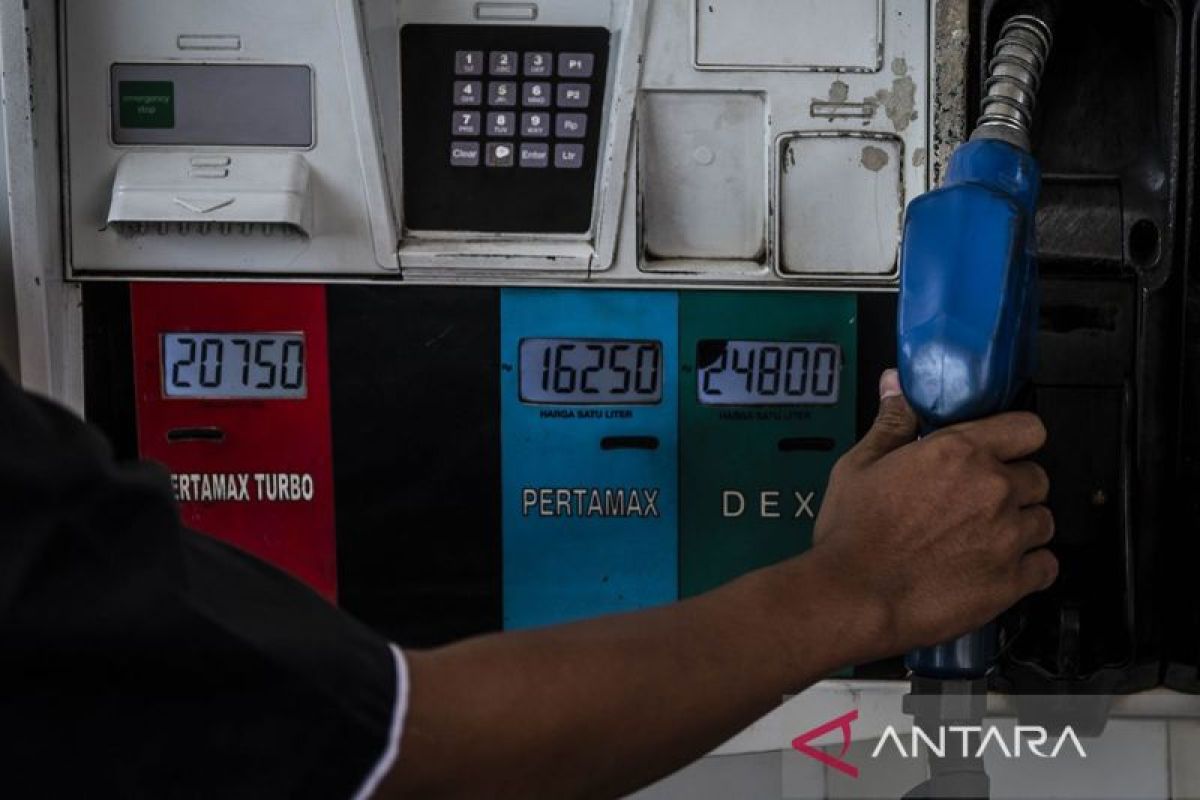
Jakarta (ANTARA) - Energy economics expert from Padjadjaran University (Unpad), Yayan Satyaki, projects that the price of non-subsidised Pertamax fuel will decline gradually from Rp16,250 per litre in June to a range of Rp12,100–Rp13,500 per litre by December 2026. “Room for non-subsidised fuel price reductions has opened up. Dexlite and Pertamina Dex have already fallen,” Yayan said when contacted by ANTARA from Jakarta on Saturday. He projects the Pertamax price will drop to Rp15,228 per litre in July, then to Rp14,557 in August, Rp14,112 in September, Rp13,814 in October, Rp13,614 in November, and Rp13,479 in December. The projection assumes the Indonesian Crude Price (ICP) will gradually decline to USD 90.6 per barrel by December 2026 and the rupiah exchange rate will strengthen from Rp17,927 to Rp16,959 per US dollar over the same period. Yayan further noted the dynamic nature of the conflict between the United States, Israel, and Iran. Brent crude oil prices briefly touched USD 117 per barrel in April before quickly correcting to around USD 78 per barrel following a US-Iran peace framework that was initially set to be signed in Switzerland on Friday (19 June). However, Brent crude prices rose again above USD 80 per barrel on Friday (19 June) as investors weighed increased geopolitical risks after the planned US-Iran negotiations were cancelled and Israel launched new attacks on Lebanon. Global crude oil prices influence the Indonesian Crude Price (ICP), which is used to determine non-subsidised fuel prices. The 2026 state budget (APBN) macro assumptions set the ICP at USD 70 per barrel. “My recommendation is that the government should prepare scenario simulations, for example an ICP of USD 70–90 per barrel, because regime uncertainty is far greater than ordinary statistical error,” Yayan said. Nevertheless, he believes Indonesia’s fiscal buffers remain strong enough to handle a scenario involving the closure of the Strait of Hormuz, although a significant portion would be utilised. He explained that the government holds a Budget Surplus Balance (SAL) of approximately Rp420 trillion and maintains the deficit at around 2.9 percent. With an average ICP of USD 90 per barrel, the deficit would widen by around Rp136 trillion. Meanwhile, a scenario involving the re-closure of the Strait of Hormuz that pushes the average ICP to USD 100 per barrel would widen the deficit by approximately Rp204 trillion. “This means the Rp420 trillion SAL can still cover the re-closure scenario without cutting spending, but it serves as a one-time insurance, not a structural solution,” Yayan said.