
Expert Presents Legal Aspects of Decolonisation in PLK Legal Entity Revocation Trial
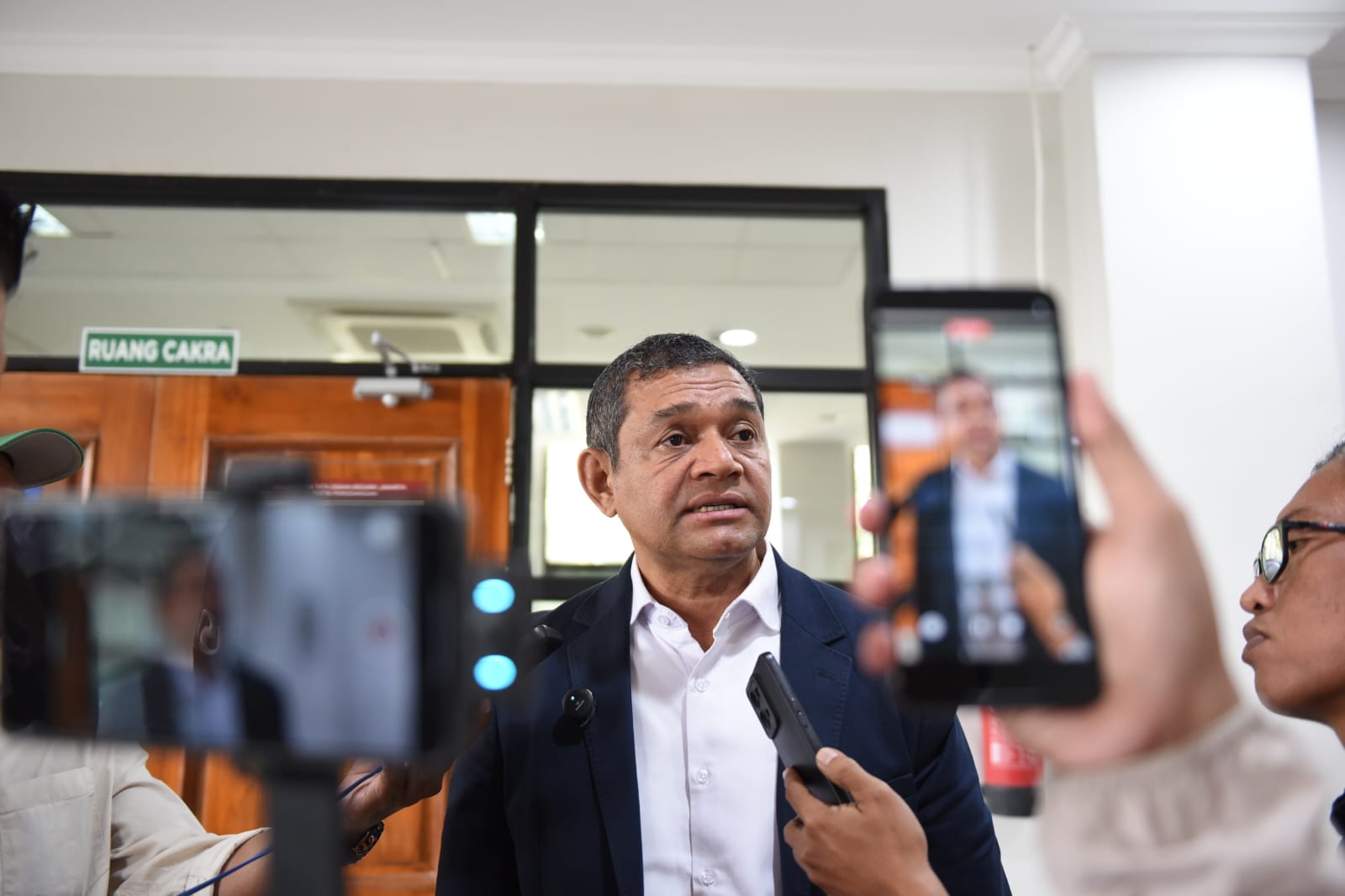
The State Administrative Dispute trial between Perkumpulan Lyceum Kristen (PLK) and the Directorate General of General Legal Administration (Ditjen AHU) of the Indonesian Ministry of Law has entered a crucial phase. During the hearing at the Jakarta State Administrative Court (PTUN), the defendant presented a prominent legal expert to examine the dimensions of decolonisation and state sovereignty behind the revocation of the association’s legal entity status.
The Ditjen AHU of the Ministry of Law presented Constitutional and State Administrative Law Expert from the Indonesian Muslim University (UMI), Fahri Bachmid, as an expert to strengthen the legal arguments for state intervention.
Case Number 435/G/2025/PTUN.JKT is being examined by a Panel of Judges led by Pulung Hudoprakoso, S.H., M.H., as Chair of the Panel, accompanied by Member Judges Meita Sandra Merly Lengkong, S.H., and Rachmadi, S.H. The defendant’s team is coordinated directly by Fitra Kadarina, S.H., M.H., as Head of the Advocacy Team for the Directorate of Business Entities at Ditjen AHU, Ministry of Law.
This dispute originated from the issuance of Minister of Law Decree Number AHU-08.AH.01.43 of 2025, which officially revoked PLK’s legal entity status. The government took this step because PLK claimed to be the legitimate successor of the colonial-era organisation Het Christelijk Lyceum (HCL), a school established by the Dutch East Indies in Dago, Bandung, in 1926, which was juridically dissolved and declared a prohibited organisation in 1960.
In his presentation at the trial, Fahri Bachmid emphasised that this case should not be simplified as merely an administrative dispute. “This case has constitutional dimensions closely related to the state’s legal politics, the exercise of national sovereignty, decolonisation policy in Indonesia’s legal history, and the relationship between state action and the rule of law principle guaranteed by the 1945 Constitution,” Fahri explained on Saturday (13/6/2026).
Fahri elaborated that the legal basis for the dissolution of HCL is founded on Government Regulation in Lieu of Law (Perpu) Number 50 of 1960. This norm is a manifestation of the post-independence state policy to protect national sovereignty, control foreign influence, and reorganise organisations operating within the jurisdiction of the Republic of Indonesia.
The legal politics of decolonisation and nationalisation of foreign assets were subsequently reinforced through the Dwikora Cabinet Presidium Regulation Number 5/Prk/1965, which focused on regulating organisations and securing ex-colonial assets. These historic steps in the late 1950s and early 1960s are considered aligned with the spirit of the Preamble and Article 33 of the 1945 Constitution to erode foreign dominance.
From a constitutional law perspective, the state holds full authority to regulate, supervise, restrict, and even dissolve legal entities under its flag. Fahri asserted that the Indonesian Ministry of Law’s action in revoking PLK’s legal entity status was appropriate and binding. “The revocation of the legal entity status of Perkumpulan Lyceum Kristen (PLK) was carried out by the Ministry of Law based on the Contrarius Actus Principle—where an institution possessing the authority to issue a permit or legal status automatically possesses the authority to cancel or revoke it,” Fahri concluded.