
Expert: PFII governance needs legal certainty to attract investors
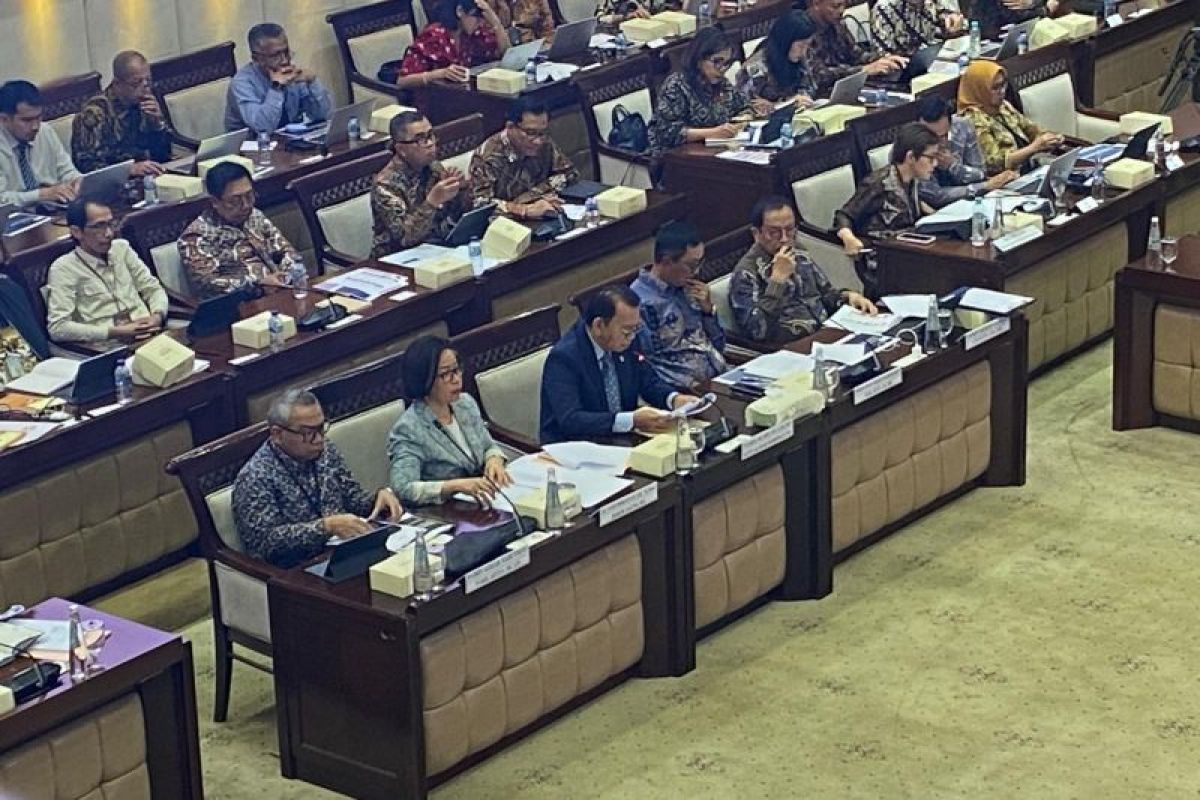
Jakarta (ANTARA) - Rahma Gafmi, a professor at the Faculty of Economics and Business at Airlangga University (Unair), believes the governance of the Indonesia International Financial Centre (PFII) requires legal certainty to attract global investors, as consistent law is considered more decisive than tax incentives in building trust.
“The most trusted governance model is one that provides legal certainty (laws that do not keep changing) and clarity of the rules of the game. If Indonesia can demonstrate that the PFII is a jurisdiction where the law is above everything and not interests above the law, then tax incentives are merely a bonus, not the main reason they come,” Rahma said in a written response to ANTARA received in Jakarta on Saturday.
To gain the trust of international investors, particularly world-class institutional investors, Rahma reminded that the PFII governance model cannot simply imitate domestic regulations.
“The PFII must adopt a hybrid governance model that combines international legal certainty with the supremacy of national authority,” she said.
She said international investors are very accustomed to common law systems such as those in Singapore, Hong Kong, or Dubai. Therefore, the PFII needs a special court or an international arbitration panel that applies common law principles to resolve commercial disputes.
“The goal is to provide a sense of security that contract disputes will not get trapped in lengthy, unpredictable, or biased local court bureaucracy,” Rahma explained.
In addition, she emphasised the importance of regulatory independence. The governance model, she said, must establish a clear separation between the government as policymaker and the regulatory authority as supervisor.
“Structurally, the PFII authority must have a supervisory board filled with international professionals (not merely bureaucrats),” said Rahma.
She added that decisions on permits, licences, and sanctions must also be based on transparent and non-political technical rules. If the regulatory authority can be intervened in by ministries or political actors, investors will withdraw immediately.
Furthermore, to remain relevant to financial innovation such as digital assets or green financing, the PFII is deemed to need a credible regulatory sandbox. She urged the PFII to provide room for innovation without sacrificing Anti-Money Laundering (AML) and Counter-Terrorism Financing (CTF) standards.
“The standards must strictly adopt FATF (Financial Action Task Force) standards from day one. Global investors will not enter a jurisdiction at risk of being placed on the global grey list,” Rahma explained.
According to her, trust also needs to be built through data that can be verified in real time. All company data, beneficial ownership, and capital flows must be documented in a secure, integrated digital system that can be independently audited. Reporting obligations must be aligned with international reporting standards.
Rahma also viewed that the PFII governance model must apply a two-track approach. Under the first track, the PFII Authority is responsible for managing the zone’s operations and promotion.
Meanwhile, under the second track, national authorities such as Bank Indonesia (BI), the Financial Services Authority (OJK), and the Directorate General of Taxes (DJP) continue to carry out macroprudential supervision and national tax compliance functions.
“The PFII Authority must not have the authority to grant exemptions from national tax obligations or monetary rules without the approval of an independent central authority,” said Rahma.
In addition, she said, it is also important to apply good governance in the use of Danantara funds. If Danantara becomes a source of capital, its governance must follow international sovereign wealth fund standards, such as the Santiago Principles.
In this regard, according to her, Danantara’s financial reports as an investor in the PFII must be transparent, audited by an international public accounting firm, and have a clear investment mandate that separates the state’s social mission from the commercial objectives of the project.
Source: jawawa.id (https://jawawa.id/newsitem/expert-pfii-governance-needs-legal-certainty-to-attract-investors-1784364772)
Originally published by Antara (Indonesian) (https://www.antaranews.com/berita/5655196/pakar-tata-kelola-pfii-butuh-kepastian-hukum-demi-tarik-investor), translated from Indonesian