
Expert: NCB Model Illegal Until Asset Forfeiture Bill Passed
True asset recovery success is measured by investigators’ ability to uphold the legality of a seizure in court through to a legally binding verdict.
Jakarta (ANTARA) — Asset recovery expert Chuck Suryosumpeno has warned that the independent forfeiture model (in rem forfeiture, or non-conviction based asset forfeiture/NCB) has no legal footing in Indonesia as long as the Asset Forfeiture Bill has not been passed.
According to him, Indonesia’s current criminal procedure law is still based on proving an individual’s guilt (in personam forfeiture).
“So as long as the Asset Forfeiture Law does not exist, investigators cannot try or seize assets in advance without legal clarity on the owner’s status. An asset is attached to its legal subject,” Chuck said in a statement in Jakarta on Tuesday.
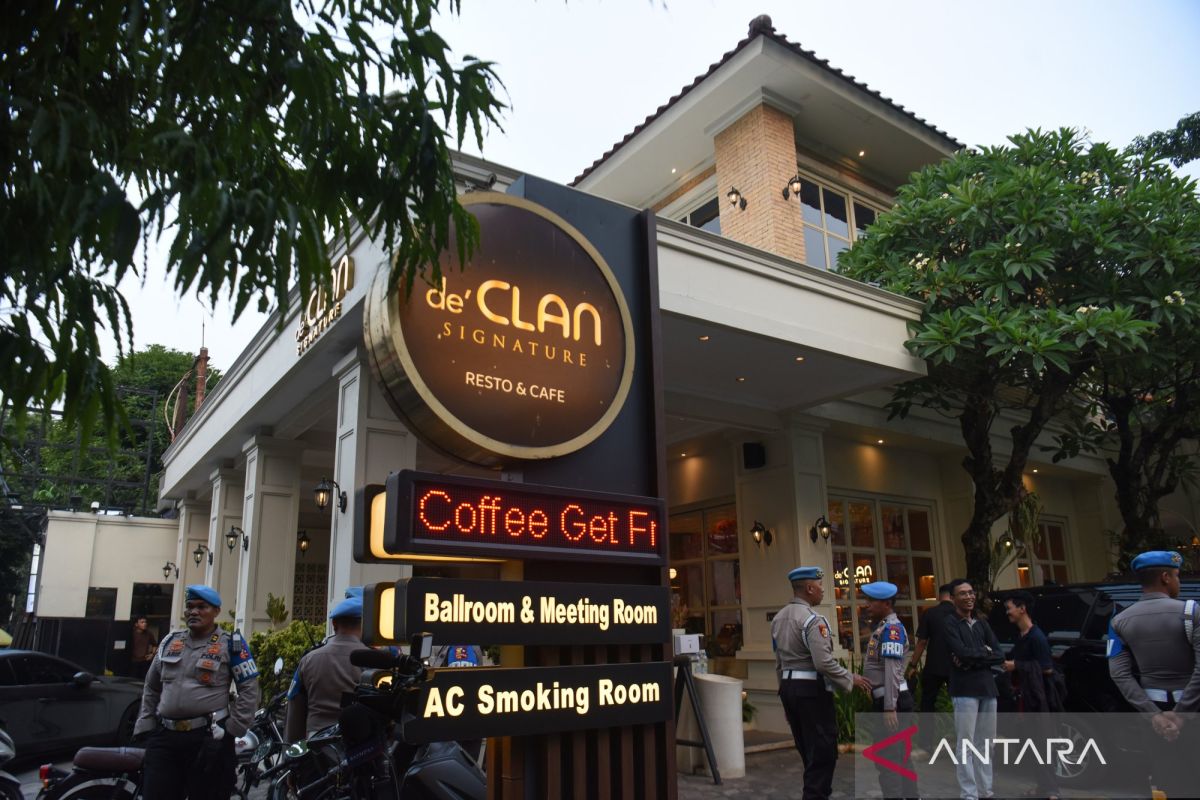
In his view, law enforcement’s seizure of the de’CLAN Signature café and a house in Sentul, Bogor, was premature and bypassed procedural legal corridors, as it was carried out before investigators had named a single suspect or obtained a calculation of actual losses to state finances.
The founder of the Attorney General’s Office Asset Recovery Centre (PPA Kejagung) added that investigators’ manoeuvre, justified as securing evidence in order to ensnare former Head of the Special Crimes Division Febrie Adriansyah (FA) and private party Don Ritto (DR), in fact carries an extremely heavy evidentiary burden.
This is because, he said, investigators must prove through a precise tracing of fund flows, or money trail (follow the money), that the de’CLAN café and the Sentul house were indeed derived from criminal proceeds or used as instruments of crime, so that they can validly be categorised as ‘criminal assets’.
Chuck argued that investigators are often trapped in the euphoria of seizing physical assets early on, whilst neglecting the strength of the causal relationship (nexus) that forms the soul of asset recovery.
He said the burden of ‘weaving’ that thread of evidence rests entirely with investigators, not on the asset owners, who have suddenly been unilaterally saddled with a reversed burden of proof.
For this reason, he stressed that asset recovery is not merely about how many assets can be seized, or how quickly, at the outset.
“True asset recovery success is measured by investigators’ ability to uphold the legality of that seizure in court through to a legally binding verdict,” Chuck said.
The former senior prosecutor emphasised that formal legality on paper must align directly with the substance of the evidence in the field.
Therefore, until the Asset Forfeiture Bill is passed to provide the driving force for shifting the burden of proof onto the assets, he continued, 100 per cent of the burden of proving the nexus lies with investigators, and if they fail, the assets must be returned by operation of law.
“This rushed law enforcement step is also considered at risk of violating human rights, particularly regarding property ownership protected by the constitution,” Chuck said.
Previously, investigators from the National Police’s Corruption and Other Crimes Enforcement Corps (Kortastipidkor) seized gold bars, foreign currency, and cash worth around Rp476 billion from the house in Sentul.
At a press conference on 10 July 2026, Febrie stated that the house had long been his, but the money and gold found there belonged to other parties. However, he did not reveal the identity of the owners.
Meanwhile, from the de’CLAN Signature café, investigators seized cash worth Rp67.2 billion. Don Ritto is the owner of the café.
The National Police have named Febrie a suspect in alleged corruption and money laundering (TPPU) in the handling of the PT Asabri case for the 2020–2024 period. Don Ritto is also a suspect in alleged money laundering in the same case.
The Attorney General’s Office subsequently issued investigation orders (sprindik) after receiving the transfer of three cases from the National Police as a form of law enforcement synergy. First, sprindik number 43 for the alleged corruption and money laundering case of PT KNI.
Second, sprindik number 44 for the alleged corruption case in coal management at coal-fired power plants (PLTU), suspected to have triggered the electricity blackouts.
Finally, sprindik number 45 concerning alleged corruption and money laundering in the handling of the PT Asabri case.