
Expert: National Defence Paradigm Undergoes Major Transformation
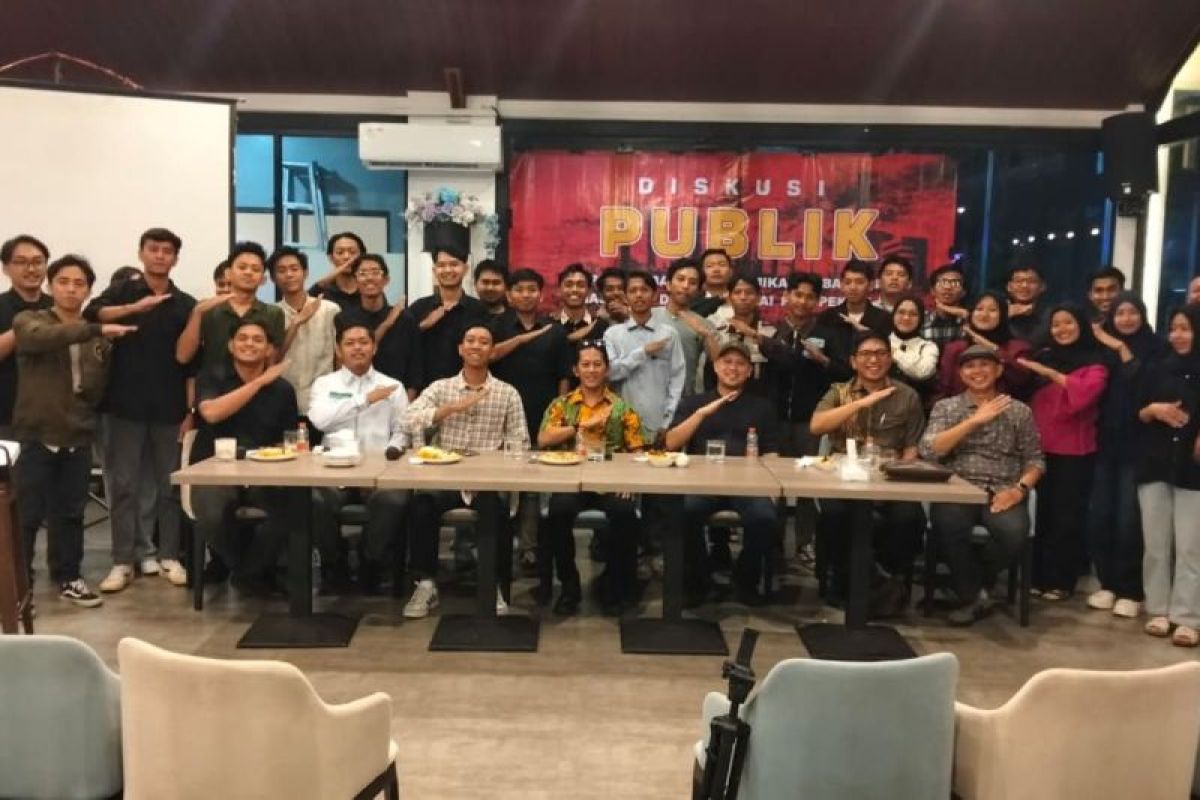
Malang (ANTARA) - Geopolitical and media expert Yusuf R. Hakim stated that the paradigm of national defence has undergone a significant shift and transformation. “In the past, a nation’s strength was determined by its control of land, sea, and air. Today, the world has entered a new era where cyberspace has become a decisive strategic domain,” Yusuf said during a public discussion titled ‘Development of Global and National Dynamics from Various Perspectives’ held at a cafe in Malang City, East Java, on Wednesday evening.
He explained that modern states are now moving to dominate the cyber world. A fourth dimension has emerged as a crucial new force: mass media and the digital space. “Our main threat today actually begins in the geo-economic sector, not directly from the military,” he stated.
According to Yusuf, modern warfare does not always manifest as armed attacks. Control of information, manipulation of public opinion, and the spread of disinformation have become new instruments capable of influencing a nation’s social and political stability. The dominance of mainstream media as the primary source of information for the public has shifted. Based on developing trends, around 70 percent of the public now consumes information through social media.
He noted that this condition presents serious challenges, as digital algorithms can systematically shape societal polarisation. Yusuf cited political phenomena that have developed in Indonesia, where certain labels emerged and were subsequently perpetuated by social media algorithms. “These algorithms filter and categorise society to facilitate the delivery of specific messages. The danger is that anger and negative sentiments are deliberately processed and produced in the virtual world, then drawn into real life. This is something we must all be wary of,” he said.
He stressed the importance of critical thinking skills amidst the torrent of digital information. “Indonesia does not lack intelligent people, but we desperately need people who remain critical and realistic thinkers,” he remarked.
Meanwhile, Penta Peturun, a Staff Expert at the Ministry of Law and Human Rights, highlighted Indonesia’s position in the global arena. He stated that Indonesia is a large country with abundant natural resources and a huge domestic market, making it a focus of attention in global competition. “In the global context, anything can happen. Therefore, we must be smart and perceptive in reading and positioning Indonesia amidst the intense dynamics of global politics,” he said.
He emphasised that current global challenges require society, especially the younger generation, to have a strong national outlook and the ability to understand global changes objectively.
Hasan Husaini, the East Java Regional Coordinator for PTNU from Tuban, assessed that students must understand issues thoroughly before taking a stance or initiating social movements. “We must first understand the problem before making a move. Students need to engage in discussions, nurture democracy, and comprehend both global and national dynamics so that the movements they create truly provide solutions,” he said.
He expressed hope that such discussion forums would continue to be held as a means of political and national education for the younger generation. Intan, a representative of the Ministry of Foreign Affairs from the Student Executive Board (BEM) of the Islamic University of Malang (Unisma), admitted to gaining many new perspectives from the discussion. “Students are not only required to understand information but also to evaluate themselves and think about how to contribute to the country in the future,” she said.
Through the discussion, participants were reminded that threats to the nation do not always come in the form of physical conflict. Control of information, economic resilience, and the public’s ability to filter information are crucial elements in maintaining Indonesia’s sovereignty in the digital era. Critical thinking, a comprehensive understanding of issues, and maintaining a healthy space for dialogue are key assets in facing increasingly complex global dynamics.