
Expert: Mitigating Industrial Raw Material Disruptions Due to Geopolitical Conflicts
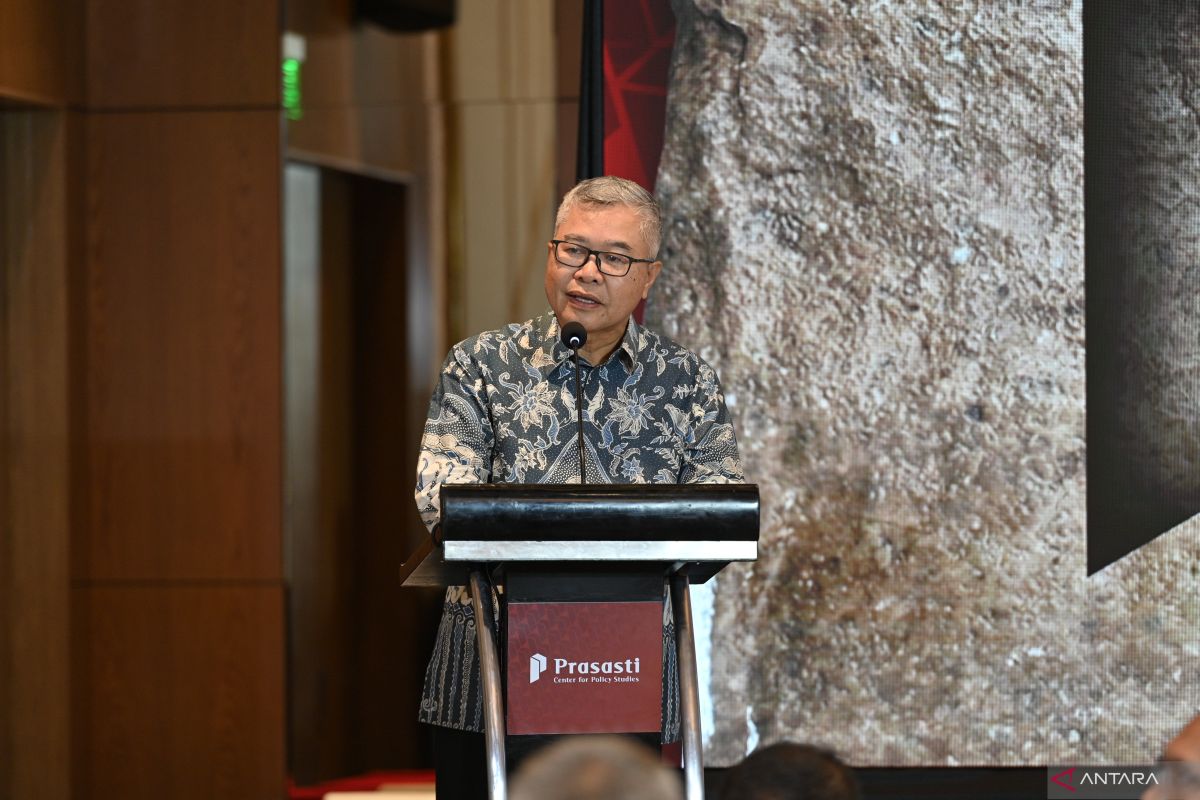
Jakarta (ANTARA) - Economist and Director of Policy and Programmes at the Prasasti think tank, Piter Abdullah, stated that swift mitigation steps are needed to address disruptions in the supply and distribution of industrial raw materials and energy due to escalating global geopolitics.
Piter, in his statement in Jakarta on Thursday, said that disruptions to energy supplies and industrial raw materials could potentially increase production costs and pressure manufacturing sector productivity.
Therefore, he said, policies to ensure energy availability for industry, including industrial gas, as well as measures to reduce production cost structures such as evaluating import duties on raw materials and auxiliary materials, are important to be formulated by relevant ministries and institutions.
“This is to maintain the efficiency and competitiveness of the national industry amid global pressures,” he said.
In the financial markets, Piter said, a combination of rising energy prices, exchange rate weakening, and fiscal pressures must be anticipated to maintain financial system stability.
According to him, in a situation of increasing global uncertainty, policy coordination between economic authorities becomes increasingly important. Policies from Bank Indonesia, OJK, and the Ministry of Finance are awaited by the business world and market players to maintain financial system stability going forward.
Furthermore, Piter said, the government’s policy of holding back fuel price adjustments is an effort to maintain people’s purchasing power. However, the sustainability of this policy depends on global oil price developments.
“If the oil price increase persists until the end of the year, it will be increasingly difficult to hold back fuel prices from rising. Therefore, the public and business actors need to understand that energy price adjustments in certain conditions are a normal part of policy responses, as long as they are accompanied by targeted compensation,” he stated.
Meanwhile, Prasasti’s Board of Experts and Indonesian energy expert Arcandra Tahar explained that in the global energy industry structure, Indonesia does not have much room to independently determine oil prices.
“Oil prices basically follow market prices. Indonesia buys on the market. Domestic production, whether through K3S (Contract Work Cooperation Contractors) or Pertamina, is also sold by referring to market prices,” he said.
Currently, the oil price assumption in the 2026 State Budget is around 70 US dollars per barrel, while, Arcandra said, current market oil prices are in the range of 90–100 US dollars per barrel. This indicates increased geopolitical risks and tight global energy supplies.
According to Prasasti, based on previous experience data, fuel price adjustments can have a significant impact on inflation. Prasasti’s analysis shows that fuel price adjustments could add around 0.7 to 1.8 percentage points to inflation, depending on the magnitude and timing of the adjustment.
Prasasti assesses that the pressures facing the Indonesian economy currently do not stem from a single factor, but rather a convergence of various global and domestic economic dynamics.
Rising world oil prices due to geopolitical tensions, rupiah exchange rate weakening, increasing pressure on state finances, and changes in the external balance simultaneously narrow economic policy space. Therefore, Prasasti advises that macroeconomic policies be managed more carefully amid geopolitical tensions.