
Expert: Mandatory Halal Certification Should Be Measured by Increased Competitiveness
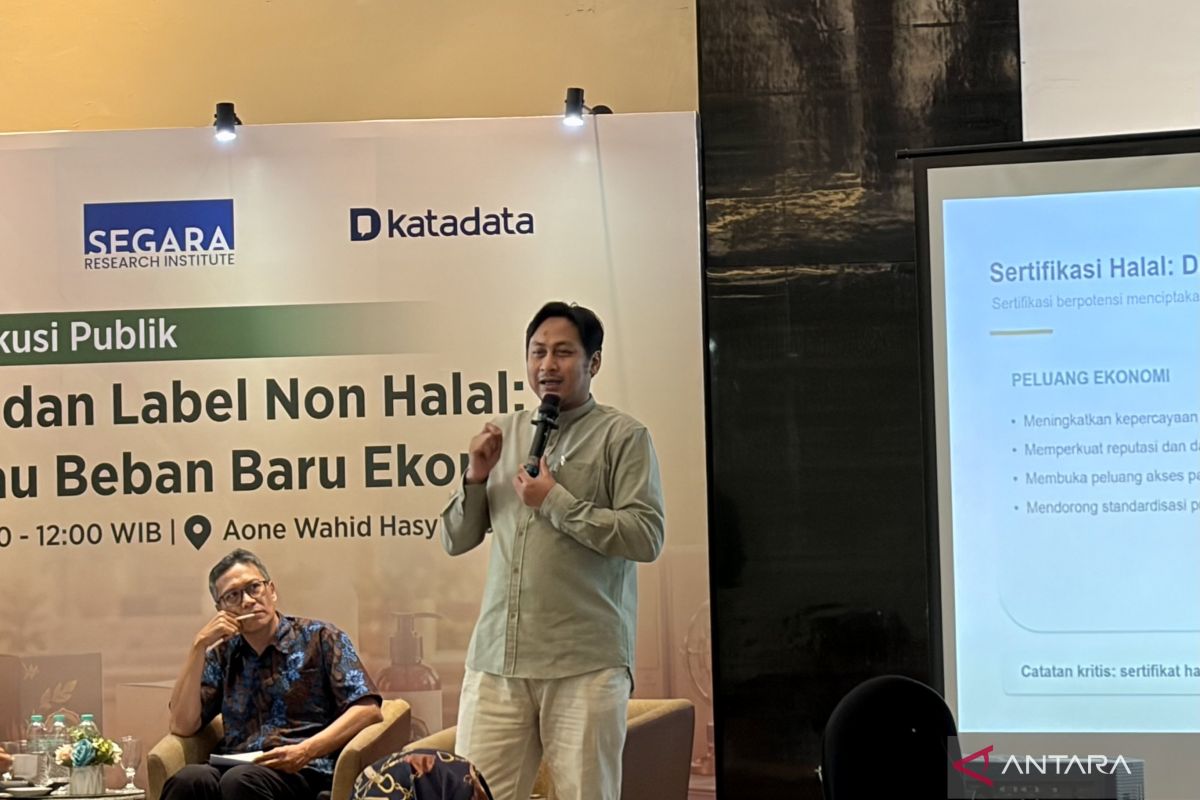
Jakarta (ANTARA) – Mohammad Nur Rianto Al Arif, a professor at the Faculty of Economics and Business at Syarif Hidayatullah State Islamic University (UIN) Jakarta, said the success of mandatory halal certification (Wajib Halal) should be measured, among other things, by improved competitiveness and quality among industry players, including micro, small and medium-sized enterprises (MSMEs).
“Success in halal certification should not be judged solely by the number of certificates, but by increased MSME competitiveness, wider market access and improved public welfare,” Nur Rianto said at a public discussion in Jakarta on Wednesday.
He said the policy’s success was closely linked to state support and easily accessible services.
Ahead of its implementation on 18 October, measures that could be advanced include expanding free certification and assistance for eligible MSMEs.
He also called for simpler procedures through accessible digital services, accompanied by in-person support, as well as proportionate enforcement that prioritises firm action against serious violations.
Nur Rianto added that the government should actively connect businesses with wider markets.
This could be accelerated by opening access to financing, procurement, retail and digital commerce.
He said the government should also measure the policy’s tangible impact by monitoring whether it leads to higher turnover and productivity, wider market access and more sustainable businesses.
“In my view, certification should not merely be an initial stage. We should move beyond certification and consider how our halal industry can develop,” Nur Rianto said.
He said mandatory halal certification could create economic opportunities if implemented effectively.
These opportunities include boosting consumer confidence and strengthening products’ reputation and competitiveness.
“It can also open up market and export opportunities, while encouraging the standardisation of production processes,” Nur Rianto said.
The Halal Product Assurance Agency (BPJPH) has stressed that implementation of mandatory halal certification, due to begin on 18 October 2026, will not be postponed.
Official information on the Halal Product Assurance policy and its implementation is available on BPJPH’s website, bpjph.halal.go.id.