
Expert: Internet Service Practices Comply with Legal Obligations
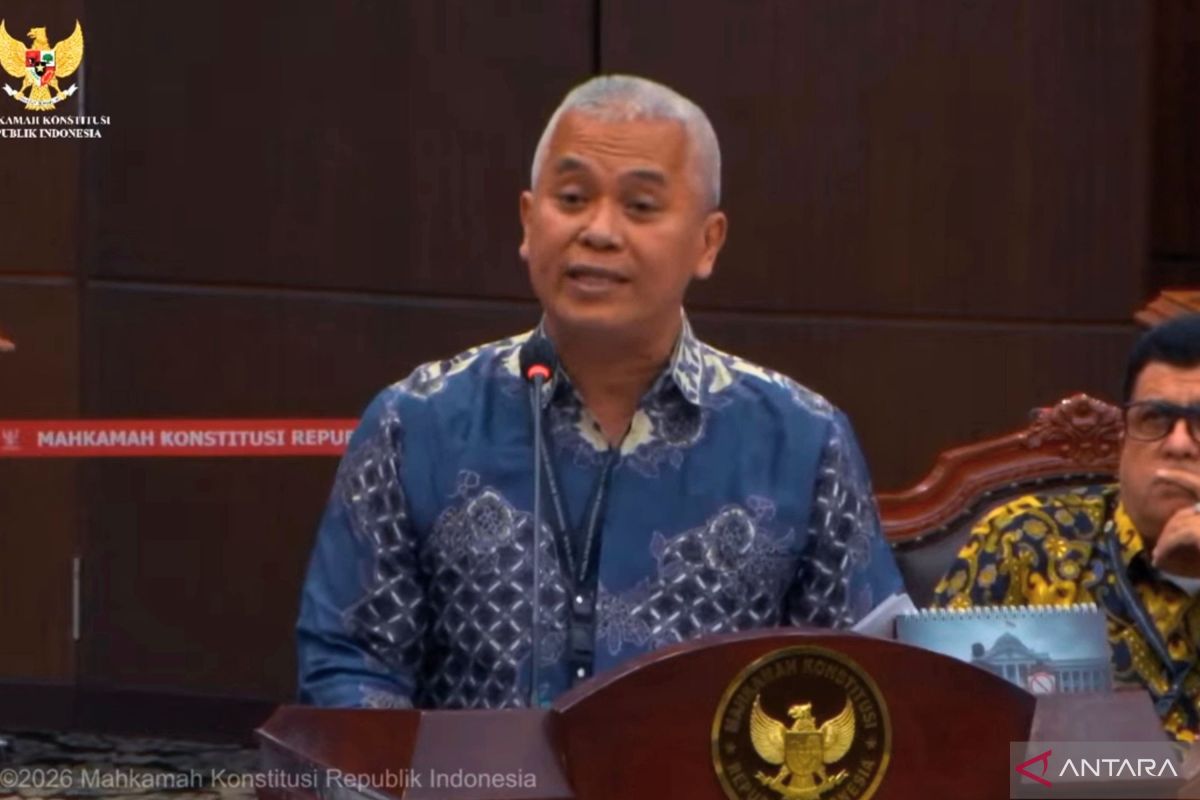
Jakarta (ANTARA) - An expert presented by the government during the judicial review of Law Number 6 of 2023 on Job Creation, Agung Harsoyo, stated that current cellular internet service practices have been carried out in accordance with the obligations mandated by law.
He noted that the fulfilment of each party’s obligations should be viewed holistically, encompassing the entire range of legal norms, industry practices, consumer interests, and the role of the state.
“At the same time, all parties have obtained legitimate benefits according to their respective roles, including the state, operators, and consumers,” Agung said during a plenary session at the Constitutional Court (MK) in Jakarta on Monday.
In other words, he stated there is no exploitative relationship, but rather a reciprocal and mutually beneficial one.
Regarding the state, specifically the Ministry of Communication and Digitalisation (Komdigi) as the regulator, he argued that it has fulfilled its obligations.
He explained that the Telecommunications Law does not mandate the government to design every service package sold by operators, but rather requires the establishment of a regulatory framework, the regulation of tariff formulas, the protection of users, the supervision of telecommunications implementation, and the maintenance of healthy competition.
He stated that these obligations have been implemented through various mechanisms, including Government Regulation Number 46 of 2021, Minister of Communication and Informatics Regulation Number 5 of 2021, Minister of Communication and Informatics Decision Number 576 of 2022, tariff formula regulations, tariff reporting mechanisms by providers, periodic supervision, and various user protection instruments.
Agung revealed that operators have also fulfilled their obligations, including building networks, expanding service coverage, increasing capacity, providing various product options, communicating service terms and conditions, reporting tariffs to the government as the regulator, and competing to offer increasingly better and more affordable services.
Meanwhile, he continued, consumers have received their rights in the form of communication access, internet access, diverse service choices, information regarding tariffs and price certainty, transparency of service terms, and the freedom to choose products that suit their needs.
He emphasised that customers requiring low tariffs can choose specific packages, while those needing higher flexibility can opt for rollover or postpaid services.
Therefore, he stated that the right to information and the right to choose are available, ensuring consumer protection is maintained through transparency and freedom of choice.
“However, there remains an openness to improving consumer protection, both in terms of transparency and the variety of service options,” he added.
Agung, who is a Lecturer at the School of Electrical Engineering and Informatics, Bandung Institute of Technology, and Head of the Information Technology Division at Perum Bulog, provided testimony as an expert in cases Number 273/PUU-XXIII/2025 and 33/PUU-XXIV/2026.
The petitioners in both applications are contesting Article 71, number 2 of the Job Creation Law. This article, which amends Article 28 of Law Number 3::6 of 1999 on Telecommunications, regulates telecommunications implementation tariffs.
Article 71, number 2 of the Job Creation Law contains two points: first, the amount of telecommunications network and/or telecommunications service implementation tariffs is determined by the network and/or service provider based on a formula established by the central government.
Second, the central government may establish upper and/or lower tariff limits for telecommunications implementation, taking into account public interest and healthy business competition.
In application number 273/PUU-XXIII/2025, online motorcycle taxi driver Didi Supandi and online culinary vendor Wahyu Triana Sari are challenging the system of expiring unused internet quotas at the end of an active period by telecommunications providers or cellular operators.
The petitioners are asking the Constitutional Court to interpret Article 71, number 2 of the Job Creation Law to mean: The determination of tariffs and telecommunications service implementation schemes must guarantee the accumulation of remaining paid data quotas (data rollover).
In application number 33/PUU-XXIV/2026, student TB Yaumul Hasan Hidayat is also testing the same article.
Yaumul argues that internet quotas significantly impact online learning, and that the unilateral deletion of quotas without consent or adequate compensation is considered contrary to the principles of legal certainty and justice.
In his petition, Yaumul requests that Article 71, number 2 of the Job Creation Law be amended to state: Internet quotas paid for by consumers must not be deleted or forfeited unilaterally, and if an expiry period is set, it must be accompanied by a fair, transparent, and proportional mechanism to ensure legal certainty and the protection of citizens’ constitutional rights.