
Expert: Increasing Police Retirement Age Must Not Create Career Obstacles
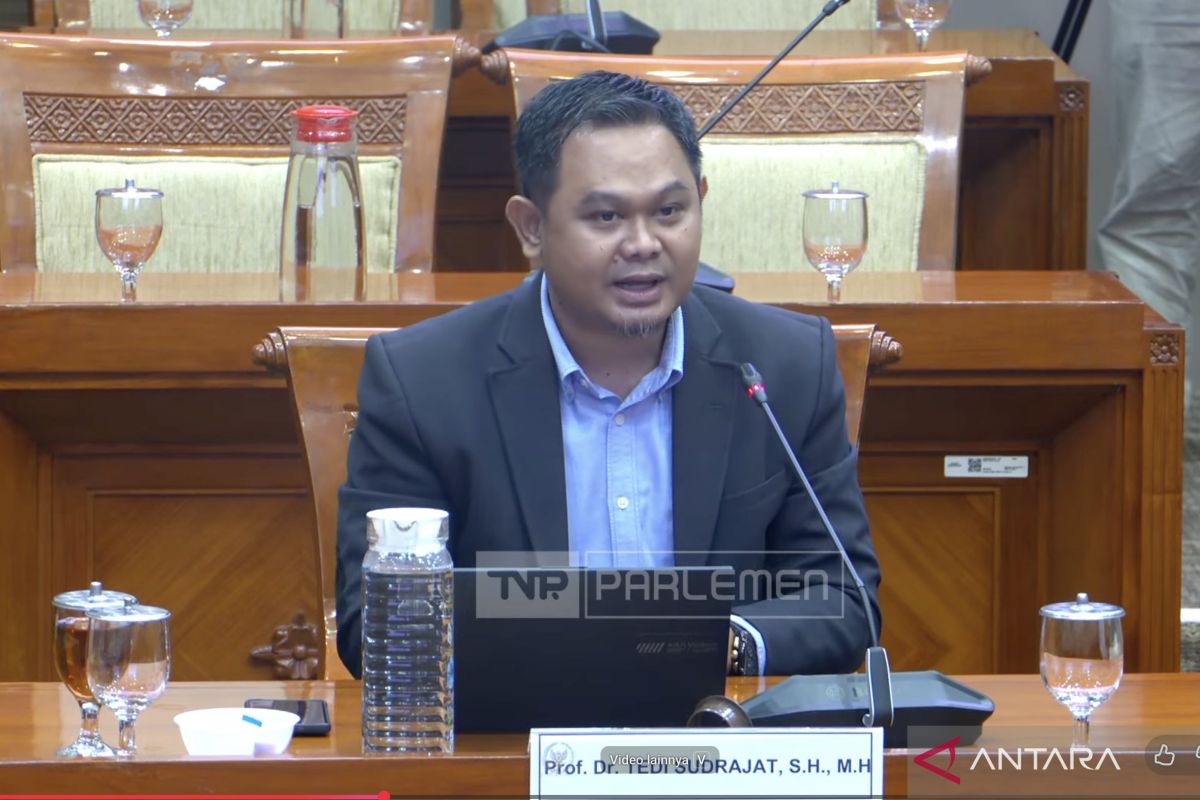
Jakarta (ANTARA) - Professor of Personnel Administrative Law at Jenderal Soedirman University, Tedi Sudertajat, has cautioned that plans to increase the retirement age for members of the Indonesian National Police (Polri) within the revision of the Polri Law must not create career impediments.
During a public hearing regarding the Polri Bill with Commission III of the Indonesian House of Representatives (DPR RI) in Jakarta on Tuesday, Tedi stated that extending the retirement age must continue to consider clear career progression.
“We must ensure that the extension of the retirement age (BUP) maintains healthy regeneration across the three levels and 21 ranks within the police force. We must not allow a career bottleneck to occur; we must consider the career path,” he said.
Tedi noted that the increase in retirement age should be considered both quantitatively and qualitatively.
Quantitatively, he pointed out that based on data from the Central Bureau of Statistics (BPS), the life expectancy of the Indonesian population in 2025 is projected to reach 74.47 years. Meanwhile, the ratio of police officers to the population of approximately 287 million people currently stands at 1:606.
Tedi added that this ratio does not yet meet the ideal United Nations (UN) standard of 1:400 to 1:450, which “demands efficiency regarding internal human resources.”
He also compared retirement ages in other countries, such as the United States (55–65 years), Germany (60–62 years), and Malaysia (60 years). Furthermore, he noted that the retirement age for prosecutors in Indonesia is 60–62 years, the Indonesian National Armed Forces (TNI) is 55–63 years, and private sector workers is 59 years.
“Based on this, we must examine the underlying conditions for the retirement age. We can refer to Law Number 13 of 1998 concerning the Welfare of the Elderly, which sets the limit for the elderly at 60 years,” he added.
Qualitatively, Tedi emphasised that the retirement age must not disrupt the internal regeneration of the institution.
Tedi explained that the discourse on increasing the retirement age must consider the ‘zero growth system’ policy regarding the number of permanent employees in the Polri recruitment system, strict regulations on service periods within ranks, and a measurable regeneration scheme to prevent leadership stagnation.
“Therefore, when there is a plan to increase it, we must ensure it does not result in a career bottleneck. This must be a qualitative consideration,” he concluded.