
Expert in Duta Palma Case Emphasises Importance of Forestry Ministry Permit for Palm Oil
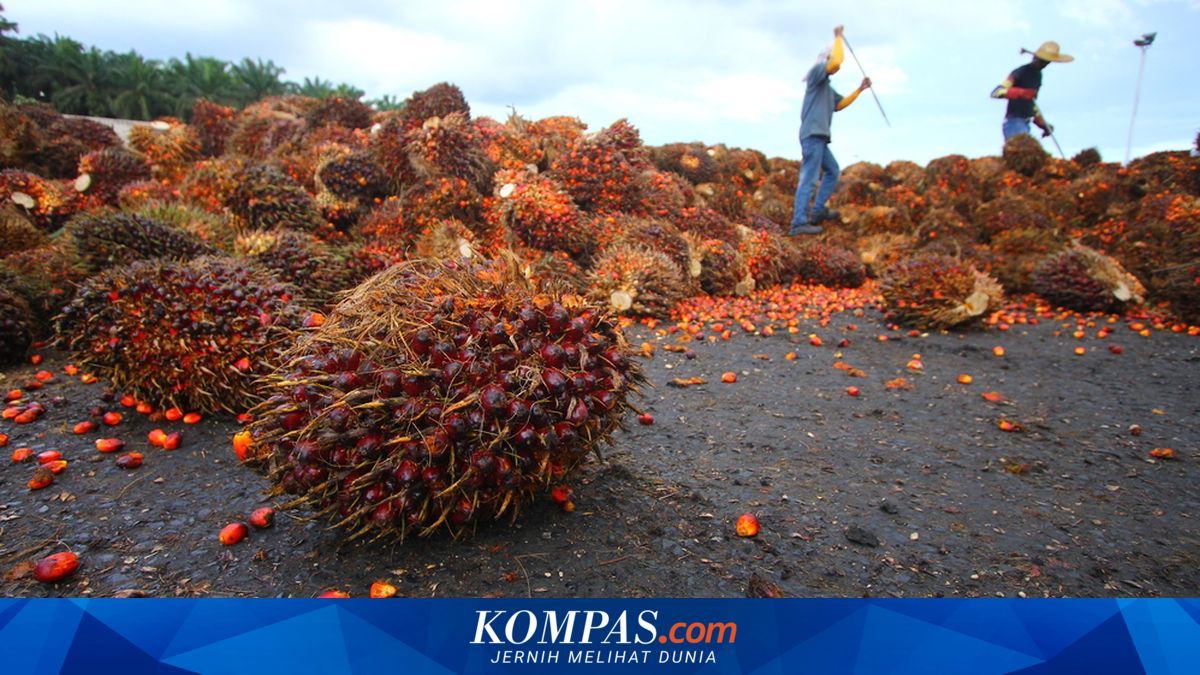
JAKARTA - An expert explained that palm oil plantation activities in forest areas without permission from the Ministry of Forestry constitute illegal operations.
This was emphasised by Forestry Policy Expert Prof Subarudi while providing testimony in the trial for alleged corruption and Money Laundering Criminal Acts (TPPU) involving the Duta Palma Group corporation at the Central Jakarta District Court on Friday (8/5/2026).
“As long as it operates in a forest area, there must be permission from the Ministry of Forestry. Without that permission, it is illegal,” said Subarudi during the trial.
“So, based on the regulations, if a forest is felled, whether illegally, it must pay reforestation funds. Then it is also required to pay forest resource provision fees (PSDH),” he stated.
According to Subarudi, these provisions refer to the regulations in effect at the time the alleged criminal act occurred.
“I am using the regulations at the time of the tempus delicti,” he said.
In his testimony, Subarudi also mentioned the whitening provisions previously provided by the government through Government Regulation Number 60 of 2012, but the process was not completed.
“Actually, in the previous trial, I also said that they were given the opportunity for whitening through PP 60 of 2012,” he remarked.
He added that companies legally utilising forest areas are generally required to pay various forestry levies.
“Usually, if someone wants to obtain a forest utilisation permit, they must pay for the forest utilisation permit. Then, when felling trees, they must pay DR. There is also PSDH,” he said.
Previously, Public Prosecutor (JPU) from the Attorney General’s Office (Kejagung) Bertinus Haryadi Nugroho revealed that state losses were caused by unlawful acts in the form of corruption and TPPU committed by the Duta Palma Group, encompassing PT Palma Satu, PT Seberida Subur, PT Banyu Bening Utama, PT Panca Agro Lestari, PT Kencana Amal Tani, PT Darmex Plantations, and PT Asset Pacific.
“The corruption was committed by enriching oneself or others or a corporation,” said the JPU during the reading of the indictment at the Jakarta Corruption Court (Tipikor), quoted from Antara.
In addition to state financial losses, the JPU stated that the case also caused economic losses to the state amounting to Rp 73.92 trillion, comprising household and business sector damages.
In the case, PT Palma Satu, PT Seberida Subur, PT Banyu Bening Utama, PT Panca Agro Lestari, and PT Kencana Amal Tani are represented by Tovariga Triaginta Ginting as director of all five companies.
Meanwhile, PT Darmex Plantations and PT Asset Pacific are represented by Surya Darmadi as the beneficial owner of both companies.
For their actions, the Duta Palma Group faces penalties as stipulated in Article 2 paragraph (1) or Article 3 in conjunction with Article 20 jo. Article 18 of Law Number 31 of 1999 on the Eradication of Criminal Acts of Corruption as amended and supplemented by Law Number 20 of 2001 and Article 3 or Article 4 in conjunction with Article 7 of Law Number 8 of 2010 on the Prevention and Eradication of Money Laundering Criminal Acts in conjunction with Article 55 paragraph (1) first of the Criminal Code.