
Expert: In-Depth Study Needed to Change Mining Revenue-Sharing Scheme Similar to Oil and Gas
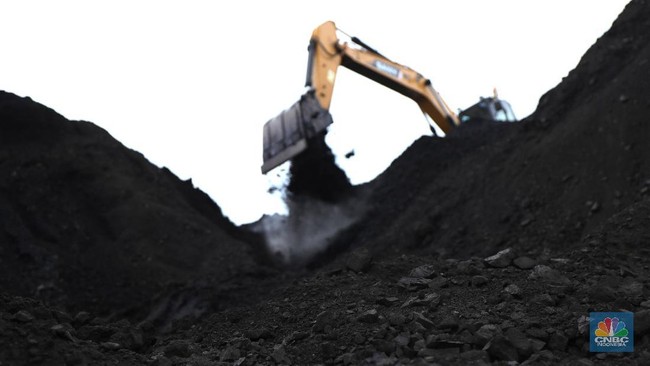
Jakarta, CNBC Indonesia - Rizal Kasli, Chairman of the Advisory Board of the Indonesian Mining Experts Association (Perhapi), assesses that the government’s plan to apply the upstream oil and gas (migas) revenue-sharing scheme to the mineral and coal mining (minerba) industry requires in-depth study.
As is known, the upstream migas industry in Indonesia currently employs two cooperation schemes: the Production Sharing Contract (PSC) Cost Recovery and Gross Split.
In the Cost Recovery scheme, the government receives a larger share of the revenue, which can reach around 85% depending on negotiations, while the contractor receives the remainder. However, the government reimburses the costs incurred by the contractor in producing migas.
“Financing from exploration, development, construction, production, and processing is borne by the government. However, it will require verification and validation of financial data in the reimbursement process for those costs,” he explained to CNBC Indonesia on Thursday (7/5/2026).
Meanwhile, in the Gross Split scheme, the government can secure certainty of its revenue share upfront. All costs for developing the area become the full responsibility of the contractor.
With the Gross Split scheme, the government does not need to control the contractor’s expenditures because the contractor will automatically implement cost efficiencies in its operations.
On the other hand, he views that the mineral and coal mining industry does not employ the Cost Recovery or Gross Split schemes. What applies is actually more similar to the Gross Split scheme.
“Where all costs from exploration, development, construction, mining, processing to sales are borne by the contractor. The government can still collect taxes at the early stages of mining activities such as KDI, PBB, PPN, PPh, land rent, and others as state revenues,” he said.
Rizal assesses that the government could potentially apply the Cost Recovery or Gross Split schemes in the mining industry. However, he suggests that the Gross Split approach is more realistic to implement in order to maintain state revenue stability.
“An in-depth study and discussion are needed to decide on the implementation of this revenue-sharing scheme in the mining industry. What are the benefits and drawbacks for the state and how it affects the attractiveness for investors in this industry,” he said.
Rizal then reminds the government that it must prepare supporting infrastructure if it wishes to implement the Cost Recovery scheme in the mining sector, including strong and credible institutions to conduct verification, validation, and auditing of costs.
“There must be a strong and credible body to perform cost verification, validation, and auditing that must be carried out when the contractor reimburses the costs incurred. If not, there will be leakages in the state budget through those reimbursement costs,” he said.