
Expert Highlights Seakeeping Aspects in Virgo Transport 8 Ship Incident
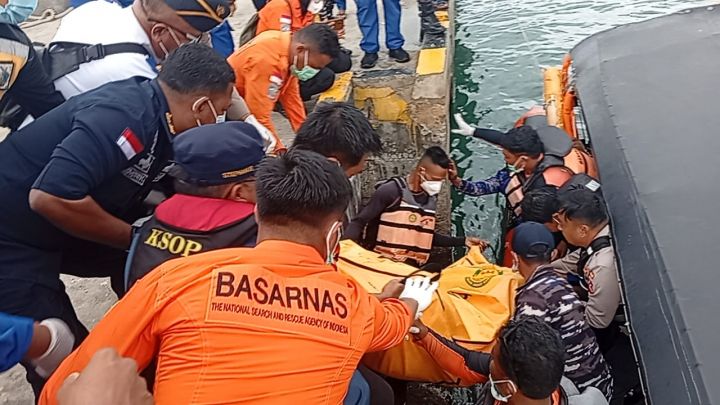
A hydrodynamics expert from the Sepuluh Nopember Institute of Technology (ITS) in Surabaya, I Ketut Aria Pria Utama, has highlighted the seakeeping performance of the vessel Virgo Transport 8 in relation to its capsizing in the waters of the Masalembu Islands, Sumenep, East Java. The professor from the ITS Faculty of Marine Technology’s Department of Naval Architecture stressed the importance of matching a ship’s design to the characteristics of the waters in which it operates. This is crucial, particularly for vessels designed for Indonesian waters.
“What needs to be critically examined is whether that Japanese-built ship’s design was suitable and recommended for sailing in Indonesian seas with high waves,” said Professor Ketut in Surabaya on Tuesday (15/9).
Ketut, who is familiarly known as Ikap, explained that the seakeeping aspect—the ship’s ability to cope with wave conditions—is often overlooked. Yet neglecting this aspect can trigger serious problems with the vessel’s stability and motion comfort when operating on the open sea.
The Virgo Transport 8, which capsized on Sunday (13/9/2026), is known to be a roll-on/roll-off (ro-ro) vessel imported from Japan and around 30 years old. Even so, Ikap judged the ship’s age not to be the main cause of the accident, provided maintenance had been carried out optimally.
Ikap explained that there are significant differences between the characteristics of Japanese and Indonesian waters. In Japan, the distance between islands is relatively short, whereas Indonesia has open waters with the potential for far more extreme large waves.
“These extreme sailing route characteristics demand different hull design standards,” he asserted.
He added that ro-ro ferries from four-season countries generally have fully enclosed hull designs. By contrast, vessels operating in Indonesia often have openings on the sides. This is done to save energy and reduce the enclosed-space tax burden, but it poses a risk to stability in bad weather.
Beyond design, Professor Ketut also highlighted the risk of large volumes of water entering the ship’s hull due to high waves or a non-watertight ramp door. Water entering the deck without an adequate pumping system can create a free surface effect, or sloshing effect.
“Water sloshing around inside the deck causes the ship to become unstable. This risk is compounded if the vehicles loaded on board are not lashed properly, causing them to shift and drastically alter the ship’s centre of mass,” he explained.
As a precautionary measure going forward, Ikap urged stricter safety procedure education for passengers before departure. In his view, passengers’ understanding of self-evacuation steps is crucial for facing unexpected emergencies at sea.