
Expert: Haze is a silent killer that claims lives
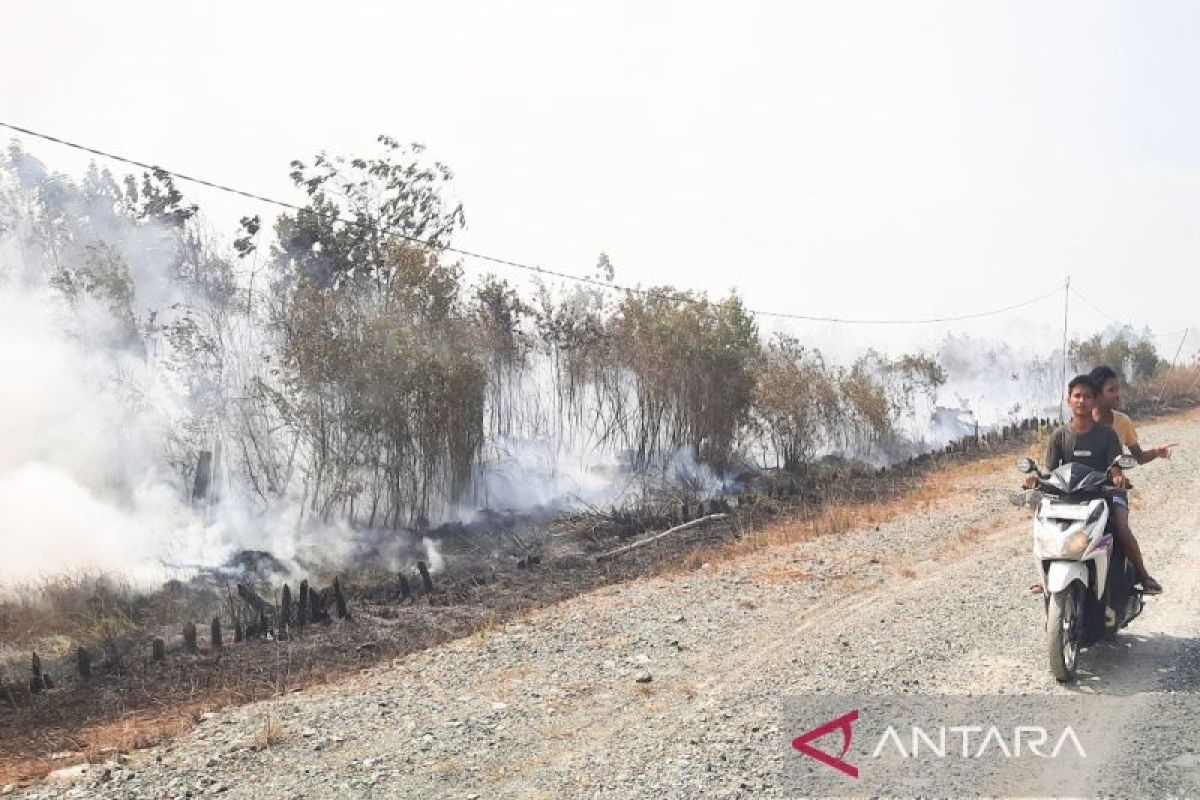
Banjarbaru (ANTARA) - Public health expert from Lambung Mangkurat University (ULM) Professor Dr dr Syamsul Arifin, MPd, FISPH, FISCM has warned that haze resulting from forest and land fires (karhutla) is a silent killer that can claim lives both slowly and suddenly.
“Data from various studies show that when haze strikes, hospital visits increase by up to 40 percent, especially for cases of respiratory and heart disorders,” he said in Banjarbaru on Monday.
Unfortunately, he said, many people still regard haze as an “ordinary disaster” that must be accepted with resignation.
“This assumption is wrong and dangerous,” he stressed.
The Dean of the Faculty of Medicine and Health Sciences (FKIK) at ULM explained that haze is a collection of fine particles and pollutants in the air that can penetrate deep into the lungs.
“This means PM2.5 is more than 20 times smaller than our hair,” he said.
Because of its extremely small size, PM2.5 is not filtered by nasal hair or mucus in the upper respiratory tract. These particles travel directly to the alveoli (air sacs in the lungs) and can even enter the bloodstream.
Along with PM2.5, other pollutants such as carbon monoxide (CO), nitrogen oxides (NOx), and volatile organic compounds (VOCs) that are irritant and carcinogenic are also carried along.
The resulting health impacts range from mild irritation to heart attacks and life-threatening conditions.
Syamsul provided six safety protocol steps to protect oneself during haze.
First, use the proper mask, namely KN95/N95 with filtration of more than 95 percent for particles of 0.3 micrometres.
Second, reduce outdoor activity because the heavier the activity, the faster and deeper breaths are taken, meaning the dose of particles entering the lungs is far greater.
Third, close doors and windows to maintain good indoor air quality.
“The fourth step is to drink enough water, fifth is to rinse the eyes with clean water if they feel sore, and finally seek medical attention immediately if severe symptoms occur, whether chest pain, heart palpitations or sudden dizziness,” he explained.