
Expert Explanation on Two-Headed Buffalo Calf in West Manggarai, NTT
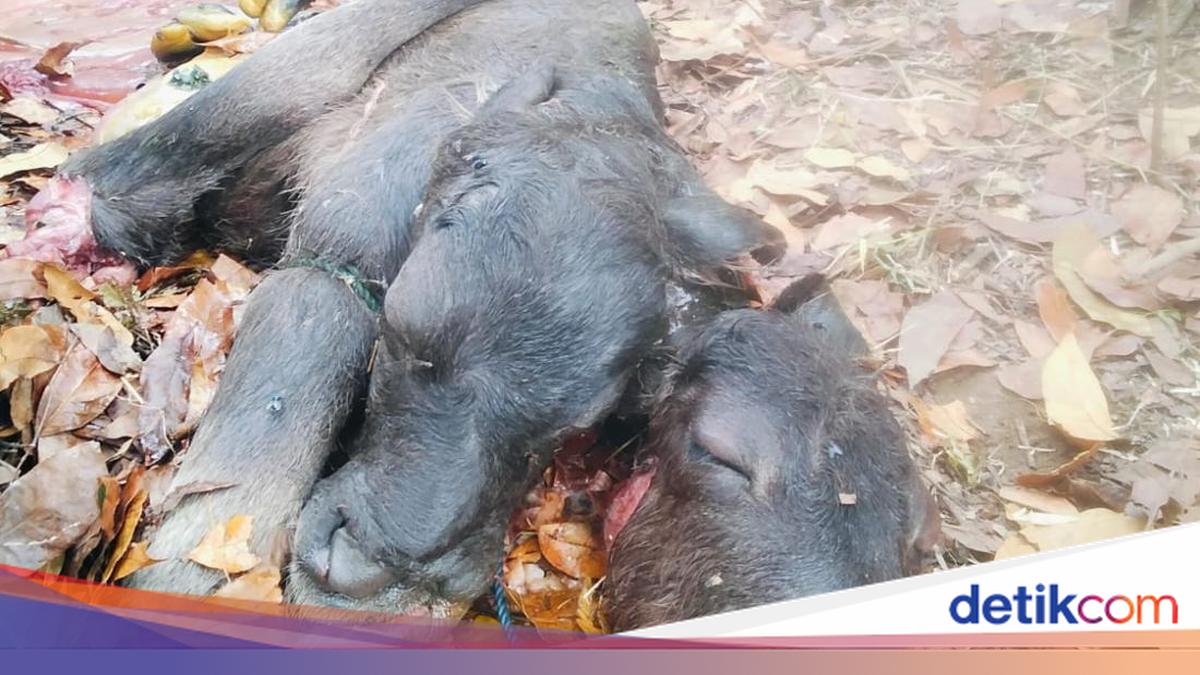
Residents were shocked by a two-headed buffalo calf in Kampung Pinggong, Golo Ndaring Village, Sano Nggoang District, West Manggarai, East Nusa Tenggara (NTT). The newborn calf had one body with two heads.
Yanuarius Saridin, a Veterinary Authority official at the West Manggarai Regency Livestock and Animal Health Service, said cases of two-headed buffalo calves are extremely rare. The conjoined twin calf was born dead.
“In veterinary medicine, a buffalo born with two heads is classified as a very rare congenital malformation,” Yanuar said on Thursday (27/8/2026).
Yanuar explained that the precise term for a conjoined twin buffalo calf depends on its anatomical form. If one body has two heads and two necks, he said, the condition is called dicephalia or dicephalus (bicephaly).
“If what is mainly visible is duplication of the face on a single head, the term is diprosopia (diprosopus),” he said.
Yanuar explained that in ruminants, dicephalia can be classified based on the point of fusion, or two skulls with one neck. There is also the term iniodymus, meaning two skulls fused at the occipital region.
Another term is derodymus, where the skulls and two necks are relatively separate but share one body. According to Yanuar, the conjoined twin buffalo calf case in West Manggarai is classified as derodymus.
Embryologically, Yanuar explained, the emergence of a conjoined twin buffalo calf is an abnormality related to disruption of the embryo formation and separation process in the early stages of development. One of the most widely supported mechanisms is incomplete separation of monozygotic twin embryos, so that some structures develop into two individuals or two body parts, while other parts remain fused.
“Recent research on cattle and buffalo shows that some cases of dicephalia and diprosopia have a monozygotic origin, based on molecular examination showing that both heads have the same genetic profile,” Yanuar explained.
He stressed that the birth of a conjoined twin buffalo calf is not necessarily due to hereditary factors. Causes of congenital abnormalities in cattle or buffalo foetuses can generally be grouped into genetic/hereditary factors, such as embryonic development disorders, certain nutritional deficiencies, infections during pregnancy, and other environmental factors.
Specifically for the two-headed buffalo case, Yanuar said the exact cause often cannot be determined based on external examination alone. Even in some reported cattle cases, examination found no definitive aetiological cause.
“Therefore, it is not appropriate to immediately conclude that the buffalo was definitely the result of inbreeding or definitely due to a genetic abnormality without further examination,” he stressed.
Yanuar then explained why the mother buffalo had difficulty giving birth to the conjoined twin calf. According to him, the foetal head is the largest and hardest part. If there are two heads, the diameter of the front part of the foetus becomes much larger and its shape is abnormal.
“As a result, the foetus can experience dystocia (difficulty giving birth) because both heads cannot pass through the birth canal normally. The risk of dystocia increases with the completeness of head duplication,” Yanuar said.
The conjoined twin buffalo calf, he continued, had a very small chance of survival. He said many cases of twin livestock die before birth.
“The prognosis is generally very poor, especially if there are abnormalities in the brain, heart, respiratory tract, or other vital organs. Many cases of polycephaly/dicephalia in ruminants are reported stillborn or die shortly after birth,” Yanuar explained.
Yanuar explained that if the occurrence recurs in the same mother or in a particular lineage, genetic aspects need more serious attention. Veterinary literature shows that some cattle foetal abnormalities are hereditary, although not all congenital abnormalities are genetic.
“The specific cause in a single case cannot be determined from external appearance alone and requires veterinary/pathological examination to determine the type and possible causative factors,” he concluded.
Two-Headed Buffalo Calf
Previously, the birth of a two-headed buffalo calf occurred in Kampung Pinggong, Golo Ndaring Village, Sano Nggoang District, West Manggarai, on Tuesday (25/8). The birth of the conjoined twin buffalo was assisted by the Sano Nggoang District Animal Health Centre (Puskeswan) team.
“We went to the scene with the calf already dead. We initially tried to adjust to its condition, injected a stimulating hormone, then reached in and pulled slowly, but it would not come out,” said Syprianus Andi, coordinator of the Sano Nggoang District Puskeswan, on Thursday (27/8).
Syprianus then confirmed the calf was a twin after finding different ears on the heads, with one head blocking the birth canal. According to him, the birthing process of the conjoined twin calf was quite complicated. Puskeswan officers cut the neck of one of the calf’s heads.
“After consideration with the owner, we performed a neck amputation (fetotomy). Once the head was cut off, the twin head rotated into a normal position on its own, and it finally came out,” Syprianus explained.
“The process was rather complicated and risky with makeshift equipment,” he concluded.
Source: jawawa.id (https://jawawa.id/newsitem/expert-explanation-on-two-headed-buffalo-calf-in-west-manggarai-ntt-1788011509)
Originally published by detikBali (https://www.detik.com/bali/nusra/d-8637563/penjelasan-ahli-soal-anak-kerbau-berkepala-dua-di-manggarai-barat-ntt), translated from Indonesian