
Expert: Ecosystem is Key to Making Affordable Vertical Housing Desirable
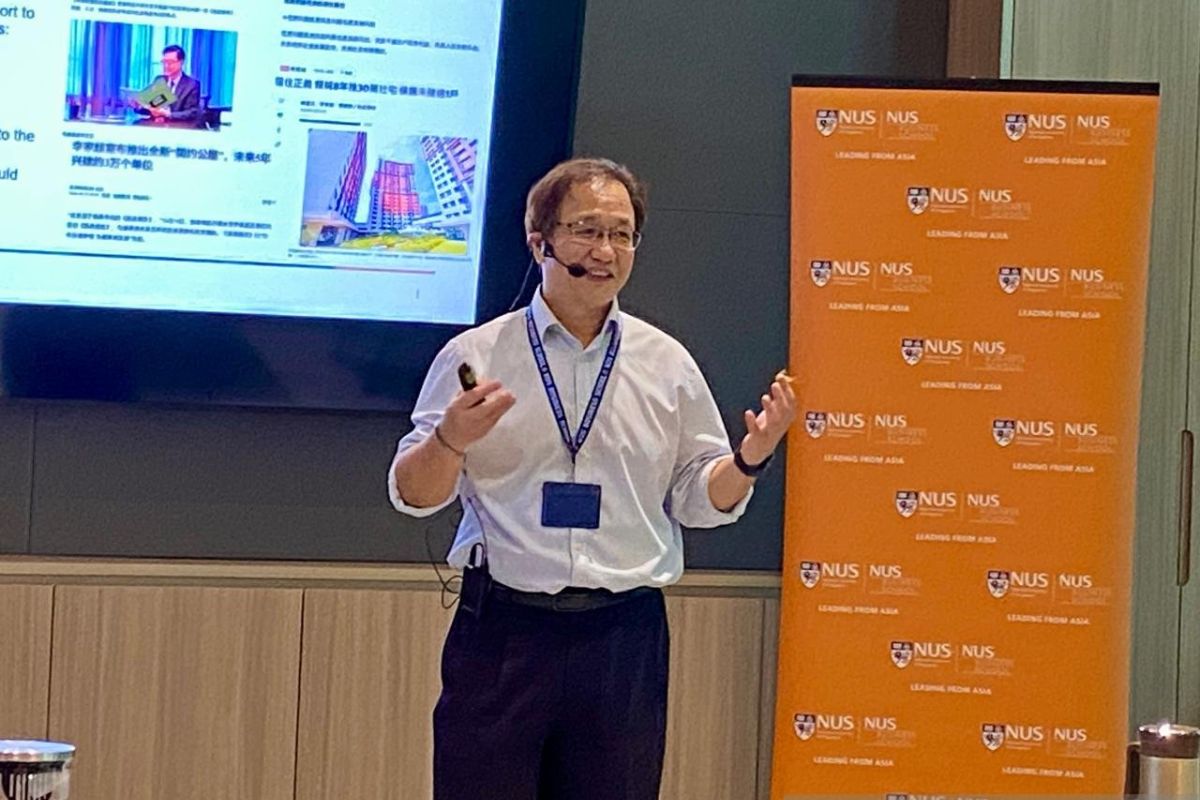
Building houses physically is relatively easy. What is more important is building a community and society, as well as ensuring the availability of schools and various complete environmental facilities.
Singapore (ANTARA) - Vice Dean for Research and PhD Programmes at NUS Business School, Professor Sing Tien Foo, believes that the development of affordable vertical housing needs to focus on developing an ecosystem or community within it, so that the public is interested in choosing it as a place to live.
“This is not merely about building housing. Building houses physically is relatively easy. What is more important is building a community and society, and ensuring that schools and various complete environmental facilities are available. This is very important,” said Tien Foo in Singapore on Wednesday.
He cited Singapore’s experience, which initially faced challenges in relocating residents from traditional villages to new residential areas.
In the past, most traditional houses in Singapore lacked proper sanitation facilities, such as adequate toilets and access to clean water.
Tien Foo explained that land scarcity eventually made vertical development an unavoidable solution. Consequently, the local government began planning the development of satellite towns.
In this regard, he noted, the government did not only consider the provision of housing but also how to create an environment that supports community life.
Singapore’s housing system was subsequently designed not only to solve housing issues but also to serve as an instrument to encourage social integration.
Tien Foo explained that Singapore is a society with diverse ethnic backgrounds. Therefore, the government implemented ethnic quota policies in public housing managed by the Housing & Development Board (HDB) to prevent the concentration of specific ethnic groups within a single block.
This policy aims to maintain a more diverse community composition within residential areas.
Furthermore, according as Tien Foo, the provision of decent and quality housing is also linked to intergenerational social mobility.
When an individual grows up in decent and quality housing conditions, their children in the future have the opportunity to occupy better housing than their parents, a concept known as the ‘housing ladder’.
According to him, this condition demonstrates intergenerational mobility, including intergenerational income mobility.
“We have conducted several studies. Among those living in public housing, approximately 60 per cent of their children’s generation live in larger or better housing compared to their parents. This indicates social progress,” said Tien Foo, who is also the Honorary Professor Holding the Provost’s Chair at the Department of Real Estate, NUS Business School.
He added that Singapore’s experience is also inseparable from government policies in providing land for public housing development. One of the policies implemented is land acquisition, including compulsory land acquisition.
Through this policy, the government can acquire land for public interest by providing compensation to owners. The acquired land is then used for various needs, including the construction of public housing and infrastructure.
In the early 1960s, Tien Foo explained, the majority of Singapore’s land was privately owned. Today, more than 80 per cent of Singapore’s land is under government ownership, which is used for various development needs, including public housing and infrastructure.
Nevertheless, Tien Foo understands that not all countries have the same flexibility in land provision. Limited land controlled by the government can force public housing development to be located further from city centres and business districts.
This situation creates another challenge: how to convince the public to move to quality public housing that is located far from economic activity centres.
“That is the issue currently faced by Hong Kong when attempting to move the population to the New Territories. It is very difficult to convince the public to move there,” said Tien Foo.
Source: jawawa.id (https://jawawa.id/newsitem/expert-ecosystem-is-key-to-making-affordable-vertical-housing-desirable-1791392028)
Originally published by Antara (Indonesian) (https://www.antaranews.com/berita/5776000/pakar-ekosistem-jadi-kunci-agar-hunian-vertikal-terjangkau-diminati), translated from Indonesian