
Expert: DPR Impeachment Process Against Gibran Remains an Uphill Battle
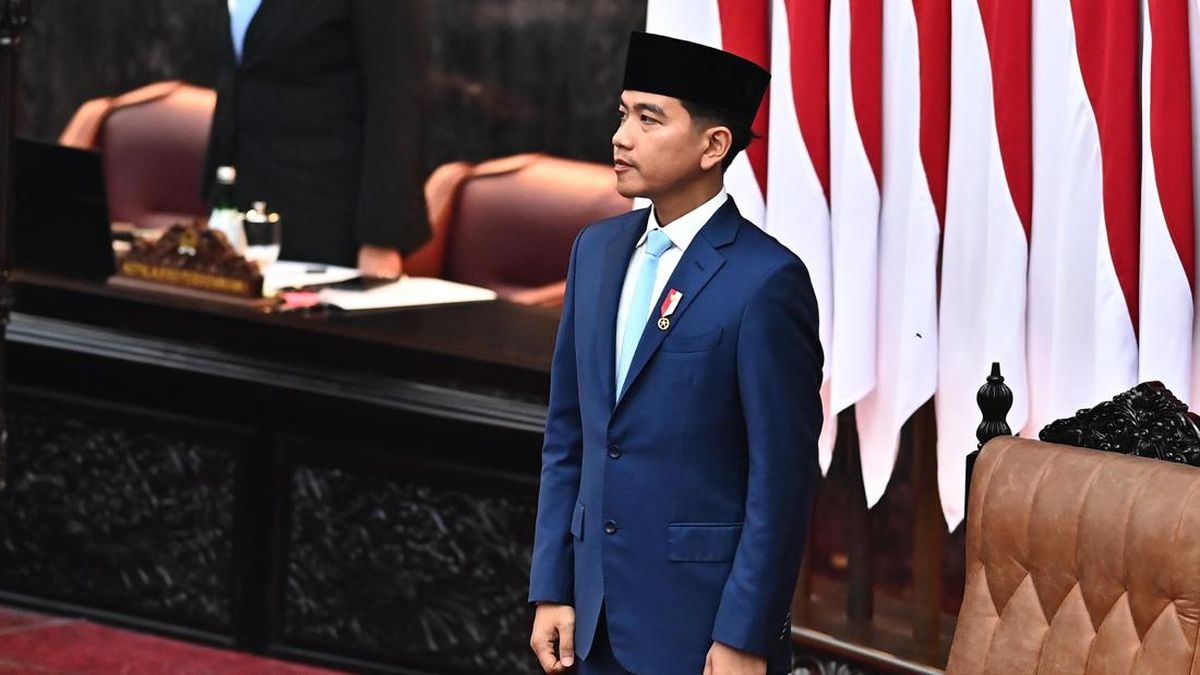
After two court rulings questioned the validity of the minimum education requirement for Indonesian Vice-President Gibran Rakabuming Raka to stand in the 2024 presidential election, attention has now shifted to the DPR.
Under the Constitution, the DPR is empowered to examine efforts to impeach the president, vice-president or both before the matter is decided by the Constitutional Court (MK). However, experts say the DPR will face a steep climb if it seeks to initiate impeachment proceedings against Gibran.
Although a Supreme Court (MA) cassation ruling affirmed the annulment of Gibran’s education equivalency certificate, the political process needed to act on the ruling will not be straightforward. Most factions in the DPR are expected to wait for a signal from the presidential palace, seen as a symbol of the close relationship between President Prabowo Subianto and his predecessor, Joko Widodo (Jokowi), who served two terms from 2014 to 2019 and is Gibran’s father.
“Politically, it is still relatively difficult, as long as relations between Prabowo and Jokowi remain good and there is no ‘green light’ from the palace,” Ali Rif’an, executive director of Arus Survei Indonesia (ASI), said on Monday (2 November).
In its cassation ruling on Friday (30 November), the MA declared invalid the certificate of education equivalency that Gibran used to meet the requirements for his candidacy in the 2024 presidential election.
The ruling affirmed an earlier finding by the Constitutional Court, which said it had been unable to find documents proving that Gibran had completed an education equivalent to upper secondary school in Singapore and Australia.
Clarifying Gibran’s status
Ali said the DPR should promptly establish whether Gibran’s position as vice-president remains constitutionally valid. Legal experts are divided in their responses to the MK and MA rulings: some believe Gibran no longer has legitimacy, while others reject that view, citing differences between administrative, electoral and constitutional legal frameworks.
“That is why a political mechanism may need to be pursued,” Ali said.
Although he believes the chances are slim, Ali said the DPR should form a special committee to launch an inquiry. The House, he said, should investigate the matter so that the dispute over Gibran’s education credentials can be clarified transparently for the public.
The right of inquiry is a constitutional power that allows the DPR to investigate government policies suspected of violating the law. It is exercised through a special committee.
Article 17 of the Law on the People’s Consultative Assembly, House of Representatives, Regional Representative Council and Regional House of Representatives (MD3 Law) sets out the committee’s structure, membership, duration and obligation to report to a plenary session of the DPR.
Special committees are generally formed to address important, complex national issues that cut across sectors. DPR Regulation No. 1 of 2020 on parliamentary procedure states that a committee is formed at a plenary session, may have no more than 30 members, and must reflect the relative strength of the parliamentary factions.
Ali said that if the inquiry found no problem with Gibran’s certificate, the controversy should end. The same should apply if the DPR’s inquiry supports the MK and MA rulings.
“Frankly, this controversy is attracting public attention, and there are concerns that it could disrupt the Prabowo administration. We are worried that the government’s work could be affected by this issue,” he said.
At the time of publication, CNNIndonesia.com had not received an official statement from Gibran regarding the MA ruling.
DPR’s response
Various parties are calling on the DPR, which has authority under the Indonesian Constitution, to follow up on the two rulings. So far, however, the House has yet to act. Most factions, particularly those in the governing coalition, say they are still reviewing the decisions.
Following the MA ruling, Democratic Party deputy secretary-general Jansen Sitindaon said Gibran no longer met the requirements to serve as vice-president.
“Because this MA ruling has declared the 6 August 2019 certificate invalid and null and void — and, further, in point three, ordered it to be destroyed — I have to say that, legally, Gibran’s legitimacy as vice-president, to use the wording of Article 7A of the Constitution, no longer meets the requirements,” Jansen said on social media on Sunday (1 November).
He compared the MA ruling with the MK’s decision, saying the MA ruling was firmer and clearer and required no further interpretation. Jansen said there were now two options: Gibran’s resignation or impeachment by the DPR and the People’s Consultative Assembly (MPR), in accordance with Article 7A of the Constitution.
Muhammad Khozin, a member of the DPR’s Commission II from the National Awakening Party (PKB), said his party would use the MK and MA’s legal reasoning and rulings as the basis for deciding its next political steps.
Earlier, fellow Commission II member Eka Widodo, also from the PKB, had proposed forming a special committee. He said the MK’s reasoning in the case concerning Gibran’s education requirements should be considered by the DPR.
PKS secretary-general Muhammad Kholid called for the matter to be examined through an official DPR mechanism, with relevant parties and constitutional law experts invited to provide their views. PKS also said it would speak with other factions about the next steps in the dispute over Gibran’s certificate.
“The DPR should follow up on the MK and MA rulings democratically and constitutionally. It should study the decisions in full, examine the documents and verification process, hear explanations from the parties concerned, and then decide on a position within its authority and constitutional rights,” he said.
Indonesian Democratic Party of Struggle (PDIP) secretary-general Hasto Kristiyanto said the issue was fundamental because it concerned constitutional eligibility requirements. He stressed that PDIP could not initiate an inquiry on its own.
“This also requires dialogue with other parties. Amid the growing process of delegitimisation, we believe other parties will also listen to these calls,” Hasto said.
He added that PDIP had begun discussions with several parties about what steps to take.
After the MK ruling, which included observations about Gibran’s certificate in its reasoning, DPR Deputy Speaker Sufmi Dasco Ahmad signalled that the House would not follow up. He urged all parties to respect the MK’s decision to reject the lawsuit filed by Denny Indrayana and others, despite its observations about the missing certificate.
“We have all heard that the lawsuit was declared inadmissible. Therefore, we respect the MK’s decision,” said Dasco, who is also chairman of the Gerindra Party’s daily executive board, at the parliamentary complex in Jakarta on Wednesday (7 October).
Gerindra has not issued a recent statement on the MA ruling.
Golkar Party chairman Bahlil Lahadalia said all parties should uphold the presumption of innocence in the case. On 20 October, he said Golkar, one of the largest parties in the governing coalition, would respect the legal process and established procedures, and urged people to safeguard democracy.
NasDem Party treasurer-general Ahmad Sahroni said on 28 October that he had received no direction from party chairman Surya Paloh regarding PKS’s call for discussions about the dispute over Gibran’s upper-secondary education equivalency certificate.
Meanwhile, PAN deputy chairman Viva Yoga Mauladi said the party was still reviewing the earlier MK ruling.
Source: jawawa.id (https://jawawa.id/newsitem/expert-dpr-impeachment-process-against-gibran-remains-an-uphill-battle-1793613222)
Originally published by CNN Indonesia (https://www.cnnindonesia.com/nasional/20261102132815-32-1422323/pakar-proses-hak-angket-gibran-di-dpr-masih-berat), translated from Indonesian