
Expert: Citizens need air quality indicators to face forest fires
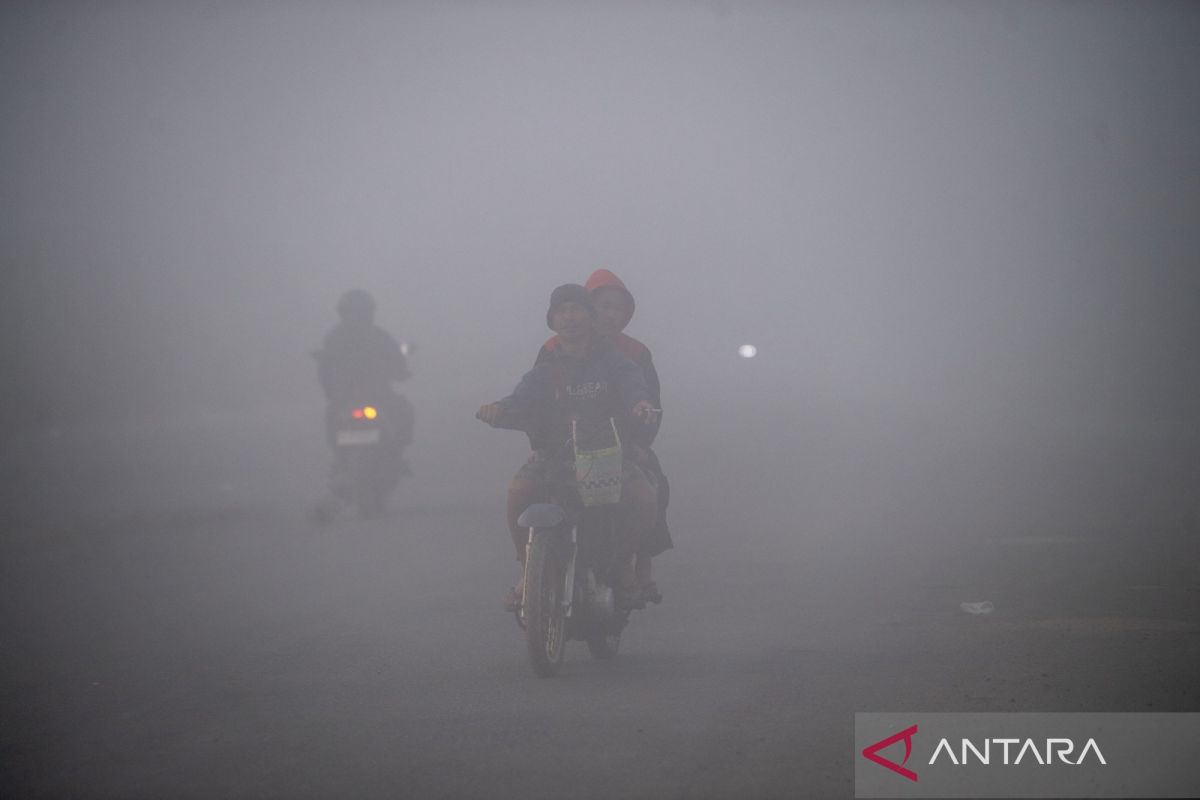
If the indicator reaches the red zone, people should not leave their homes; it is appropriate to study or work from home in such instances.
Jakarta (ANTARA) - The Chairman of the Ethics Council of the Indonesian Society of Respirology (PDPI), Professor Tjandra Yoga Aditama, stated that the availability of air quality indicators serves as vital information for the public when facing exposure to smoke from forest and land fires (karhutla).
According to him, air quality information is necessary so that citizens know whether the air condition falls into the red, yellow, or green category. Regularly updated data should serve as a benchmark when planning activities, such as leaving the house for work or school.
“There should be explanations from the government to the community in those locations regarding current levels, in accordance with existing indicators,” Tjembara told ANTARA on Saturday (5/9).
“If it has reached the red level, then do not leave the house; it is appropriate to school from home or work from home. However, if it is still in the yellow zone, it may still be considered, depending on whether the school has sufficiently good facilities to ensure the air inside the classroom remains clean enough,” he added.
These air quality indicators, Tjandra noted, are part of the World Health Organisation (WHO) recommendations to provide information on pollutant levels over time. This data is essential as a reference for citizens, school administrators, and local governments in determining necessary actions.
The Professor at the Faculty of Medicine, University of Indonesia, suggested that residents in areas affected by forest fires who are forced to be active outdoors should use masks. The type of mask used should be adjusted to the density of the smoke.
Forest fire firefighters are advised to use respirators rather than cloth masks, while the general public heading to the office or school should use the highest quality masks possible.
“The recommendation is to use the best possible mask; if possible, N9m5 is even better,” he said.
In an effort to prevent or reduce exposure to forest fire smoke, Tjandra urged those indoors to seal any access points through which outdoor air might enter.
Additionally, air purifiers can be used indoors if already available, but he noted that this does not mean everyone in affected areas must purchase one, especially since their effectiveness may not be optimal during very dense smoke.
“If you have an air purifier, please use it, but it does not mean everyone indoors must buy one right now. Again, it depends on how thick the smoke is. We do not know how deep an air purifier’s capability can reach,” he added.
He urged residents in emergency areas to seek immediate medical attention at health facilities if they experience symptoms such as coughs or colds, particularly for vulnerable groups such as the elderly, children, pregnant women, and those with comorbidities.
“Do not wait two or three days because, around us, smoke is being inhaled minute by minute. If there are complaints today, seek treatment at a health facility today so that appropriate action can be taken. Those who already have conditions, such as asthma, must adjust their medication accordingly,” he said.
Previously, the Ministry of Health recorded 5.4 million people affected across seven provinces by forest fires. Seven provinces have declared a state of emergency for forest and land fires: South Kalimantan, Central Kalimantan, West Kalimantan, East Kalimantan, Jambi, Riau, and South Sumatra.
The Director of Health Services for Vulnerable Groups at the Ministry of Health, Imran Pambudi, stated that the forest fires hitting several Indonesian provinces in 2026 have caused very serious health impacts.
“Ministry of Health data records more than 50,000 cases of Acute Respiratory Infection (ISPA) up to the end of August, with almost 40,000 of those occurring in the age group above five years, including the elderly,” Imran said in Jakarta on Tuesday (1/9).