
Expert: Central Government Should Not Wait for National Disaster Status
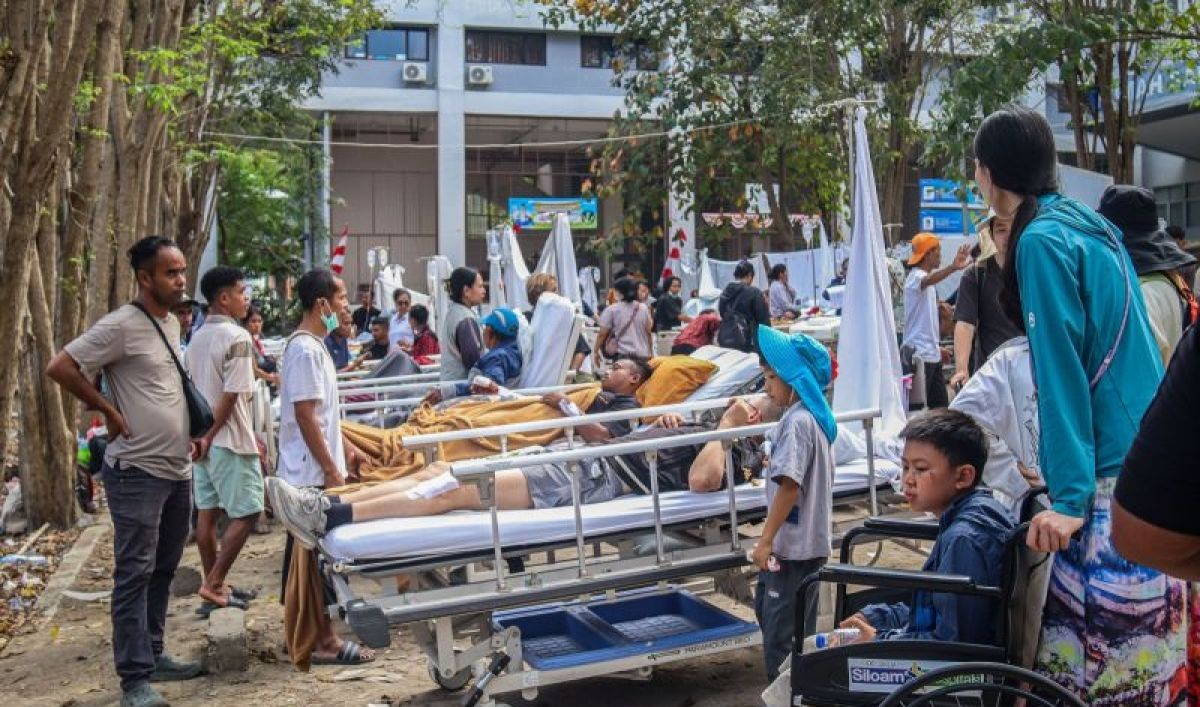
Professor Djohermansyah Djohan of the Institute of Home Affairs Governance (IPDN) has urged a paradigm shift in Indonesia’s disaster management so that central government assistance is provided based on regional capacity to handle emergencies, rather than merely waiting for a national disaster status to be declared. He acknowledged that regional governments are indeed the parties closest to communities when a disaster occurs. However, that proximity is not always matched by adequate capacity in terms of personnel, equipment, logistics or budgets.
For this reason, the central government is considered to need to provide support immediately once regional capacity begins to be exceeded. The designation of disaster status should not become a reason to delay the deployment of resources needed by affected communities.
“It should not be the case that because national status has not yet been determined, central assistance appears to have to wait. In an emergency, what the people need is not a label, but clean water, food, medicine, heavy equipment, medical personnel, evacuation shelters and transport access,” Djohermansyah said in a statement on Tuesday (25/8).
He explained that the implementation of regional autonomy in disaster management does not mean that district or city governments must handle all disaster impacts independently. The division of authority must be accompanied by a division of responsibility, resources and support across levels of government.
According to him, the government closest to the disaster site must be the first to act. However, when that capacity is no longer sufficient, higher levels of government must immediately strengthen the response.
“Those closest move first, those stronger immediately reinforce,” Djohermansyah said.
Under this scheme, the district or city Regional Disaster Management Agency (BPBD) becomes the spearhead when a disaster can still be handled with local capacity. If regional capacity is exceeded, the provincial government must take a greater role. Subsequently, when provincial capacity is no longer sufficient, the central government needs to immediately deploy national support.
Djohermansyah assessed that disaster management has too often been held hostage by discussions over whether an event has met the criteria to be classified as a national disaster. Yet the more urgent issue is the ability of local government to save communities and control the impact of disasters.
Law Number 24 of 2007 regulates the determination of disaster status and levels by considering, among other things, the number of victims, losses, damage to facilities and infrastructure, the extent of affected areas, and socio-economic impacts. Meanwhile, Government Regulation Number 21 of 2008 regulates the determination of emergency status at the national level by the President, at the provincial level by governors, and at the district or city level by regents or mayors.
However, according to Djohermansyah, the provisions regarding status should not be interpreted as a prerequisite for the central government to provide assistance to regions.
He also encouraged the establishment of a more automatic escalation mechanism. When district or city capacity begins to be exceeded, the provincial government must immediately step in to provide support. If provincial capacity is also insufficient, central government support must be provided immediately before conditions on the ground deteriorate further.
Such a mechanism is considered increasingly important because the impact of disasters does not recognise administrative boundaries. Floods can cross several districts, forest and land fires can spread across provinces, while large-scale hydrometeorological disasters can quickly drain a region’s resources.
For this reason, Djohermansyah considers that the concept of cross-regional or regional disaster management needs to be clarified within the national disaster system. Such arrangements are not intended to add bureaucracy, but rather to ensure command protocols, coordination and financing when disaster impacts exceed the boundaries of a single autonomous region.
In addition to the escalation mechanism, strengthening BPBDs is also considered urgent. Djohermansyah said BPBDs should not only be active once a disaster has occurred, but must become strategic institutions that build preparedness long before an emergency emerges.
Various issues remain challenges in the regions, ranging from limited personnel and competence, minimal equipment, limited technology to inadequate disaster management budgets.
According to Djohermansyah, budget policy also needs to be directed towards strengthening capacity before disasters occur. The government is not enough merely to provide funds for post-disaster handling, but also needs to increase investment in prevention and mitigation.
He encouraged the central government to strengthen support through the Physical Special Allocation Fund (DAK) for Disaster Management for regions with high vulnerability levels. These funds can be used to build early warning systems, evacuation routes and sites, logistics warehouses, rescue equipment, emergency communication systems, public facilities and infrastructure that is more resilient to disasters.
“Investment before a disaster is far cheaper than paying for damage after a disaster,” he said.
On the other hand, Djohermansyah assessed that the National Disaster Management Agency (BNPB) needs to be strengthened as a national orchestrator. That role should not only become visible after the President declares an event a national disaster, but from the moment indications emerge that regional government capacity is beginning to be exceeded.
He also considers that international assistance mechanisms need to be prepared in a measured manner. Assistance from other countries must still enter through coordination with the Indonesian government and be tailored to needs on the ground. However, considerations regarding sovereignty should not turn into rejection.