
Expert Calls for Root-Cause Fix to Regional Head Corruption
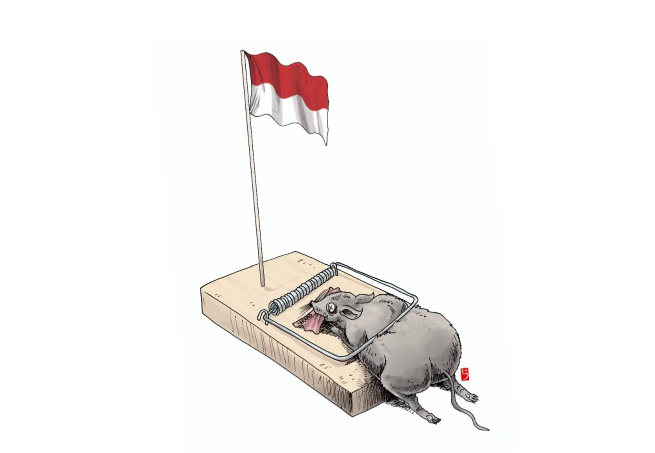
A governance expert has warned that the repeated arrest of regional heads in sting operations reflects deep-seated problems in Indonesia’s political and bureaucratic systems. The recent naming of Langkat Regent Syah Afandin as a suspect serves as a reminder that anti-corruption efforts must address root causes, not just individual perpetrators.
IPDN Professor Djohermansyah Djohan stated that the spate of cases involving regional heads is not solely due to weak individual integrity. He argued that the source of the problem lies in an unreformed system. “As long as the upstream issues are not fixed, we will continue to witness regional heads taking turns being arrested by the KPK,” he said in a statement on Friday.
The former Director General of Regional Autonomy at the Ministry of Home Affairs explained that corrupt practices at the regional government level are generally concentrated in three areas: promotion of positions, procurement of goods and services, and licensing. In the promotion mechanism, bureaucrats often face demands for payment to secure certain positions. Meanwhile, in government projects and licensing processes, kickbacks and facilitation payments frequently occur, involving bureaucratic elements and business actors.
“This is not merely the behaviour of corrupt bureaucrats. Many bureaucrats are actually in a pressured position because of power relations. The regional head, as the holder of power, can intervene, threaten, or even dismiss officials who do not follow their will,” he said. He assessed that this condition causes the bureaucracy to lose its professionalism, as it functions more as a political instrument. Consequently, public policy is no longer fully oriented towards the public interest but follows the interests of those in power.
Djohan also highlighted the candidate recruitment patterns applied by political parties. He noted that the candidate selection process is still dominated by central elites, which opens up greater space for political transactions. “Indonesia has adopted decentralisation in government, but political parties remain highly centralistic. The determination of regional head candidates is entirely decided by the central elite,” he said. He urged for a more open selection process to provide opportunities for figures with integrity and competence, not just those with financial means.
As a long-term measure, Djohan proposed a comprehensive overhaul of the Political Party Law, the Regional Election Law, and the Regional Government Law. He argued that regulatory changes are necessary to create a healthier political system and governance structure. Additionally, he suggested that the implementation of regional elections should be designed more flexibly, taking into account the characteristics of each region, so that a uniform approach is not applied everywhere. “Regional elections in Indonesia cannot be standardised. Our regions are very diverse. Policies must also consider this diversity so that political costs can be reduced,” he said.
For a short-term solution, Djohan urged the central government to increase oversight of regional governments. He even proposed that the Ministry of Home Affairs divide supervisory and guidance responsibilities among its directorates general based on region as a rapid response to the high number of corruption cases involving regional heads. “Corruption among regional heads has reached an emergency stage. Therefore, extraordinary breakthroughs are needed. If the system is not changed, we will just keep waiting for the next regional head to be arrested by the KPK,” he concluded.