
Expert Calls for Geothermal Development to Be Further Optimised
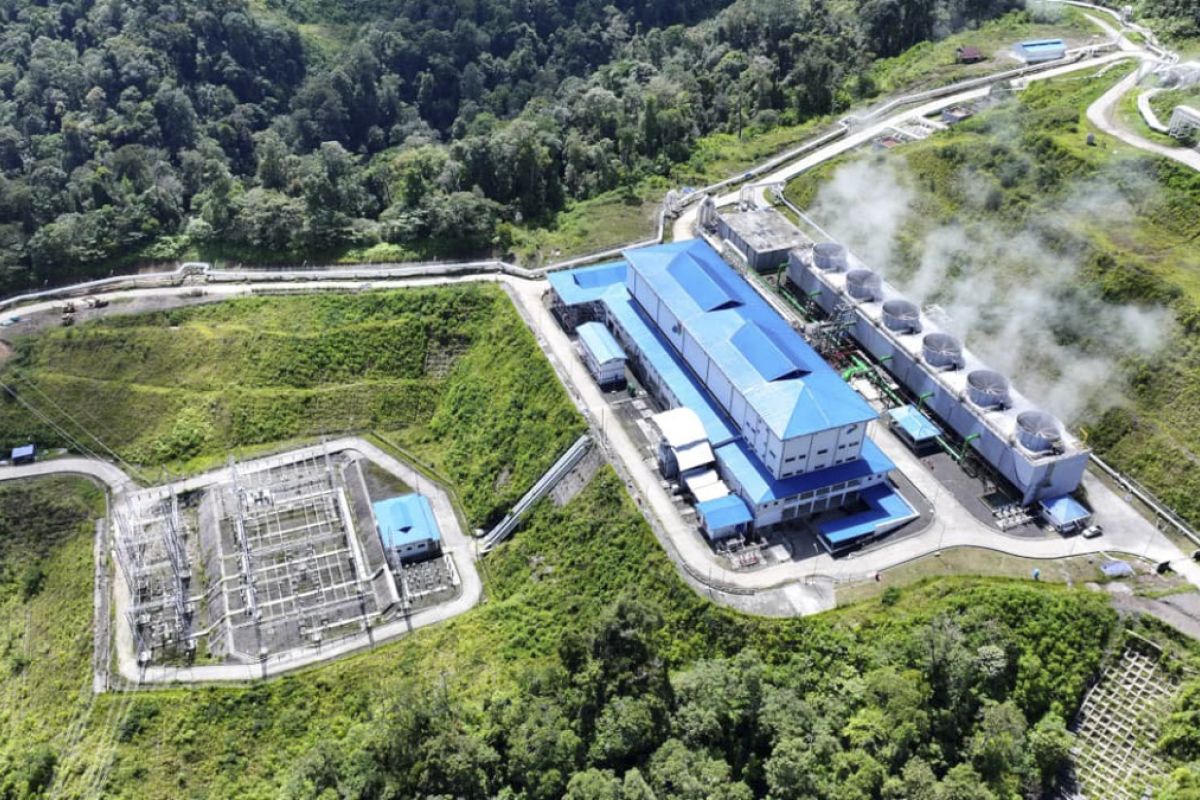
Jakarta (ANTARA) — Universitas Gadjah Mada (UGM) energy economist Fahmy Radhi has called for the development of new and renewable energy (NRE), including geothermal, to be further optimised.
He said NRE development was essential and needed to be pursued with clear and sustained priorities.
“Indonesia still has considerable geothermal potential, but it has not been explored optimally. This is a challenge,” Fahmy said in a statement in Jakarta on Tuesday.
According to a presentation by the Geological Agency of the Ministry of Energy and Mineral Resources in August 2026, Indonesia has geothermal potential of around 24 gigawatts (GW) across 368 locations.
Meanwhile, installed geothermal power plant capacity, according to data from the ministry’s Directorate General of New, Renewable Energy and Energy Conservation, stands at just 2,776 megawatts (MW), or about 11.6 per cent of the total potential.
In other words, around 88 per cent of Indonesia’s geothermal potential could still be harnessed as a future energy source.
Fahmy said the substantial gap between potential and utilisation made the centenary of geothermal energy a reminder of the need for more serious and focused action.
This includes encouraging more investors to participate in exploration.
He said NRE development had begun, but its direction needed to be clarified, given Indonesia’s diverse and abundant resources.
He therefore urged the government to establish NRE as a priority.
“The decision is that NRE is the priority,” he said.
From a market perspective, Fahmy said geothermal energy continued to offer strong prospects. Geothermal electricity could provide an alternative to coal-fired power for both households and industry.
The development opportunity is also in line with PLN’s 2025–2034 Electricity Supply Business Plan (RUPTL). Of the planned 69.5 GW in additional generating capacity, 42.6 GW is to come from NRE-based power plants, with geothermal expected to contribute an additional 5.2 GW.
Achieving that target will require national energy companies to make long-term investments in exploration and drilling.
One company playing a role is listed firm PT Pertamina Geothermal Energy Tbk (PGEO), which currently manages 15 geothermal working areas with a total installed capacity of 1,932 MW. This comprises 727 MW operated directly and 1,205 MW under joint operating contracts, equivalent to around 70 per cent of national geothermal capacity.
As geothermal energy marks a century since the first drilling at the Kamojang crater in West Java in 1926, this resource must be better harnessed to strengthen Indonesia’s energy security in the future.
This role is rooted in a long history: Indonesia’s geothermal potential was first identified 100 years ago at Kamojang, West Java, where PGEO continues to operate.
Steam has been produced consistently from well KMJ-3 since 1926, making it one of the early milestones in the country’s geothermal industry.
Looking ahead, PGEO aims to increase its self-operated capacity to 1 GW by 2028 and 1.8 GW by 2034, in line with the RUPTL.
Fahmy emphasised that energy self-sufficiency required not only a wider range of energy sources, but also the resolve to set priorities based on domestic potential.
Co-operation between the government, national energy companies and investors is key to ensuring geothermal potential is fully harnessed in the second century of its development.
“Developing NRE is essential and must be pursued continuously,” Fahmy said.