
Expert at LNG Hearing Explains Difference Between State Losses and Corporate Profit Shortfalls
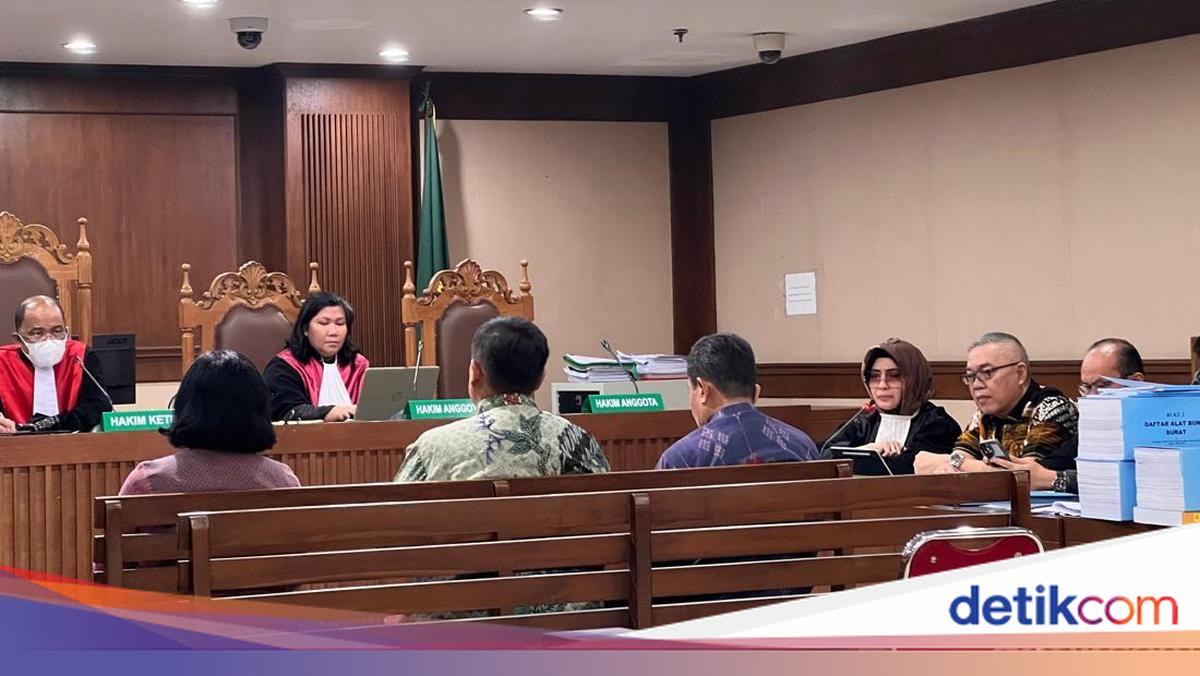
Criminal law expert from Pancasila University, Prof Agus Surono, appeared at the trial for the alleged corruption case in the procurement of liquefied natural gas (LNG), or liquefied natural gas. Agus explained the difference between state financial losses and corporate profit shortfalls.
The hearing was held at the Central Jakarta Corruption Court on Monday (30/3/2026). Agus was presented by the defendant, former Director of Gas at PT Pertamina, Hari Karyuliarto.
Initially, Hari’s lawyer asked Agus’s opinion regarding state losses and corporate losses. She asked whether losses in corporate actions could be considered state financial losses.
“I request the expert’s opinion: which of these losses can be said to be state losses, and which are corporate losses? In this case, we are talking about a PT, a state-owned enterprise (BUMN), in the form of a limited liability company. When there is a business involving purchases and then reselling, where the funds also come from the company’s money, the BUMN’s money, and there are losses said to be fund losses, right,” said Hari’s lawyer, Wa Ode Nur Zainab.
“The losses from reselling. Is this the kind of loss that occurs in a BUMN, which actually happens quite often in BUMN trading practices—sometimes losing, sometimes profiting,” continued Wa Ode.
“When there is a loss in such corporate actions, without bribery, without manipulation, without kickbacks, without conflict of interest, can that then be said to be a loss in relation to state financial losses under Article 2, Article 3?” added Wa Ode.
Agus then provided an explanation. Agus stated that if there is no bribery, manipulation, up to conflict of interest, there is no strafbaar feit or criminal act.
“With the panel’s permission, I am not answering that specifically. But I want to convey that if there is none of what you mentioned earlier, then there is no strafbaar feit in that action. If there is no strafbaar feit, then there is no criminal liability. That’s the logic of the law, right,” replied Agus.
“Thus, even if there is a loss, the context is certainly different. What was already explained by the other expert, I won’t repeat the same thing,” he added.
Agus opined that state financial losses and reductions in corporate profits are different matters. He emphasised the presence or absence of strafbaar feit in a legal event.
“But, with the panel’s permission, I also want to emphasise that a shortfall in profits or reduction in profits and state financial losses are different things. Please understand, you can ask the other experts later,” said Agus.
“A reduction in profits and state financial losses are different things. You keep illustrating it as profit, turns out profit, turns out profit. So, in my view, a distinction must be made between a reduction in profits and state financial losses,” he added.
Prosecution
Previously, the public prosecutors from the Corruption Eradication Commission (KPK) charged two new defendants in the LNG procurement corruption case with causing state losses of USD 113 million. The two defendants are former Director of Gas at PT Pertamina, Hari Karyuliarto, and former VP of Strategic Planning Business Development in Pertamina’s Gas Directorate, Yenni Andayani.
The charging hearing was held at the Central Jakarta Corruption Court on Tuesday (23/12/2025). Both are charged with committing the acts together with former Pertamina CEO Galaila Karen Kardinah or Karen Agustiawan, who has already been convicted in this case.
“Committing acts of enriching themselves or others or a corporation, namely enriching Galaila Karen Kardinah alias Karen Agustiawan by Rp 1,091,280,281 (Rp 1 billion) and USD 104,016, and enriching the corporation Corpus Christi Liquefaction LLC by USD 113,839,186 (USD 113 million),” said the prosecutor.
The prosecutor stated that the loss figure is based on the investigative audit report from the Supreme Audit Agency (BPK) of Indonesia. The prosecutor said the gas purchase was carried out on the grounds that domestic gas stocks were limited, so Pertamina needed to buy gas from the US.
The prosecutor said the principal permit for the LNG procurement was issued by Karen without guidelines for implementing LNG procurement. The LNG procurement, according to the prosecutor, was carried out based on best practices that Pertamina always followed as an LNG seller on behalf of the state.
After various negotiation processes and internal discussions, the gas purchase was made by Pertamina from Corpus Christi Liquefaction LLC. However, according to the prosecutor, Pertamina did not yet have fixed LNG buyers in the domestic market to absorb or purchase the LNG from that US company.
The prosecutor said the LNG purchase was not accompanied by a final economic analysis or calculation. This condition led to an excess or oversupply of LNG.
“Whereas according to the interim risk study on the volume of LNG imports to be purchased by PT Pertamina’s Gas Directorate, there should be a gas sales agreement (GSA) before the LNG SPA (sales and purchase agreement) is signed, so that the LNG can be absorbed 95 percent according to the statistical probability approach, or 90 percent according to the conservative approach, or 80 percent of the LNG SPA volume according to the aggressive approach, thus not causing losses to PT Pertamina,” he said.
The prosecutor said Pertamina then sold the surplus imported LNG to buyers abroad from 2019 to 2023. The prosecutor said the total cost of purchasing 18 cargoes of LNG from Corpus Christi Liquefaction incurred by Pertamina amounted to USD 341,410,404, and Pertamina sold them at a loss with a sales value of USD 248,784,764.
The prosecutor said Pertamina suffered losses from this buying and selling practice amounting to USD 92,625,640. The prosecutor also said there was uncommitted cargo, causing Pertamina to pay a suspension fee of USD 10,045,980.
The prosecutor stated that the defendants’ actions have caused state losses of USD 113,839,186.