
Expert at Asset Forfeiture Bill Hearing: What If Tigers and Elephants Become Assets?
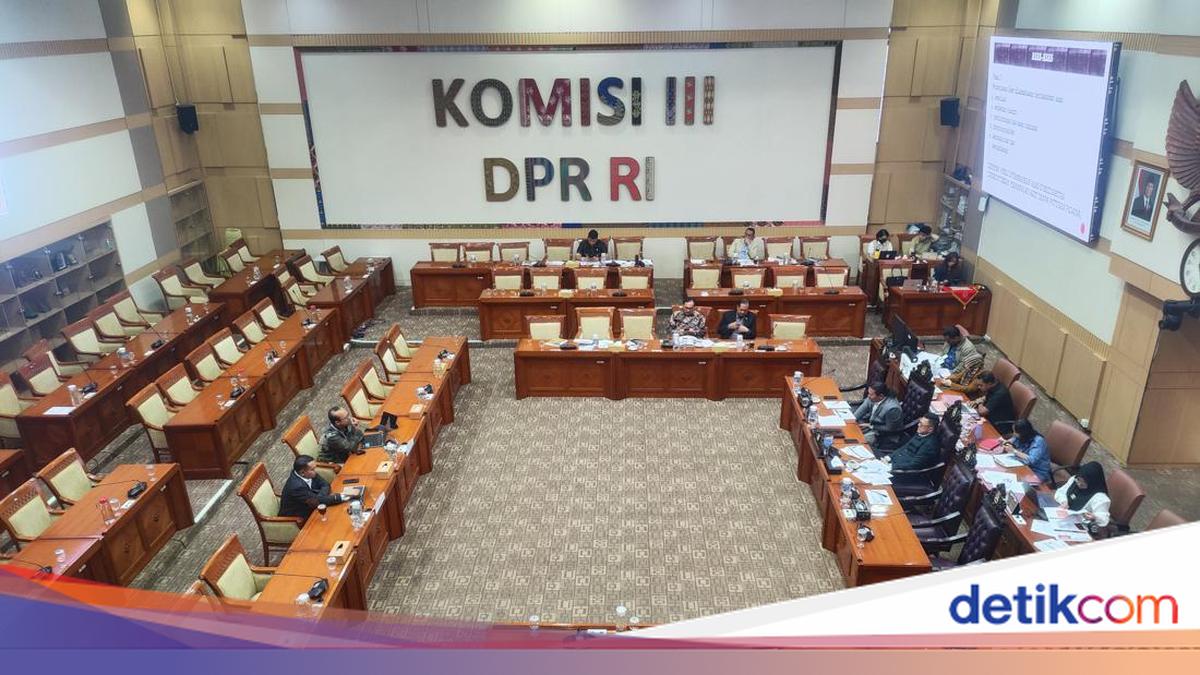
A legal academic from Surabaya State University (Unesa), Aditya Wiguna Sanjaya, offered several notes on the Asset Forfeiture Bill during a meeting with House of Representatives Commission III. One of them concerned the value of assets that have no market price.
“First, ladies and gentlemen need to think about how to determine the valuation for proceeds of crime that do not have a market price,” Aditya said during the meeting with House Commission III at the DPR building in Senayan, Jakarta, on Monday (31/8/2026).
He then touched on an article in the draft Asset Forfeiture Bill that mentions the nominal value of assets that can be seized. He went on to discuss the criminal offence of trafficking in plants and wildlife.
“Some time ago we held a discussion with colleagues from the civil servant investigators and the Ministry of Forestry. At the Ministry of Forestry we have what is called the Conservation Law, and within the Conservation Law there is a criminal offence concerning the trafficking of plants and wildlife,” he said.
In that discussion, according to him, a question arose about plants or wildlife that become assets. He then asked what would happen if an elephant or a tiger became an asset subject to seizure.
“Well, during our discussion a question emerged: if there is a wildlife trafficking offence, for example a tiger or an elephant being traded, and then the suspect dies or flees, this becomes an asset. Then how do we value this tiger? If we want to sell it or auction it, there is no market price,” he said.
For this reason, Aditya suggested that the matter of asset valuation be carefully examined by House Commission III. “Therefore, assets such as these need to be considered,” he added.
Previously, House Commission III revealed that there are 13 types of criminal offences included in the list that can be subject to asset forfeiture under the Asset Forfeiture Bill related to criminal acts. The list covers corruption to human trafficking.
Chairman of House Commission III Habiburokhman said the list was the result of scrutiny of input from experts, as well as comparison with asset forfeiture regulations in a number of countries.
“Regarding the question about the scope of criminal offences in this bill, House Commission III conducted research and in-depth study of the types of criminal offences regulated in this bill,” Habiburokhman said in his statement on Saturday (29/8/2026).
The following are the 13 criminal offences included in the list:
corruption;
narcotics and psychotropic substances offences;
terrorism;
people smuggling;
smuggling of weapons, ammunition and hazardous materials;
forestry offences;
environmental offences;
taxation offences;
banking offences;
insurance offences;
mining offences;
marine and fisheries offences; and/or
human trafficking.
Source: jawawa.id (https://jawawa.id/newsitem/expert-at-asset-forfeiture-bill-hearing-what-if-tigers-and-elephants-become-assets-1788159207)
Originally published by detikcom (https://news.detik.com/berita/d-8641658/pakar-di-rapat-ruu-perampasan-aset-kalau-harimau-gajah-jadi-aset-gimana), translated from Indonesian