
Expert: Asset Forfeiture Bill Should Not Regulate Illicit Enrichment
Said Bakhri, an academic from the Faculty of Law at Jayabaya University, has proposed that illicit enrichment should not be included in the Asset Forfeiture Bill. He stated that illicit enrichment must be placed within the appropriate legal construction.
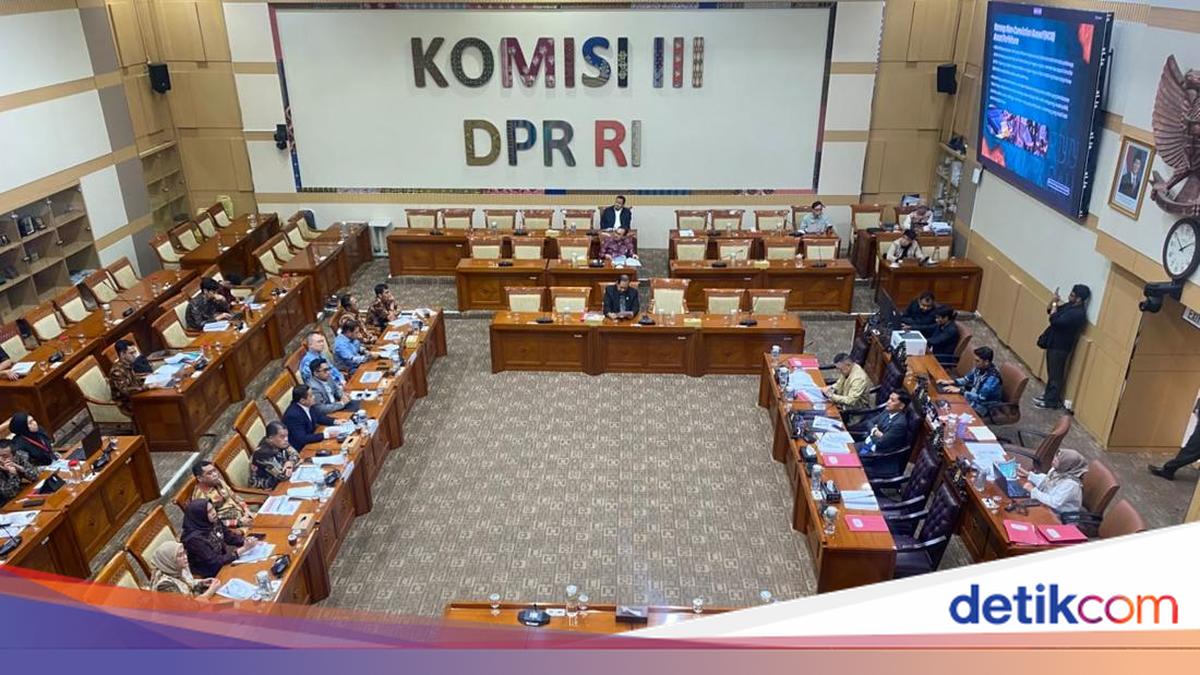
“We are providing notes regarding illicit enrichment. Illicit enrichment should be regulated under substantive law, not procedural law. To explain, the seizure of assets from illicit enrichment is a form of punishment for a substantive offence, and therefore should be placed within substantive criminal law,” said Said Bakhri during a Public Hearing (RDPU) with Commission III of the Indonesian House of Representatives (DPR RI) in Senayan, Jakarta, on Monday (28/09/2026).
Said noted that the Asset Forfeiture Bill regulates mechanisms related to criminal acts. He proposed that the bill currently being discussed by Commission III of the DPR should not include illicit enrichment in its provisions.
“Meanwhile, the asset forfeiture bill regulates procedural law or the execution of legal sanctions for criminal acts, which is procedural law. In accordance with the legal principle of lex superior derogat legi inferiori—where a higher regulation overrides or supersedes a lower one if they conflict—the asset forfeiture bill should not regulate illicit enrichment,” he said.
He emphasised that wealth irregularities must also be examined through fair evidence. Said stated that wealth discrepancies should not result in an automatic verdict.
“Furthermore, wealth irregularities should not serve as an automatic verdict. Every legal consequence must be based on clear provisions or legal certainty, involving verifiable evidence and the opportunity for the parties involved to provide explanations,” said Said.
“The formation of legislation needs to carefully distinguish between the regulation of criminal offences, methods of proof, the principle of due process of law, and mechanisms,” he concluded.