
Expert Assesses Solar Panels as Effective Solution to National Electricity Supply Crisis
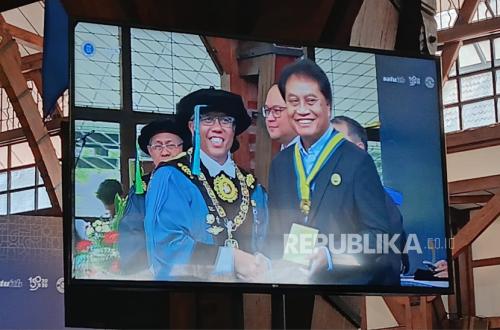
The phenomenon of power outages that recently affected parts of Java and Sumatra serves as a serious warning signal for the national energy sector. The blackouts are considered an indication that the safety margin of the national electricity supply is now beginning to thin. According to Energy and Infrastructure expert and ITB Chemical Engineering alumnus Triharyo Soesilo, the increasingly critical electricity supply condition was triggered by the cessation of power plant construction since 2019. Meanwhile, public electricity consumption driven by economic growth has continued over the past seven years without being matched by the addition of new generating capacity. To rapidly catch up on the supply shortfall, the utilisation of solar panels or Solar Power Plants is considered the most realistic option at present, he said. Hengki explained that conventional energy options such as coal-fired Steam Power Plants are now prohibited. Meanwhile, the geothermal potential on the island of Java can no longer be increased. The option of building gas-based power plants also faces major obstacles because it requires very high costs and a long time to build the turbines. Seeing this situation, accelerating large-scale solar power installations is an urgent step. The utilisation of open areas such as water surfaces is considered an efficient solution. Hengki is known as an ITB alumnus who has produced various important works in the industrial sector. In the 1980s, he played a role in the construction of all fertiliser plants in Indonesia, as well as several plants in Malaysia and Brunei. Together with Indonesian technologists, he also succeeded in enabling PT Rekayasa Industri to compete and reduce the dominance of foreign contractors in industrial development in Indonesia. In the 2000s, national contractors began to be able to build oil refineries independently, such as the Langit Biru Refinery Project in Balongan. Hengki’s mission appeared to be fighting foreign contractor dominance. He eventually built a submarine gas pipeline crossing from Sumatra to Java and then dominated the construction of Geothermal Power Plants by Indonesian engineers. Both of these technologies were previously controlled by foreign contractors in Indonesia. One of his toughest challenges was when he received an assignment from the Minister of State-Owned Enterprises and the Minister of Energy and Mineral Resources to become the President Commissioner of PT Kilang Pertamina Internasional. At that time, Pertamina’s refineries experienced severe fire incidents almost every three months, but all causes were successfully mitigated one by one by the entire board of PT KPI. Simultaneously, the board successfully completed Pertamina’s refinery projects one by one. Hengki documented his experiences solving various large-scale project problems and market domination strategies in a book titled ‘Ilmu Menerobos Sumbatan’.