
Expert Assesses B50 Biodiesel Blending as Means to Reduce Energy Import Dependence
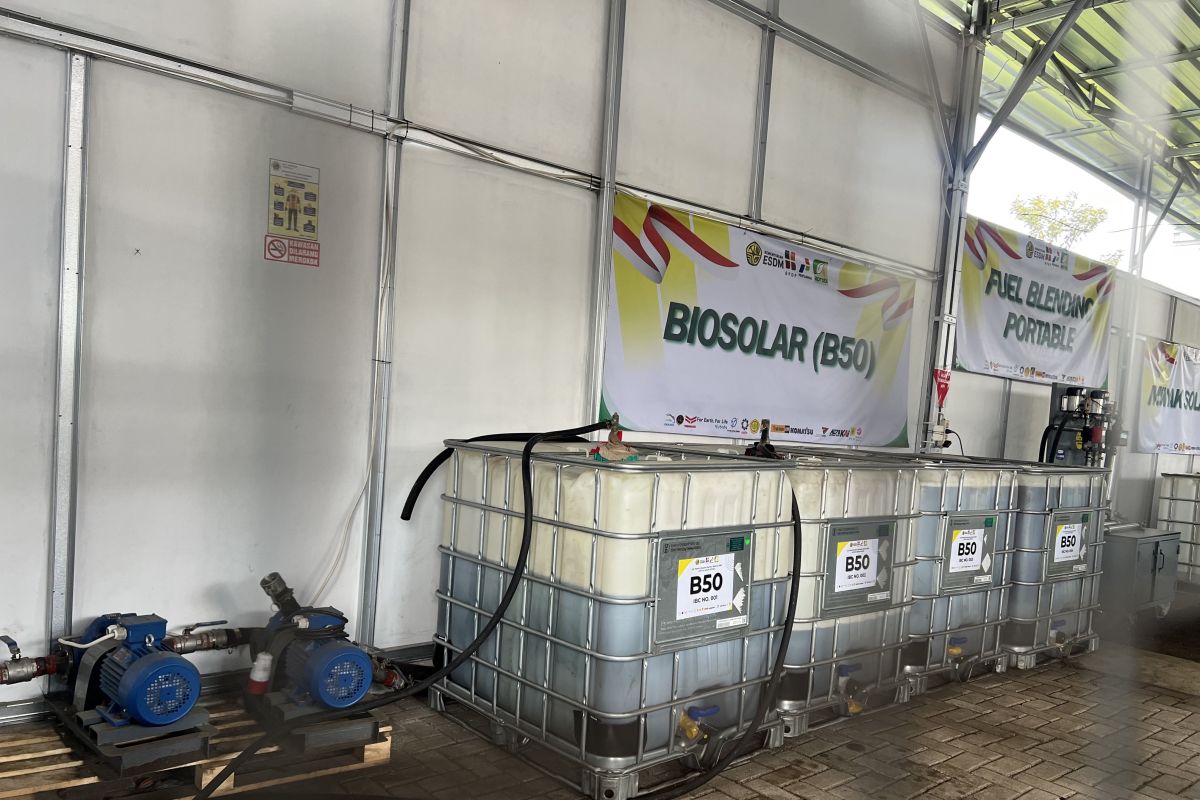
Jakarta (ANTARA) — To safeguard against geopolitical impacts, Indonesia must become more self-reliant in managing domestic energy potential. Energy transition expert from the Bandung Institute of Technology (ITB) Retno Gumilang Dewi assessed that implementing 50 percent biodiesel blending with palm oil (B50) can reduce Indonesia’s dependence on energy imports.
“The aspect that will make our energy supply stable is utilising our own wealth. By being able to utilise it, we will not be affected by what is called a geopolitical crisis as we see now,” Retno stated in a statement received in Jakarta on Sunday.
Retno explained that current global dynamics demonstrate that energy issues are no longer simply a matter of supply, but also a geopolitical concern. Consequently, she noted, every country is currently competing to secure its own energy needs amid increasing global uncertainty.
“To be safe from these geopolitical impacts, Indonesia must be more self-reliant in managing its domestic energy potential,” she said.
Retno outlined Indonesia’s energy transition roadmap for the 2025–2060 period. The first phase, she explained, runs from 2025–2030 with a focus on stabilising and strengthening national energy resilience before entering full decarbonisation.
During this phase, the government must promote energy diversification through the utilisation of domestic gas, biomass co-firing in coal-fired power plants, implementation of B40 biodiesel progressing towards B50, bioethanol development, and the acceleration of new renewable energy.
The second phase, Retno continued, runs from 2030–2040. This phase focuses on accelerating clean energy development through the utilisation of solar, hydroelectric, and geothermal energy, as well as strengthening electrification in the transport and industrial sectors.
Subsequently, the third phase from 2040–2060 focuses on deep decarbonisation towards the Net Zero Emission (NZE) 2060 target. This phase is conducted through the gradual reduction of coal use and the development of new energy sources such as hydrogen, ammonia, nuclear power, and CCS/CCUS technology.
Nevertheless, Retno emphasised that Indonesia’s energy transition cannot be implemented instantaneously. According to her, fossil fuels will still play an important role in ensuring national energy supply security during the transition period.
“If energy transition is carried out abruptly, the impact will be very significant for the economy and society. Therefore, Indonesia’s energy transition must be implemented gradually whilst prioritising energy resilience,” Retno stated.
Retno noted that the greatest challenge in energy transition lies in the transport sector, as this sector remains the largest fuel consumer in Indonesia.
“For this reason, the government needs to strengthen the development of electric vehicles, the use of gas for mass transportation, and the gradual development of low-emission fuels,” she said.