
Expert Appreciates Puan's Commitment to 'Meaningful Participation' in Asset Forfeiture Bill
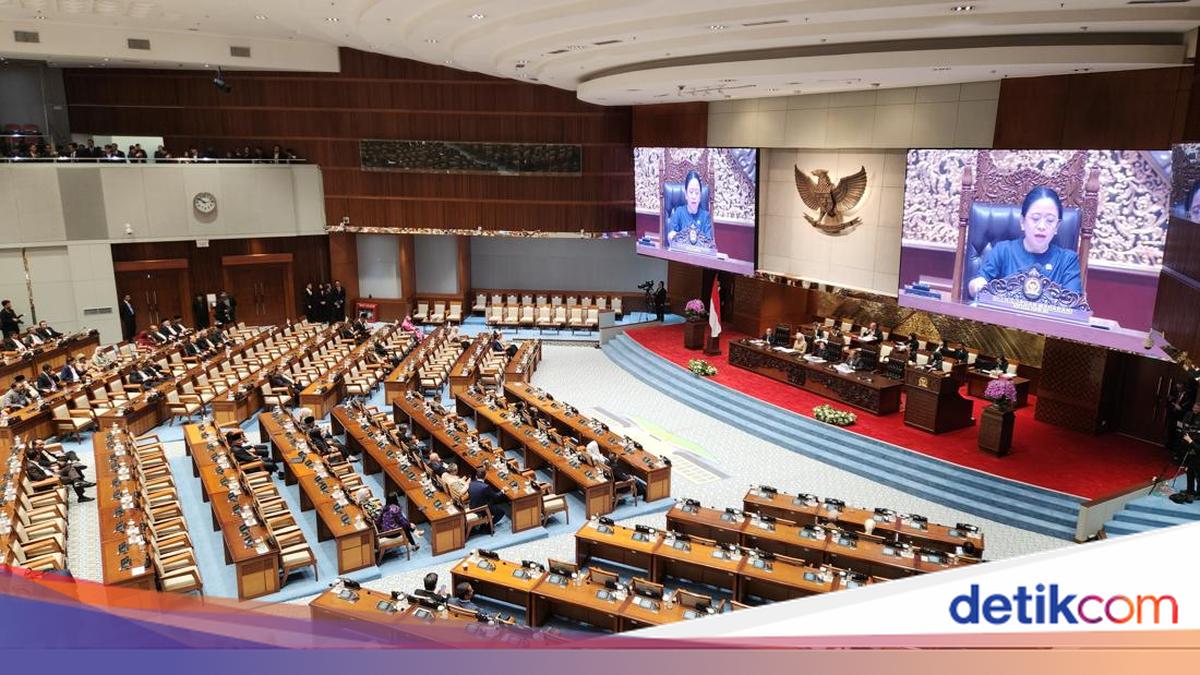
Legal and development observer Hardjuno Wiwoho has expressed appreciation for House of Representatives (DPR) Speaker Puan Maharani’s emphasis on the importance of ‘meaningful participation’ in the legislative process for the Asset Forfeiture Bill during the 2026-2027 sitting year. According to Hardjuno, this commitment demonstrates the DPR’s attention to the quality and legitimacy of the law to be produced.
“I appreciate what the Speaker of the DPR has conveyed. The emphasis on meaningful participation is very important because it shows that the DPR wants the Asset Forfeiture Bill to have strong substance while also gaining public trust. This is a good direction in the law-making process,” said Hardjuno on Monday (17/8/2026).
Hardjuno said the Asset Forfeiture Bill has long been an important part of the agenda to strengthen the eradication of corruption and economic crime. He expressed hope that the spirit of openness conveyed by Puan would be maintained throughout the deliberation process so that the regulation would strengthen the mechanism for recovering state assets while providing legal certainty and maintaining a balance of authority among state apparatus.
“Therefore, I hope that meaningful participation will not be interpreted merely as inviting the public to forums or requesting input. The public must know what is being discussed, whose input is accepted, and how that input influences the formulation of articles in the law,” he explained.
According to Hardjuno, public attention will later focus on the substance of the bill, particularly regarding the mechanism for tracing and forfeiting assets, the standard of proof, protection for parties acting in good faith, as well as oversight and objection mechanisms. He urged that deliberation on these sections be conducted transparently.
“If the DPR wants this bill to have strong legitimacy as conveyed by the Speaker, the measure is simple: the public is not only given the opportunity to speak, but can see that their voices truly enter the law-making process. The Asset Forfeiture Bill must become an effective instrument for pursuing the proceeds of crime, while at the same time still guaranteeing the principles of the rule of law,” said Hardjuno.
Hardjuno assessed that Speaker Puan Maharani’s statement in her speech at the Opening of the First Session of the 2026-2027 Sitting Year provides strong legitimacy for the continuation of the deliberation of the Asset Forfeiture Bill until it becomes law.
“This strong legitimacy is very important for the people. I hope that the participation space opened can be utilised as widely as possible so that various public inputs enrich the deliberation. In this way, the Asset Forfeiture Bill can become an effective instrument for pursuing the proceeds of crime while still guaranteeing the principles of the rule of law,” Hardjuno concluded.
Previously, Puan said the Asset Forfeiture Bill is part of 43 bills currently in the drafting stage together with the government. The DPR, according to her, is still opening space for the public to provide input on the draft regulation.
“The Asset Forfeiture Bill is still at the stage of receiving meaningful input from the public, or meaningful participation, so that it can strengthen the substance of the law and have strong legitimacy,” said Puan in her speech at the opening of the session at the Parliament Building on Friday (14/8).
The DPR and the government are working to carry out law-making in accordance with the constitutional mandate, opening space for meaningful public participation, and grounded in national legal needs and social, political and economic legitimacy.
“As well as ensuring there is no overlap between laws and/or the authority of state apparatus,” continued the first woman to serve as Speaker of the DPR.