
Expert: Anyone Can Shape Opinions, Kejagung Investigators Must Be Discerning
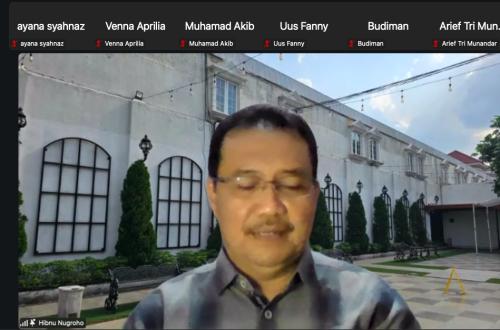
REPUBLIKA.CO.ID, JAKARTA — A criminal law expert from Universitas Jenderal Soedirman (Unsoed) in Purwokerto, Hibnu Nugroho, stated that in the current era, anyone can shape opinions regarding a case handled by the Attorney General’s Office (Kejagung). Therefore, the public must be careful with opinion-forming efforts by parties that instead obscure the case being handled by law enforcement.
In handling cases, according to Hibnu, Kejagung certainly already understands the case and possesses strong evidence. “Anyone can shape opinions on a case, but Kejagung certainly does not designate someone as a suspect lightly, as it will be tested in court,” said Hibnu.
This was conveyed by Hibnu in response to questions about influencers who have questioned Kejagung’s policy in designating suspects in the alleged corruption case of Chromebook procurement during Minister Nadiem Makarim’s tenure.
What must be guarded against is the formation of opinions that obscure the substance of a corruption case. Thus, law enforcement must focus on the evidence found.
In the current digitalisation era, focus must be placed on accurate evidence obtained in uncovering cases. Information can serve as input in case revelations. “The integrity and independence of law enforcement are important in the current technological era,” he said.
Regarding the PPK for the Chromebook procurement who has been questioned for not being designated as a suspect, Hibnu stated that in the science of case revelation, there are strategies that do not immediately make someone a suspect.
“Regarding whether there are other parties involved or not? What is the evidence? Investigators cannot directly examine someone based on mere admissions. So, there could be case volume I, volume II, and so on,” explained Hibnu.
Current law enforcement, according to Hibnu, must be intelligent because opinions emerging in society can serve as input for law enforcement, but they may not necessarily have evidentiary value. “Therefore, law enforcement must assess whether public opinions have evidentiary value or not,” he revealed.