
Expert Analysis on the 'Bermuda Triangle' of Masalembo, Site of KM Virgo Accident, is Not Mystical
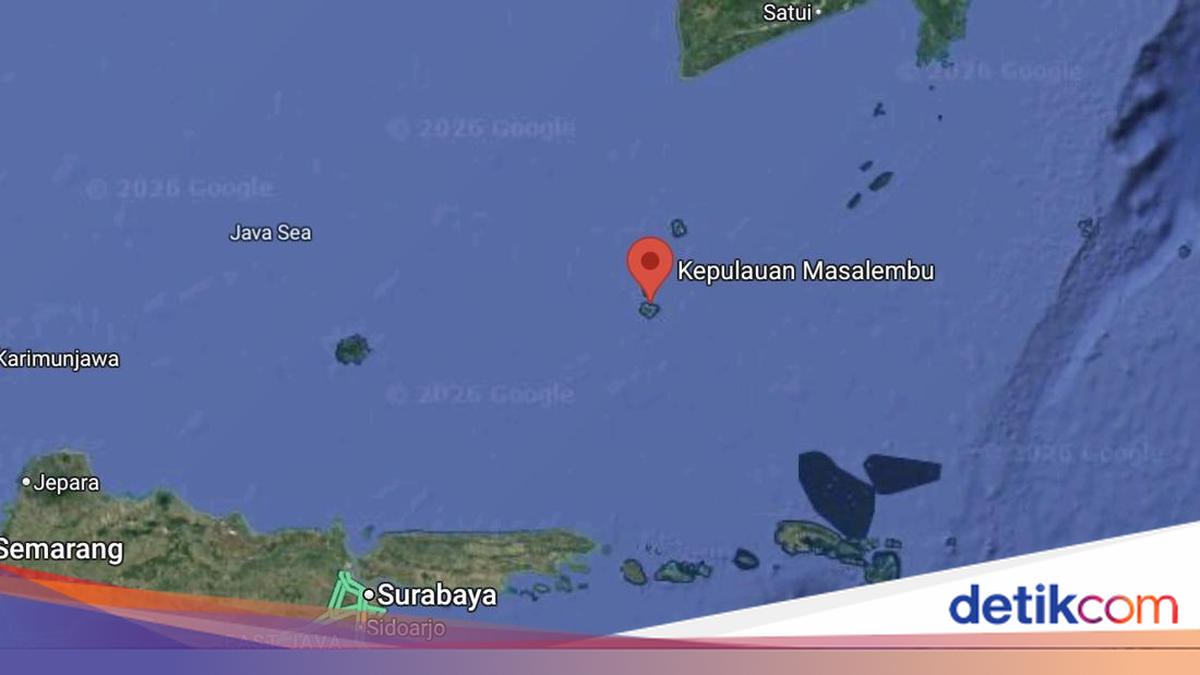
The motor vessel (KM) Virgo Transport 8 experienced an accident in the Masalembo waters, Java Sea—an area frequently linked to mystical tales and nicknamed the ‘Indonesian Bermuda Triangle’. Experts assert that the high maritime risks in this region can be explained logically through highly dynamic sea and weather conditions.
Dr Daryono, a member of the Indonesian Disaster Expert Association (IABI), explained that Masalembo is not a territory of supernatural beings or a mysterious zone that automatically ‘attracts’ ships to sink.
“This complexity does not mean Masalembo possesses mysterious or unique marine phenomena that automatically cause ships to sink. The navigational risks in this area are more accurately understood as the result of interacting factors, including wind, waves, currents, tides, atmospheric conditions, bathymetry, vessel characteristics, cargo, as well as navigational decisions and procedures,” Daryono stated in a written statement received on Wednesday (16/09/2026).
Masalembo, according to Daryono, is in a very strategic position as it is flanked by the Java Sea, the Makassar Strait, and the Flores Sea. The Makassar Strait serves as a primary ‘water highway’ that flows with strong currents from the Pacific Ocean towards the southern Indonesian waters.
Imagine this area as a very busy highway intersection. Differences in temperature, salinity, and even sea depth create highly complex current movements.
“Under certain conditions, differences in density between layers can produce marine stratification and current shear, which is the difference in speed or direction of currents between one layer and another. This process can be related to turbulence, water mass mixing, or internal wave phenomena. However, these phenomena should not be immediately assumed to be the cause of a ship losing buoyancy or control,” Daryono explained.
The Danger of Cross-Seas and Sudden Storms
In addition to ocean currents, weather factors in Masalembo also significantly affect maritime safety. Influenced by the movement of the Asian-Australian monsoon winds, wind direction and speed in Masalembo can fluctuate.
These conditions often trigger the phenomenon of ‘cross-seas’, a situation where two or more wave systems from different directions meet and collide at a single point. For a ship, being hit by waves from various directions is akin to being shaken from left to right (rolling) and front to back (pitching) simultaneously.
“Cross-seas can increase ship movement, particularly rolling and pitching, and increase the dynamic load on the ship’s structure,” he said.
On the other hand, the warm waters of Masalembo are highly conducive to the formation of giant storm clouds (cumulonimbus). These clouds can trigger sudden strong winds (gust fronts) and disrupt sea conditions in a very short period.
“When cumulonimbus clouds develop strongly, heavy rain, lightning, downdrafts, and gust fronts can occur. Rapidly changing wind gusts can cause sea conditions to change in a relatively short time. For ships, sudden changes in wind and waves can increase the load and movement of the vessel,” said Daryono.