
Expert Admits Trading in Influence Not Yet Regulated, Febrie's Lawyer Calls AGO's Charges Imaginative
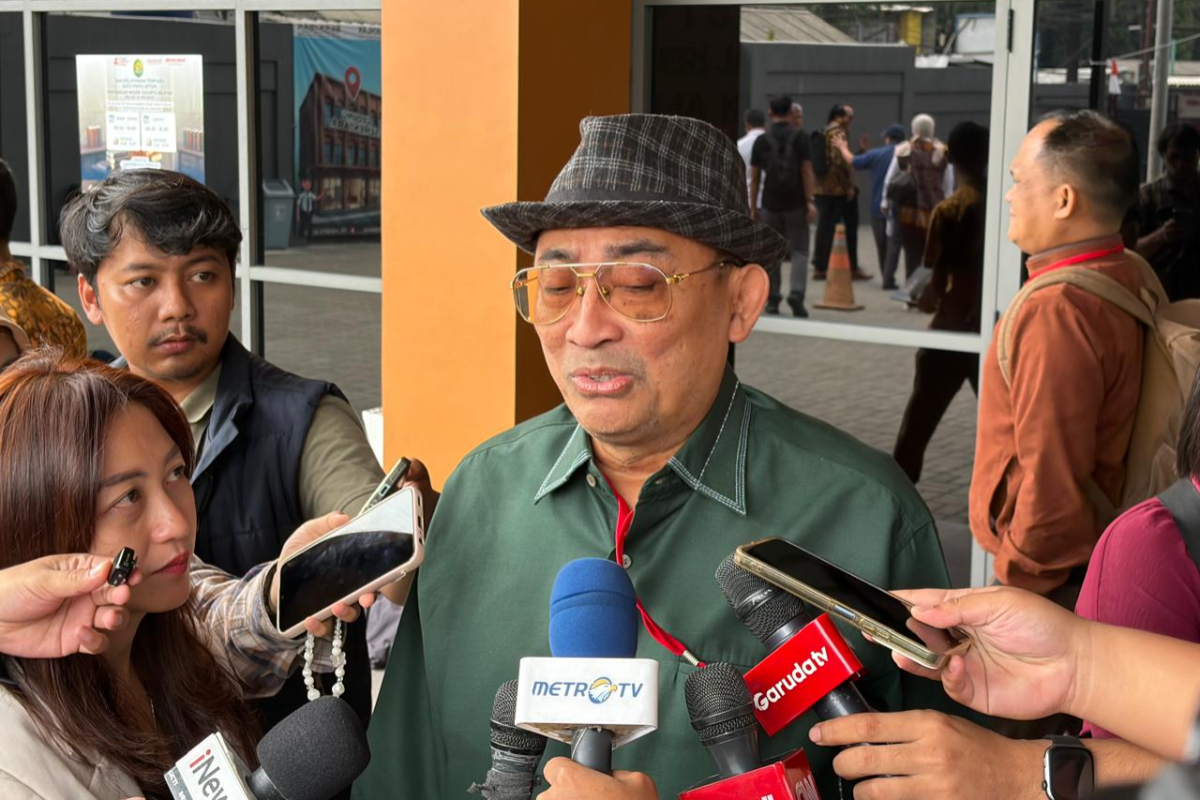
The legal counsel for former Deputy Attorney General for Special Crimes (Jampidsus) Febrie Adriansyah, Firman Wijaya, has argued that the charge of trading in influence linked to his client lacks a clear criminal basis. Firman stated that the testimony of criminal law expert from Gadjah Mada University (UGM), Fatahillah Akbar, presented by the Attorney General’s Office (AGO) in Febrie’s pretrial hearing, actually strengthened their argument. Fatahillah acknowledged that trading in influence has not been criminalised as a separate offence under Indonesian positive law.
“If it is a modus operandi, including the article being charged, which article is it? It does not exist yet. What criminal act is being charged? It does not exist yet. Moreover, whose influence is being traded? It does not exist yet. Is it his family’s? Or whose? Because there must be a third party. Who is trading the influence? So it is imaginative, an imaginative article charge,” Firman said after the hearing at the South Jakarta District Court on Monday (24/8/2026).
According to Firman, the construction of a criminal charge must fulfil the principle of lex certa, meaning criminal provisions must be formulated clearly and firmly. He assessed that the lack of clarity regarding the predicate offence charged against Febrie is also a problem in the case. “The lex certa principle must be clear and firm in the indictment. Moreover, the expert also emphasised that in naming a suspect, one must not create a presumption of guilt. If there is a presumption of guilt, it means there is a legal basis being used. In fact, the article used against Mr Febrie Adriansyah, what the predicate offence is, remains unclear,” he said.
During the hearing, Fatahillah explained that trading in influence is indeed regulated in the United Nations Convention Against Corruption (UNCAC), which Indonesia ratified through Law Number 7 of 2006. However, this provision cannot yet be used as an indictment article because it has not been specifically criminalised in national law. “Trading in influence is indeed one of the acts regulated in the United Nations Convention Against Corruption, which has been ratified by Law Number 7 of 2006. But if we ask whether Article 18 of the UNCAC that has been ratified can become an indictment article, it cannot,” Fatahillah said.
He explained that the concept of trading in influence can only be used as a description or modus operandi to strengthen the allegation of an unlawful act, not as a standalone criminal article. “It can only be a modus operandi to strengthen the unlawful act,” he said. Fatahillah also explained that trading in influence is the act of trading influence to obtain a benefit. According to him, this concept differs from the criminal offence of bribery, which already has provisions in national law. He noted that the regulation of trading in influence was once included in the draft Criminal Code in 2018-2019. However, the provision was not accommodated again in the current Criminal Code. “Even though our country has ratified it, we still need implementing legislation to criminalise the acts regulated in the UNCAC,” he said.
In addition to trading in influence, Firman also questioned the construction of the alleged money laundering offence (TPPU) against Febrie. He assessed that the testimony of former Head of PPATK Yunus Husein in the hearing further strengthened their argument regarding the unclear predicate offence in the case. Firman claimed Yunus emphasised that the predicate offence needs to be identified first to explain the source of assets later linked to money laundering. “No, Mr Yunus Husein actually emphasised that the predicate offence should be found first, then the money laundering,” Firman said.
Firman also questioned the basis for concluding that 74 kilograms of gold and a number of foreign currencies seized in the case were proceeds of crime. “How is this interpreted as Article 74, the gold and several foreign currencies as proceeds of crime or the result of a criminal act. What criminal act the proceeds came from is still unknown,” he said. According to Firman, money laundering is a follow-up crime related to the proceeds of a criminal act. Therefore, he questioned what criminal act was the source of the assets. “So money laundering is a follow-up crime, the result of a criminal act. Well, the result of what criminal act? An ordinary criminal act, a special criminal act, which of the 26 corruption offences? Until today, it is not clear,” he said.
Firman also touched on documents shown by the AGO in the hearing. He said the investigation order (sprindik) and the suspect determination letter displayed were no different from the documents held by Febrie’s side. “Including what was displayed, the sprindik is the same, the suspect determination is the same as our documents. The dates are also the same. So there is actually no opposing evidence that the respondent can present to refute our arguments,” he concluded.
In the development of the case, the Attorney General’s Office has also named private party Nurman Herin (NH) and lawyer Don Ritto (DR) as suspects.