
Expert: 300 tonnes of carbon released into the atmosphere per hectare of burned peatland
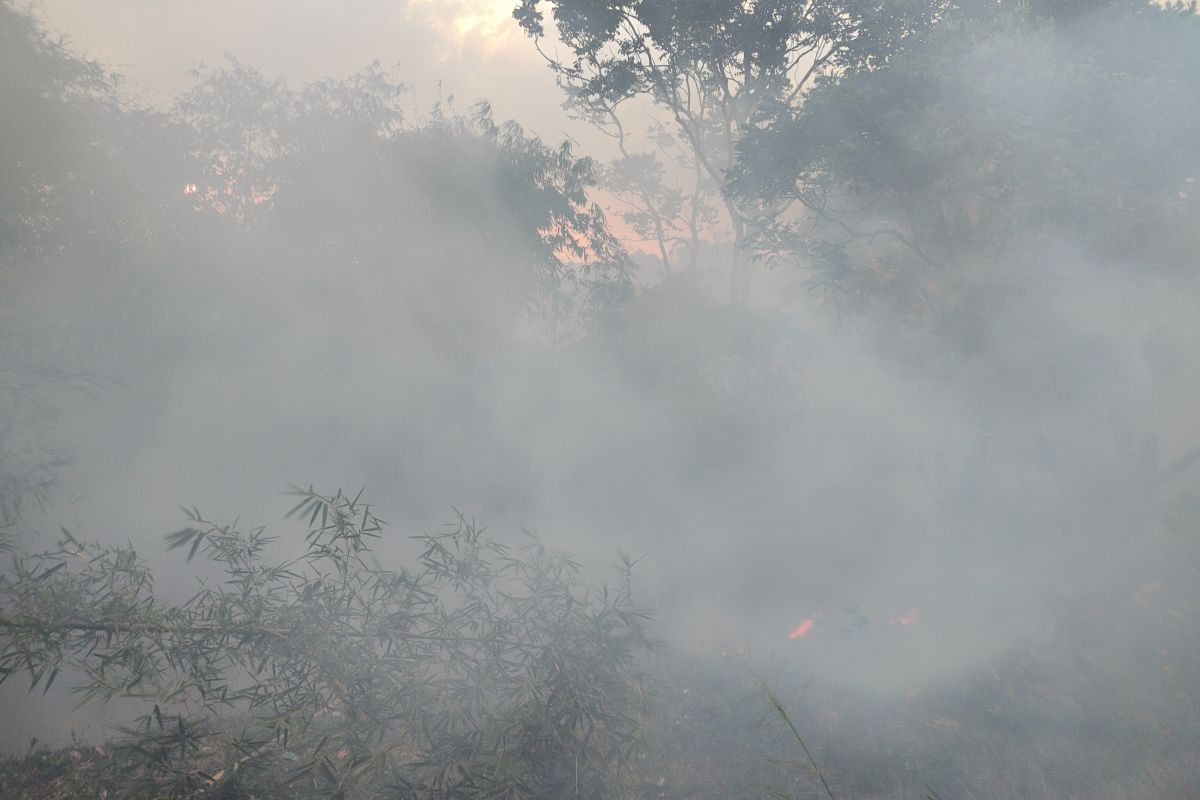
Bandung (ANTARA) - Dr Elham Sumarga, an ecology expert from the School of Life Sciences and Technology (SITH) at ITB, has stated that every hectare of burned peatland releases hundreds of tonnes of carbon into the atmosphere, accelerating global climate change.
According to Elham, this is precisely what is happening in the peatland forest and land fires (karhutla) in Kalimantan and Sumatra, which peaked during the dry season in August 2026 and continue to this day. The fires are not only triggering a haze disaster but are also releasing hundreds of tonnes of carbon into the atmosphere.
“Every hectare of burned peatland releases up to 300 tonnes of carbon into the atmosphere, which accelerates the pace of global climate change,” Elham said in Bandung on Monday.
Drainage activities, according to Elham, transform peatland into organic material that acts as fuel across the entire area.
“If peatland remains in its natural state, permanently waterlogged, it is not a problem. However, once the water is removed, the dried organic material turns into an accumulation of fuel stretching across a very wide area,” he said.
Unlike mineral soil, Elham said, fires on peatland also occur below the ground surface (subsurface smouldering). This characteristic makes the flames extremely difficult to extinguish and allows the thick haze crisis to persist, including the current episode that has spread to neighbouring countries such as Malaysia and Singapore.
The haze disaster, he said, carries PM 2.5 particulate toxins that trigger a respiratory crisis, forcing school closures, halting flights, and destroying protected wildlife habitats.
“Many orangutans in Kalimantan have been displaced and trapped by the fires. Some photographs even show wildlife that was burned alive, unable to survive the intense blaze,” he said.
Beyond the threat of massive carbon emissions, peat drainage also triggers permanent land subsidence. Based on ITB hydrological modelling, this phenomenon risks creating permanent water pooling and flooding within the next 50 to 100 years.
As a sustainable solution, ITB recommends three strategic steps. First, large-scale restoration through rewetting and canal blocking to retain water and maintain peat moisture.
Second, the adoption of paludiculture, namely shifting agricultural cultivation to flood-tolerant crops such as jelutung (dyera), sago and purun, so that community economic activities can continue without drying out the land. Third, law enforcement and concession evaluation, namely tightening regulations on land clearing without burning and strengthening the moratorium on concession permits for peatland deeper than 3 metres.
“This is the main function of modelling. We can investigate what-if scenarios to make anticipatory and preventive decisions so that even more severe fires do not occur in the future,” said Elham.
He added that handling karhutla in Indonesia requires synergistic collaboration between the government, the Peatland and Mangrove Restoration Agency (BRGM), academics, and concession holders.
“All parties must move together in synergy. Forest fires are a problem that cannot be localised, so addressing them requires shared awareness, regulatory improvement, and firm law enforcement to safeguard the sustainability of the ecosystem,” said Elham.
Source: jawawa.id (https://jawawa.id/newsitem/expert-300-tonnes-of-carbon-released-into-the-atmosphere-per-hectare-of-burned-peatland-1788796416)
Originally published by Antara (Indonesian) (https://www.antaranews.com/berita/5730488/pakar-300-ton-karbon-lepas-ke-atmosfer-per-hektare-gambut-terbakar), translated from Indonesian